
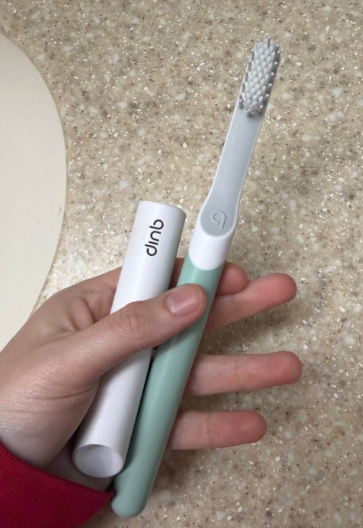
If you have seen a Quip toothbrush sitting elegantly on a bathroom counter, you have probably wondered the same thing many shoppers do: is Quip Sonic toothbrush good, or is it mainly a beautifully designed toothbrush with clever marketing?
The short answer is yes—the Quip Sonic Toothbrush is a good electric toothbrush for the right person. Its biggest strengths are simplicity, portability, gentle vibrations, excellent battery convenience, and built-in brushing guidance. It is also accepted by the American Dental Association (ADA), whose Council on Scientific Affairs found the non-rechargeable Quip electric toothbrush safe and effective for removing plaque and helping prevent and reduce gingivitis when used as directed.
But there is an important catch.
The original Quip Sonic is deliberately minimal. It does not try to compete with premium electric toothbrushes through powerful motors, multiple cleaning modes, pressure sensors, screens, or dozens of settings. Think of it more like a well-designed manual toothbrush that has been given a quiet electric heartbeat.
For some people, that is exactly what makes it attractive.
For others, it may feel too basic.
So, rather than simply saying Quip is “good” or “bad,” we are going to look at how it actually works, how well it cleans, what its limitations are, and who should—and probably should not—buy one.
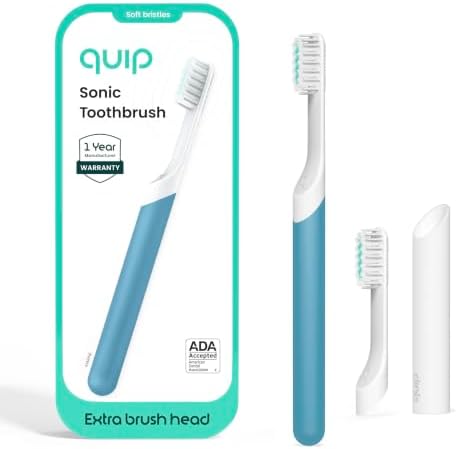
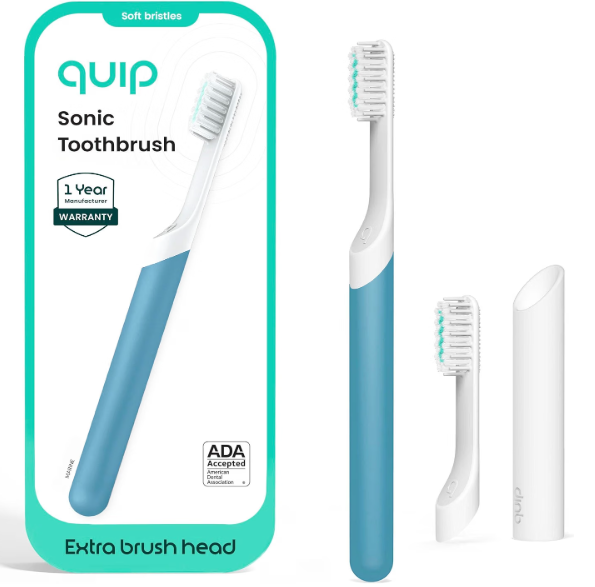
- Guided Brushing Technique: Oral health is a big deal – and the right technique makes all the difference. The quip Toothb…
- Timed Sonic Vibrations: Soft bristles help clean tight spaces and sensitive teeth and gums with gentle sonic vibrations …
- Replaceable Head & AAA Battery: Dentists recommend replacing brush heads every 3 months before bristles wear out and no …
What Is the Quip Sonic Toothbrush?
The original Quip Sonic Toothbrush is a slim battery-powered electric toothbrush designed to make good brushing habits easier without turning your bathroom sink into a charging station.
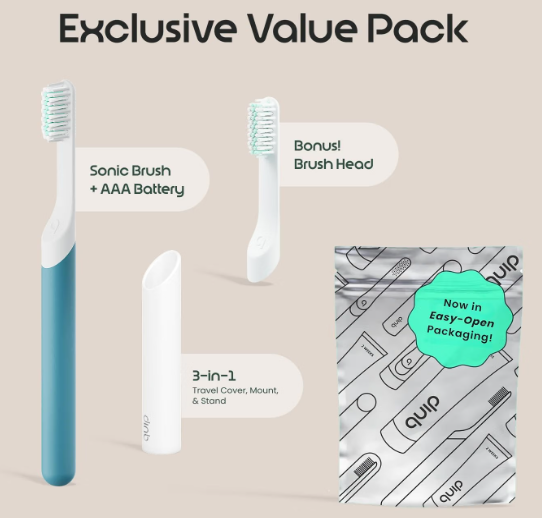
Unlike large rechargeable brushes, the classic Quip runs on a standard AAA battery.
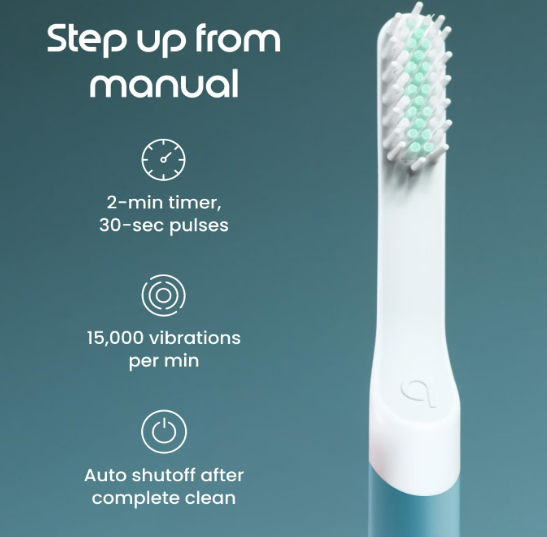
Quip says a single battery can power the brush for approximately three months under normal use. The toothbrush also includes a two-minute automatic timer and pulses every 30 seconds, encouraging us to divide brushing evenly between the four main sections of the mouth.
Its core features include:
- Gentle sonic vibrations
- One cleaning mode
- Soft bristles
- Two-minute brushing timer
- 30-second quadrant reminders
- Replaceable brush heads
- AAA battery operation
- Slim travel-friendly construction
- Protective travel cover
- Mirror-mount functionality
There is nothing especially complicated here.
And that is intentional.
Quip’s philosophy is less about transforming brushing into a technological event and more about removing excuses for brushing poorly.
How Does Quip Sonic Technology Work?
The brush uses rapid sonic vibrations while we guide the toothbrush across our teeth.
However, this is one of the most important things to understand about the original Quip Sonic: we still do some of the brushing movement ourselves.
Quip itself distinguishes the original Sonic from its more powerful Ultra models. With the original Sonic, users continue using familiar short back-and-forth strokes. With stronger Quip Ultra brushes, the powered bristles are designed to do more of the work without manual scrubbing.
That distinction matters.
Someone moving from a manual toothbrush to Quip may find the transition wonderfully intuitive. Someone accustomed to a powerful Philips Sonicare or Oral-B electric brush may initially wonder whether the Quip is doing enough.
Is Quip a “Real” Electric Toothbrush?
Yes.
The toothbrush is electrically powered and creates sonic vibrations, but its minimalist operation makes it feel different from many conventional powered toothbrushes.
It sits somewhere between traditional manual brushing and the more automated sensation delivered by high-powered premium electric brushes.
That middle ground is basically the entire Quip experience.
Is the Quip Sonic Toothbrush Actually Good at Cleaning Teeth?
Yes—provided we use it properly.
This is where marketing claims matter much less than brushing technique.
The American Dental Association states that both manual and powered toothbrushes can effectively remove plaque when used correctly. Powered toothbrushes can be especially useful for some people because their mechanical action and built-in guidance make consistent brushing easier.
More specifically, the ADA currently lists the non-rechargeable Quip Electric Toothbrush as an accepted product. According to its Seal statement, the toothbrush has demonstrated safety and effectiveness in removing plaque and helping prevent and reduce gingivitis when used as directed.
That is more meaningful than flashy advertising.
We are not simply trusting a toothbrush company telling us its toothbrush works.
The Timer May Be More Important Than the Motor
One of Quip’s smartest features is also one of its least exciting: the timer.
Most of us are terrible at estimating two minutes while standing half-awake in front of the bathroom mirror.
Thirty seconds feels suspiciously like two minutes at 6:30 in the morning.
Quip solves that problem automatically.
The brush runs for two minutes and provides a cue every 30 seconds so we know when to move to another quadrant.
That simple behavioral nudge may matter considerably for people whose main brushing weakness is not technique but consistency.
Why Brushing Habits Matter So Much
Consider two people.
One owns an expensive toothbrush with seven modes, Bluetooth connectivity, artificial-intelligence coaching, and enough lights to resemble an airport runway—but brushes randomly for 50 seconds.
The other owns a simple Quip and carefully brushes all four quadrants for two minutes twice daily.
Which routine sounds more sensible?
Technology can support brushing. It cannot replace brushing.
That is precisely where Quip’s minimalist approach makes sense.
What Does the Quip Sonic Toothbrush Feel Like?
Quip feels unusually light compared with many rechargeable electric toothbrushes.
Instead of gripping a thick motorized handle, we hold something much closer in size and shape to a normal toothbrush.
The vibrations are relatively gentle.
If traditional electric toothbrushes feel like tiny power tools inside your mouth, Quip feels more like a manual toothbrush quietly humming along.
That can be an advantage if you dislike aggressive electric brushes.
Is Quip Good for Sensitive Teeth and Gums?
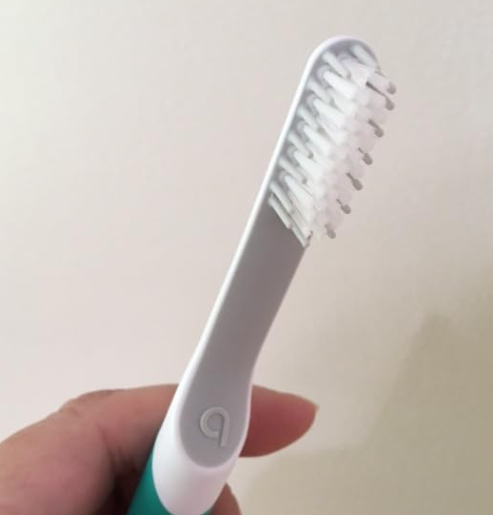
It can be a comfortable choice because the original Sonic uses soft bristles and relatively gentle vibrations.
Still, sensitivity can have many causes—from gum recession to enamel wear, cavities, recent dental procedures, or periodontal problems—so a toothbrush alone should not be expected to solve persistent dental sensitivity.
What Quip does offer is a softer, less intimidating brushing experience than many high-powered brushes.
For people who find strong electric vibrations uncomfortable, that gentleness may be a feature rather than a weakness.
Quip Sonic Toothbrush Cleaning Power: Is It Strong Enough?
This is probably the biggest question surrounding the original Quip.
Its motor does not feel especially dramatic.
Press the button and you do not get the sensation that a small turbine has awakened inside the handle.
That leads some users to associate the gentle feeling with weak cleaning.
But perceived intensity and actual brushing quality are not exactly the same thing.
Quip’s accepted non-rechargeable electric toothbrush has satisfied ADA requirements relating to plaque removal and gingivitis reduction when used as directed.
So the better question is not simply, “Does it vibrate strongly enough?”
It is:
Will its design help us brush correctly and consistently?
For many users, yes.
Where Quip Requires More Effort
The original Sonic is not a toothbrush we simply park against each tooth and allow to do everything.
Quip recommends using familiar short back-and-forth movements with the original Sonic model.
That means brushing technique still matters.
People who want their electric toothbrush to perform most of the mechanical movement may prefer a stronger sonic brush or an oscillating-rotating model.
Quip Sonic Battery Life: One of Its Biggest Advantages
This is where Quip becomes genuinely convenient.
The original Sonic toothbrush uses a replaceable AAA battery rather than requiring regular USB or wall charging.
Quip states that the battery can last around three months with ordinary use.
No charger.
No proprietary charging dock.
No wondering whether your toothbrush will die halfway through a vacation.
Just replace the battery when necessary.
Why AAA Power Is Surprisingly Practical
Rechargeable batteries sound automatically superior until we travel.
Suddenly we are packing:
- Phone charger
- Laptop charger
- Watch charger
- Earbud charger
- Power bank
- Travel adapter
- Toothbrush charger
At some point, our carry-on resembles an electronics repair shop.
Quip removes one cable from that mess.
A spare AAA battery weighs practically nothing and can be purchased almost anywhere.
For frequent travelers, that simplicity is one of the brush’s strongest selling points.
Is Quip Sonic Toothbrush Good for Travel?
Absolutely.
Travel is arguably where the original Quip Sonic makes its strongest case.
The slim handle occupies little room inside a toiletry bag, while its cover protects the brush head.
Quip also designed the cover to function as a holder that can attach to a smooth surface such as a mirror.
There is also no charging base to pack.
For weekend trips, business travel, backpacking, or anyone who regularly moves between two homes, Quip is wonderfully uncomplicated.
Quip Versus a Large Rechargeable Toothbrush When Traveling
A premium electric toothbrush may clean brilliantly at home.
But traveling with one can mean carrying a bulky handle, case, charging cable, and sometimes a separate power adapter.
Quip essentially says: what if we didn’t?
That is its appeal in one sentence.
Quip Sonic Toothbrush Design and Build Quality
Quip became popular partly because it made toothbrushes look unusually stylish.
Its handles are narrow, modern, and understated.
Instead of hiding the toothbrush inside a cabinet because it looks like medical equipment, we can comfortably leave a Quip sitting beside the sink.
Does appearance improve plaque removal?
Of course not.
But products we enjoy using tend to become products we actually use.
And habit formation is one of Quip’s central ideas.
Plastic Versus Metal Quip Handles
Quip has historically offered both lighter plastic versions and heavier metal-bodied variations.
The fundamental brushing experience is similar, so the choice is largely about feel, aesthetics, and price.
A metal handle feels more premium and substantial.
A plastic handle is lighter and arguably makes more sense for travel.
Neither magically transforms the toothbrush’s cleaning capability.
Does the Quip Sonic Toothbrush Have a Pressure Sensor?
The original Quip Sonic does not include a pressure sensor.
This is probably its most notable missing feature.
Quip’s newer premium brushes, including Ultra and Rev models, do include pressure feedback systems, but the classic Sonic remains deliberately basic.
Why does that matter?
Because brushing harder does not necessarily mean brushing better.
People who unconsciously press aggressively against their gums may benefit from a toothbrush that warns them when they are applying excessive force.
Who Should Care About a Pressure Sensor?
We would put pressure sensing higher on our priority list if:
- We regularly flatten toothbrush bristles quickly.
- Our dentist has warned us about aggressive brushing.
- We have gum recession.
- We tend to scrub our teeth enthusiastically.
- We want as much brushing guidance as possible.
If none of those sound familiar, Quip’s missing pressure sensor may not bother us much.
How Often Do Quip Brush Heads Need Replacing?
Quip promotes replacement on a roughly three-month schedule, which aligns neatly with its battery approach.
The company also offers optional refill plans that send replacement heads automatically.
That subscription model is convenient, but it is not mandatory.
Some people love automatic deliveries because they otherwise forget when their brush head was last changed.
Others dislike subscriptions and prefer purchasing replacement heads manually.
Neither preference is wrong.
Are Quip Replacement Heads Convenient?
Yes, especially if automatic replacement solves a real behavioral problem for us.
A toothbrush with ancient, frayed bristles does not suddenly become better because the handle cost more money.
Quip understands that maintaining a brushing routine includes maintaining the brush itself.
Its refill system therefore fits nicely with the brand’s habit-centered philosophy.
Quip Sonic Toothbrush Pros and Cons
After separating design from marketing, the original Quip’s strengths and weaknesses become fairly obvious.
Quip Sonic Toothbrush Pros
- ADA-accepted non-rechargeable electric toothbrush.
- Slim and lightweight.
- Very convenient for travel.
- Two-minute automatic timer.
- 30-second quadrant reminders.
- Gentle vibrations.
- Soft bristles.
- Simple one-button operation.
- No charging cable required.
- AAA battery can last around three months according to Quip.
- Replaceable brush heads.
- Optional automatic refill service.
- Familiar brushing technique for manual-brush users.
- Attractive minimalist design.
Quip Sonic Toothbrush Cons
- Only one brushing mode.
- No pressure sensor.
- Less powerful-feeling than premium sonic toothbrushes.
- Still requires manual back-and-forth brushing movements.
- No intensity adjustment.
- Replacement heads create an ongoing cost.
- Subscription refills will not appeal to everyone.
- Advanced users may outgrow its simplicity.
- People expecting a powerful electric-brush sensation may feel underwhelmed.
Quip Sonic vs Premium Sonic Toothbrushes
This comparison is almost unfair because the products have different goals.
Premium sonic toothbrushes usually emphasize cleaning power, different intensities, pressure detection, charging technology, and specialized modes.
Quip Sonic emphasizes something different:
simplicity.
It is closer to asking whether we should buy a compact city car or a luxury SUV.
The luxury SUV objectively has more equipment.
That does not necessarily make it more useful for someone who just needs to drive three miles to work.
Where Premium Brushes Have the Advantage
More expensive sonic brushes can offer:
- Stronger powered movement
- Pressure sensors
- Several cleaning intensities
- Sensitive modes
- Gum-care modes
- Rechargeable batteries
- Charging indicators
- Smartphone connectivity
- Brush-head recognition
- More automated brushing technique
Quip’s own current range illustrates this difference. Its Ultra Sonic models add pressure sensing, multiple intensities, rechargeable operation, and—in some versions—connected features.
Where Original Quip Still Wins
Quip Sonic remains appealing because it avoids almost all that complexity.
There is one button.
Press it.
Brush.
Move quadrants when prompted.
Finish after two minutes.
Done.
There is something wonderfully refreshing about a device that does not need an app to justify its existence.
Quip Sonic vs Manual Toothbrush: Is It Really an Upgrade?
For disciplined brushers with excellent technique, a manual toothbrush can already clean teeth effectively.
The ADA notes that both manual and powered toothbrushes can remove plaque effectively when used appropriately.
Therefore, buying Quip does not mean manual toothbrushes suddenly become inadequate.
Quip’s real advantage over an ordinary manual brush is behavioral assistance.
It helps us:
- Brush for the full recommended session.
- Divide brushing time evenly.
- Maintain a repeatable routine.
- Introduce gentle powered movement.
- Remember brush-head replacement if using subscriptions.
That can be enough to make it a meaningful upgrade.
Who Is the Quip Sonic Toothbrush Best For?
We think Quip makes the most sense for people who value simplicity and consistency over maximum technology.
It is particularly well suited to:
1. People Switching From Manual Toothbrushes
The familiar slim handle and brushing motion reduce the adjustment period.
2. Frequent Travelers
Few powered toothbrushes are easier to throw into a toiletry bag.
3. Minimalists
If five brushing modes sound like four too many, Quip will feel refreshing.
4. People Who Forget to Brush for Two Minutes
The integrated timer solves that immediately.
5. People Who Prefer Gentle Vibrations
Quip’s original Sonic is intentionally less aggressive than many high-powered alternatives.
6. Anyone Who Hates Charging Another Device
A AAA battery every few months is beautifully uncomplicated.
Who Should Probably Skip the Original Quip Sonic?
Not every toothbrush suits every mouth.
We would look elsewhere if we strongly prioritize:
- A built-in pressure sensor
- Powerful sonic cleaning
- Multiple intensity settings
- Specialized brushing modes
- Fully automated brushing motion
- Advanced smart features
- Real-time brushing feedback
- A rechargeable battery
In those cases, Quip’s newer Ultra or Rev brushes—or competing premium electric brushes—may better match the intended experience.
Is Quip Sonic Toothbrush Good for Beginners?
This is arguably its sweet spot.
People sometimes purchase feature-packed electric toothbrushes and then use exactly one mode forever.
Quip skips that theater.
There are no menus to study.
No mysterious icons.
No companion app required.
No charging routine.
For someone upgrading from a manual toothbrush, it offers just enough technology to improve structure without changing the brushing experience dramatically.
That makes Quip unusually approachable.
Does Quip Sonic Toothbrush Whiten Teeth?
We should keep expectations realistic.
A toothbrush may help remove surface stains caused by substances such as coffee, tea, or certain foods, but it does not chemically bleach teeth the way whitening treatments can.
The original Quip Sonic should therefore be viewed first as an oral-hygiene tool—not as a substitute for professional or peroxide-based whitening.
Good brushing may make teeth appear cleaner and brighter simply because plaque and surface debris are being removed more consistently.
That is different from changing the natural shade of the tooth.
Is Quip Sonic Worth the Money?
For the right buyer, yes.
The original Sonic occupies the simpler end of Quip’s current electric toothbrush lineup, well below feature-heavy models such as Ultra. Quip’s official store currently positions Sonic as its entry-level sonic option, while Ultra Lite, Rev, and Ultra models move progressively toward more advanced powered cleaning and guidance features.
But value is not simply a feature-count equation.
Suppose Quip encourages us to brush correctly twice every day because we genuinely enjoy using it.
That brush may deliver more practical value than an expensive model gathering toothpaste dust beside the sink.
On the other hand, if we already know we want stronger power, a pressure sensor, adjustable intensity, and rechargeable operation, purchasing Quip Sonic simply because it looks nice could create buyer’s remorse.
The Real Quip Value Proposition
Quip is not selling maximum horsepower.
It is selling frictionless routine.
That is the lens through which we should evaluate it.
How to Get the Best Results From a Quip Sonic Toothbrush
Owning an electric toothbrush does not automatically guarantee excellent brushing.
We still need good technique.
For the original Quip Sonic, we should:
- Apply toothpaste normally.
- Place the bristles gently against the teeth and gumline.
- Turn the brush on.
- Use gentle, short back-and-forth movements.
- Cover outer, inner, and chewing surfaces.
- Move to a new mouth quadrant when the brush pulses at 30 seconds.
- Continue until the two-minute cycle finishes.
- Avoid aggressively pressing the bristles into the gums.
- Rinse the brush head after use.
- Replace worn brush heads regularly.
Notice something?
None of these steps are glamorous.
That is oral hygiene in general.
Consistency beats spectacle.
So, Is Quip Sonic Toothbrush Good?
Yes, the Quip Sonic Toothbrush is good—especially for people who want a simple, gentle, portable electric toothbrush that encourages better brushing habits without unnecessary complexity.
Its ADA acceptance is particularly reassuring because it means its value is not based solely on sleek packaging or clever advertising. The ADA states that the accepted non-rechargeable Quip electric toothbrush has demonstrated safety and efficacy for removing plaque and helping prevent and reduce gingivitis when used as directed.
Still, we should understand what we are buying.
The original Quip Sonic is not a miniature dental machine packed with premium technology.
It lacks a pressure sensor.
It has one mode.
Its vibrations are relatively gentle.
We still guide it using short brushing movements.
And that is precisely why some people love it.
It takes an ordinary toothbrush routine and quietly improves its structure without demanding that we learn an entirely new brushing system.
Final Thoughts: Simple, Stylish, and Good Enough for Many
The Quip Sonic Toothbrush reminds us that more technology does not automatically produce better habits.
Sometimes the best product is the one that disappears into our routine.
Quip’s timer encourages us to brush long enough. Its quadrant reminders help distribute that time. Its slim body travels easily. The AAA battery eliminates charging anxiety. Its soft bristles and gentle vibrations make electric brushing approachable.
Could we find toothbrushes with more cleaning modes? Absolutely.
Could we find stronger motors? Easily.
Could we get pressure sensors, screens, Bluetooth, apps, coaching systems, and enough brushing statistics to conduct a quarterly performance review on our molars?
Definitely.
But not everyone wants that.
For someone asking “is Quip Sonic toothbrush good?”, our answer is straightforward: yes, it is a solid minimalist electric toothbrush, provided its simplicity matches what we actually want.
If we want gentle assistance and better brushing habits, it makes considerable sense.
If we want a powerful brush that performs most of the mechanical work and actively monitors our pressure, we should look toward a more advanced model.
The best toothbrush, after all, is not necessarily the one with the longest feature list.
It is the one we use properly every morning and every night.
Frequently Asked Questions
1. Is Quip Sonic Toothbrush recommended by dentists?
The non-rechargeable Quip electric toothbrush carries the ADA Seal of Acceptance. The ADA Council on Scientific Affairs states that its acceptance is based on findings that the toothbrush is safe and effective at removing plaque and helping prevent and reduce gingivitis when used as directed.
Individual dentists may naturally have different product preferences depending on a patient’s teeth, gums, dexterity, and brushing habits.
2. Is Quip Sonic better than a regular toothbrush?
Not automatically. Both manual and powered toothbrushes can effectively remove plaque when used properly, according to the ADA.
Quip’s advantage comes from its built-in timer, quadrant reminders, and powered vibrations, which may help some people maintain a more consistent brushing routine.
3. Does the Quip Sonic Toothbrush remove plaque?
Yes. The ADA’s acceptance statement for the non-rechargeable Quip electric toothbrush specifically identifies plaque removal and helping prevent and reduce gingivitis among its demonstrated uses when the product is used as directed.
4. How long does a Quip Sonic Toothbrush battery last?
Quip states that the original Sonic runs on a single AAA battery that lasts approximately three months under normal brushing conditions.
That makes it especially convenient for travel because no charging equipment is required.
5. Is Quip Sonic good for sensitive gums?
Its soft bristles and relatively gentle sonic vibrations may appeal to people who dislike aggressive powered brushing. However, the original model does not have a pressure sensor, so people who tend to brush too hard need to control pressure themselves. Anyone experiencing persistent gum pain, bleeding, recession, or unusual sensitivity should discuss it with a dental professional rather than relying on a toothbrush change alone.