
Choosing the right electric toothbrush can make a noticeable difference in our daily oral hygiene routine. With so many models offering advanced cleaning technology, pressure sensors, smartphone connectivity, and multiple brushing modes, finding one that genuinely justifies its price isn’t always easy.
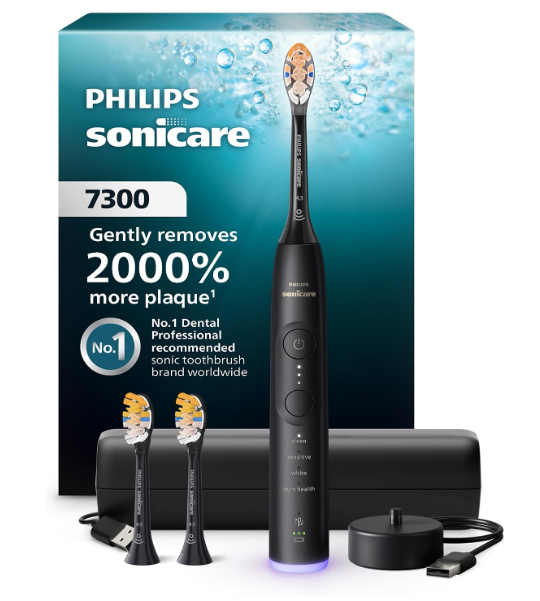
One model that deserves attention is the Philips Sonicare 7300, a premium rechargeable electric toothbrush designed to provide effective plaque removal, gentle gum care, and a more personalized brushing experience.
But is the Philips Sonicare 7300 a good toothbrush, or are we simply paying extra for features we might never use?
The short answer is yes. The Philips Sonicare 7300 is a very good electric toothbrush, particularly for anyone who wants powerful sonic cleaning, adjustable intensity, pressure feedback, and technology that encourages better brushing habits.
Its next-generation sonic motor, four cleaning modes, three intensity levels, and long battery life make it an attractive option for people looking to upgrade their oral care routine.
However, it isn’t necessarily the best choice for every budget. Less expensive electric toothbrushes can also deliver excellent cleaning results when used correctly.
In this detailed Philips Sonicare 7300 review, we’ll explore its features, cleaning performance, comfort, battery life, advantages, disadvantages, and long-term value to determine whether it’s worth buying.

- Gum Health and Plaque Removal: The A3 Premium All-in-One brush head featuring longer, angled bristles with triangular ti…
- Next-Generation Sonicare Technology: Delivers 62,000 bristle movements per minute with zero drop in performance, even in…
- Visual Pressure Sensor: A light ring at the base alerts you when you’re pressing too hard; simply ease off when it light…
Philips Sonicare 7300 Overview
The Philips Sonicare Series 7300 is part of Philips’ advanced electric toothbrush lineup, combining high-frequency sonic vibrations with smart technology designed to make brushing more consistent and comfortable.
Unlike a conventional manual toothbrush, which relies entirely on our hand movements, the Sonicare 7300 uses a motor to generate thousands of rapid bristle movements.
These movements help disrupt plaque along tooth surfaces and the gumline while reducing the need for aggressive manual scrubbing.
The toothbrush also includes a pressure sensor that warns us when we’re brushing too hard, a particularly useful feature for people who tend to apply excessive force.
Philips Sonicare 7300 Specifications
| Feature | Philips Sonicare Series 7300 |
|---|---|
| Toothbrush type | Rechargeable sonic electric |
| Sonic technology | Next-Generation Sonicare |
| Brush movements | Up to 62,000 per minute |
| Brushing modes | Clean, White, Gum Health, Sensitive |
| Intensity settings | Low, Medium, High |
| Pressure sensor | Yes, with visual feedback |
| Smart connectivity | Bluetooth and Sonicare app |
| Timer | SmarTimer and BrushPacer |
| Brush head reminder | BrushSync |
| Battery life | Up to 21 days |
| Travel case | Charging case in specified bundles |
| Brush head | A3 Premium All-in-One |
| Warranty | Two-year limited warranty |
Specifications and included accessories can vary by model number and regional package.
On paper, the Sonicare 7300 offers many of the features we would expect from a high-end electric toothbrush. The real question is how useful they are in our everyday routine.
How Well Does the Philips Sonicare 7300 Clean Teeth?
Cleaning performance is arguably the most important consideration when choosing an electric toothbrush.
Fortunately, the Philips Sonicare 7300 has several features designed to provide effective daily plaque removal.
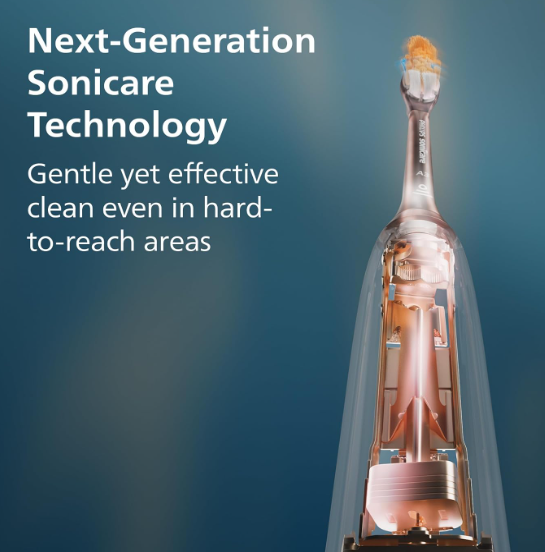
Next-Generation Sonicare Technology
The toothbrush uses Philips’ Next-Generation Sonicare Technology, which produces up to 62,000 bristle movements per minute.
These rapid movements help loosen and remove plaque from tooth surfaces, including areas that can be difficult to clean with a manual toothbrush.
One particularly interesting feature is the adaptive motor system.
The motor adjusts its output to maintain consistent brushing performance when resistance changes, such as when we’re cleaning our back teeth.
This helps deliver a more uniform brushing experience.
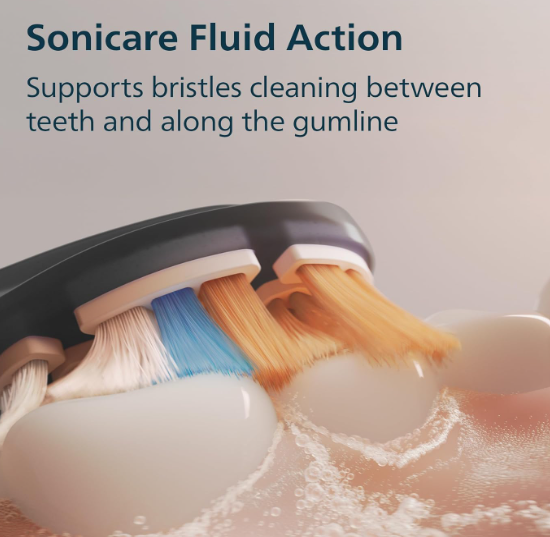
Philips also incorporates Sonicare Fluid Action, which uses the movement of the brush head to agitate toothpaste and saliva around the teeth.
While this can support cleaning around the gumline, direct bristle contact and proper brushing technique remain essential.
Does It Remove More Plaque Than a Manual Toothbrush?
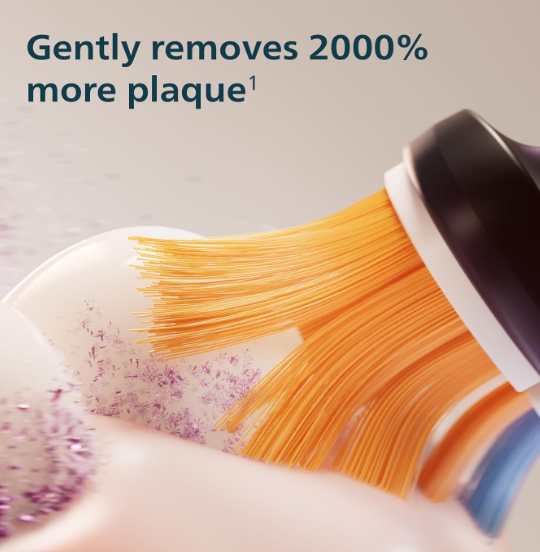
Philips advertises that the Sonicare 7300, when paired with its A3 Premium All-in-One brush head, can remove 2000% more plaque than a manual toothbrush under specified testing conditions.
That’s an impressive manufacturer claim, but it shouldn’t be interpreted as a guarantee that everyone will experience the same improvement.
Actual plaque removal depends on several factors:
- How long we brush.
- Whether we reach every tooth surface.
- The pressure applied during brushing.
- The condition of the brush head.
- Our existing brushing technique.
- How consistently we brush twice daily.
What makes the Sonicare 7300 especially appealing is that it combines effective mechanical cleaning with features designed to improve these everyday habits.
Our assessment: Cleaning performance is one of the Sonicare 7300’s biggest strengths. Its advanced motor and premium brush head make it a compelling choice for people who want a thorough clean without aggressive scrubbing.
Is the Philips Sonicare 7300 Good for Gums?
Gum care is another major reason to consider this toothbrush.
Many people assume that pressing harder against their teeth produces better cleaning results. Unfortunately, excessive pressure can irritate gum tissue and contribute to brushing-related damage over time.
The Sonicare 7300 addresses this problem through adjustable intensity settings and pressure feedback.
Gentle Cleaning Along the Gumline
The toothbrush is designed to clean around the gumline without requiring substantial pressure.
When we hold the brush head against our teeth at the recommended angle, its rapid movements do much of the cleaning work.
This can be particularly helpful for people who previously used a manual toothbrush with an aggressive scrubbing technique.
The A3 Premium All-in-One brush head features angled bristles intended to reach plaque near the gums.
Philips also advertises substantial gum-health improvements compared with manual brushing under its specified study conditions.
However, no electric toothbrush can guarantee healthier gums on its own.
Consistent brushing, daily interdental cleaning, and professional dental care remain important for preventing and managing gum problems.
Can It Help With Bleeding Gums?
The Philips Sonicare 7300 may help us develop gentler, more effective brushing habits, especially when bleeding is associated with poor plaque control.
Nevertheless, bleeding gums can have several causes, including gingivitis and other dental conditions.
We shouldn’t assume that changing toothbrushes will automatically solve persistent bleeding.
If our gums frequently bleed, feel swollen, or become painful, a dental examination is advisable.
Philips Sonicare 7300 Brushing Modes Explained
One of the Sonicare 7300’s most useful features is its selection of four brushing modes.
Each mode is designed for a different oral care priority.
| Brushing mode | Primary purpose | Best suited for |
|---|---|---|
| Clean | Everyday plaque removal | General daily brushing |
| White | Removing surface stains | Coffee and tea drinkers |
| Gum Health | Additional gum-focused care | People prioritizing gum hygiene |
| Sensitive | Gentler brushing experience | Sensitive teeth and gums |
Clean Mode
Clean mode is the standard option for daily brushing.
For most people, this will probably be the mode they use most frequently because it provides a practical balance between cleaning effectiveness and comfort.
If we’re unsure which setting to choose, starting with Clean mode at medium or low intensity is sensible.
White Mode
White mode is designed to help remove surface stains from teeth.
These stains commonly develop from coffee, tea, red wine, tobacco, and certain foods.
However, it’s important to understand the difference between surface-stain removal and professional tooth whitening.
The Sonicare 7300 does not chemically bleach teeth or change their natural internal color.
Instead, the brushing action helps remove accumulated external discoloration.
Gum Health Mode
Gum Health mode focuses on cleaning near the gumline.
This mode may appeal to people who want extra attention around their gums, particularly when combined with gentle brushing pressure.
It shouldn’t be considered a treatment for periodontal disease.
Sensitive Mode
Sensitive mode is designed for people who prefer a gentler brushing sensation.
This can be especially helpful when transitioning from a manual toothbrush to an electric model.
We can also combine Sensitive mode with a lower intensity setting for additional comfort.
Three Intensity Levels Make a Difference
Having multiple brushing modes is useful, but adjustable intensity can be even more important.
The Sonicare 7300 offers three intensity settings:
- Low: A gentler experience for sensitive teeth and gums.
- Medium: A balanced option for regular brushing.
- High: A stronger brushing sensation for users who prefer greater intensity.
This gives us 12 possible combinations of brushing modes and intensities.
It’s worth mentioning that higher intensity doesn’t automatically mean better cleaning.
For effective brushing, technique and coverage matter more than selecting the strongest setting.
We would generally recommend beginning with a comfortable intensity and increasing it only if needed.
Is the Sonicare 7300 Pressure Sensor Useful?
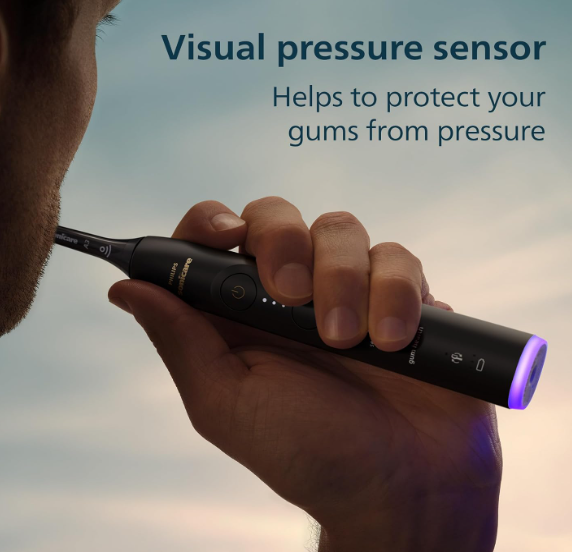
Yes. In fact, we consider the pressure sensor one of the most valuable features of this toothbrush.
Many people apply too much pressure without realizing it.
This habit can contribute to irritated gums and unnecessary wear on tooth surfaces.
The Sonicare 7300 includes a visual pressure sensor located near the base of the handle.
When we press too hard, the sensor activates a colored light ring and provides additional feedback.
The purpose is simple: encourage us to reduce pressure and allow the sonic movements to do the cleaning.
Why Pressure Feedback Matters
A pressure sensor offers several practical advantages.
First, it provides immediate feedback instead of requiring us to guess whether we’re brushing too aggressively.
Second, it can help us gradually develop a gentler technique.
Third, it’s especially valuable for people switching from manual toothbrushes, where applying more force may have become a habit.
The sensor doesn’t eliminate every risk of brushing-related irritation, but it is a useful everyday safeguard.
Philips Sonicare 7300 Brush Head Performance
A toothbrush motor is only part of the equation.
The brush head plays an equally important role in cleaning performance, comfort, and gum care.
The newer Sonicare Series 7300 is commonly packaged with the A3 Premium All-in-One brush head.
This brush head is designed to address three common oral care priorities:
- Plaque removal.
- Gumline cleaning.
- Surface-stain removal.
Its angled bristles are intended to improve contact with different tooth surfaces.
This makes the A3 an appealing general-purpose option for users who don’t want to switch between several specialized brush heads.
Are Sonicare Replacement Heads Expensive?
One disadvantage of premium electric toothbrushes is the ongoing cost of replacement brush heads.
Genuine Philips Sonicare heads can be noticeably more expensive than basic manual toothbrushes.
For most people, replacing a brush head approximately every three months is appropriate, or sooner if the bristles become frayed.
That means we should budget for around four replacement heads per year.
Although compatible third-party heads are available, their quality and compatibility can vary.
We would prioritize genuine, correctly fitting brush heads when possible, particularly if we want to retain the benefits of the BrushSync technology.
Does the Philips Sonicare 7300 Have Smart Features?
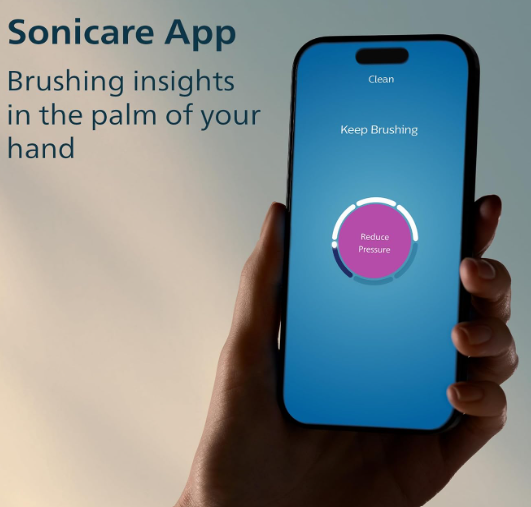
Yes. The newer Philips Sonicare 7300 supports Bluetooth connectivity with the Sonicare mobile application.
The connected features are designed to provide insights into our brushing habits.
Depending on the app version and supported device, these may include brushing history, progress reports, and guidance intended to encourage better oral hygiene.
Are the Smartphone Features Actually Necessary?
This depends largely on our preferences.
If we enjoy tracking personal habits, the Sonicare app could provide useful motivation.
It may be particularly helpful for people trying to develop a consistent twice-daily brushing routine.
However, we don’t need to connect our phone every time we brush.
The toothbrush still performs its core cleaning functions independently.
For many users, the app will be an occasional extra rather than an essential daily tool.
And that’s completely reasonable.
The strongest reasons to choose the Sonicare 7300 are its cleaning performance, adjustable settings, and pressure feedback—not simply its smartphone connectivity.
How Long Does the Philips Sonicare 7300 Battery Last?
Battery life is another area where this toothbrush performs well on paper.
Philips advertises up to 21 days of operation on a full charge under its specified usage conditions.
That’s approximately three weeks of brushing, making the Sonicare 7300 attractive for travel and everyday convenience.
Of course, real-world battery performance can vary depending on the selected brushing mode, session length, charging habits, and battery age.
Is Three Weeks of Battery Life Good?
Absolutely.
For people who travel regularly or simply dislike leaving a toothbrush plugged in, a claimed three-week battery life is convenient.
It also reduces the need to carry a charger on short trips.
The toothbrush includes a rechargeable lithium-ion battery and a battery indicator to help us know when charging is needed.
A major practical advantage is that we can concentrate on brushing rather than constantly worrying about charging.
Does Battery Life Decline Over Time?
Like other rechargeable devices, the Sonicare 7300’s battery may gradually lose capacity as it ages.
This is normal for lithium-ion batteries.
To help preserve the toothbrush:
- Follow Philips’ recommended charging instructions.
- Avoid exposing the handle to excessive heat.
- Keep charging contacts and accessories clean and dry.
- Store the toothbrush appropriately between uses.
- Avoid unnecessary physical damage to the charging equipment.
If battery performance deteriorates significantly during the warranty period, contacting Philips support is worthwhile.
Is the Philips Sonicare 7300 Comfortable to Use?
Comfort is one of the factors that can determine whether we actually enjoy using an electric toothbrush twice a day.
The Sonicare 7300 features a relatively slim, ergonomic handle designed to be comfortable to hold.
Its different intensity levels also make it easier to adjust the brushing sensation.
For people accustomed to manual toothbrushes, the high-frequency vibrations may initially feel unfamiliar.
Some users describe sonic brushing as a buzzing or tickling sensation, particularly around the gums.
Fortunately, this sensation often becomes more familiar with repeated use.
Is It Too Powerful for Beginners?
Not necessarily.
Although the Sonicare 7300 has a powerful motor, its adjustable settings make it suitable for many first-time electric toothbrush users.
We would suggest starting with Sensitive mode or a low intensity setting.
Once we’re comfortable, we can experiment with other modes.
There’s no need to use maximum intensity if lower settings already provide an effective and comfortable experience.
Is the Philips Sonicare 7300 Noisy?
Like most sonic electric toothbrushes, the Philips Sonicare 7300 produces an audible buzzing sound during operation.
This is a normal result of its high-frequency motor.
Noise perception is subjective, and we shouldn’t assume that every user will find the sound equally comfortable.
People who are particularly sensitive to vibration or sound may prefer to compare the Sonicare 7300 with other models before purchasing.
The toothbrush isn’t silent, but its noise is generally the kind of mechanical buzzing expected from a sonic cleaning device.
Is the Philips Sonicare 7300 Good for Traveling?
The Sonicare 7300 is a practical choice for frequent travelers.
Its long advertised battery life reduces the need for charging during shorter trips, while selected packages include a charging travel case.
This case provides a convenient way to transport and protect the toothbrush.
USB charging also adds flexibility when we’re away from home.
However, some packages include a USB charging cable without a wall power adapter, so it’s important to check exactly what’s included before purchasing.
What Comes in the Box?
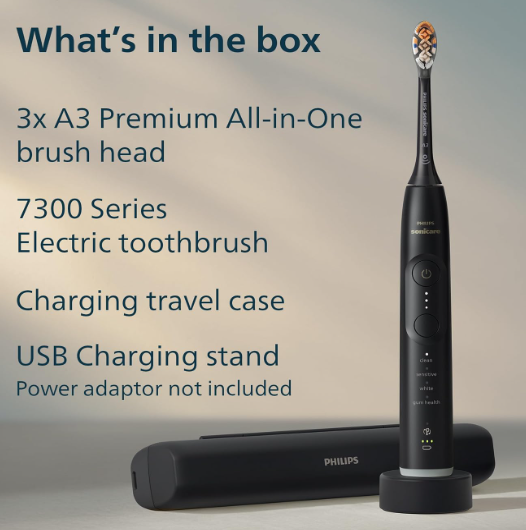
For example, the Series 7300 HX7423/05 package is specified with:
- One rechargeable toothbrush handle.
- Three A3 Premium All-in-One brush heads.
- One charging travel case.
- One USB-A charging accessory.
Other model numbers and regional bundles may have different accessories.
We should always review the specific package contents rather than assuming every Sonicare 7300 includes the same items.
Can the Philips Sonicare 7300 Whiten Teeth?
The Sonicare 7300 includes a White brushing mode intended to help remove surface stains.
This makes it potentially useful for people who regularly drink coffee or tea.
Removing surface stains can make teeth look cleaner and may help restore some of their natural brightness.
However, we should keep our expectations realistic.
The toothbrush doesn’t replace dentist-supervised whitening treatments, and it cannot change the underlying natural shade of our teeth.
Whitening results will also depend on the type and severity of discoloration.
For deeper stains or substantial color changes, professional advice is usually more appropriate.
Philips Sonicare 7300 Pros and Cons
Before deciding whether this toothbrush is worth buying, let’s summarize its main advantages and disadvantages.
Advantages
- Powerful next-generation sonic cleaning technology.
- Four brushing modes and three intensity settings.
- Pressure sensor with visible feedback.
- Up to 21 days of advertised battery life.
- Premium A3 brush head designed for all-around cleaning.
- Bluetooth connectivity and brushing progress tracking.
- BrushSync brush head replacement reminder.
- Convenient travel charging accessories in selected bundles.
- Two-year limited warranty.
Disadvantages
- More expensive than basic electric toothbrushes.
- Genuine replacement heads increase long-term costs.
- Smartphone connectivity may be unnecessary for some users.
- Sonic vibrations can take time to get used to.
- Not everyone needs four brushing modes.
- Doesn’t offer every feature found on the most expensive flagship toothbrushes.
- Extra cleaning performance may not justify the price for someone already using a good electric toothbrush correctly.
Overall, the advantages are compelling, particularly for users who appreciate premium features and want greater control over their brushing routine.
Nevertheless, the price remains an important consideration.
Philips Sonicare 7300 vs 7100: Which Is Better?
The Philips Sonicare 7100 is one of the most relevant alternatives to the 7300.
Both belong to the newer Sonicare lineup and share several technologies.
They also offer adjustable brushing settings, pressure feedback, and connected features.
The main difference is their positioning within the range and the advertised cleaning performance of their respective brush head configurations.
| Feature | Sonicare 7100 | Sonicare 7300 |
|---|---|---|
| Technology | Next-Generation Sonicare | Next-Generation Sonicare |
| Brushing modes | 4 | 4 |
| Intensity settings | 3 | 3 |
| Visual pressure sensor | Yes | Yes |
| Bluetooth connectivity | Yes | Yes |
| Battery life | Up to 21 days | Up to 21 days |
| Advertised plaque removal | Up to 1000% more than manual brushing | 2000% more than manual brushing |
| U.S. launch MSRP | $159.99 | $199.99 |
Manufacturer-advertised plaque-removal comparisons use specific brush heads and testing conditions and should not be interpreted as a direct head-to-head measure of what every user will experience.
Which One Should We Buy?
If budget is a priority, the Sonicare 7100 deserves serious consideration.
It already provides the core features many people need, including multiple modes, pressure feedback, and excellent sonic brushing technology.
The Sonicare 7300 becomes more attractive when we specifically want the premium A3 brush head package and the higher advertised plaque-removal performance.
At the original U.S. suggested prices, the difference was approximately $40, although actual retail prices and promotions can change.
For someone buying their first premium electric toothbrush, that difference may be reasonable.
But if the 7100 is available at a substantially lower price, it may offer better overall value.
Philips Sonicare 7300 vs a Manual Toothbrush
Is upgrading from a manual toothbrush really worthwhile?
For many people, yes.
The Sonicare 7300 offers several practical features that a conventional manual toothbrush cannot provide.
Better Brushing Guidance
One of the biggest benefits is its built-in timing system.
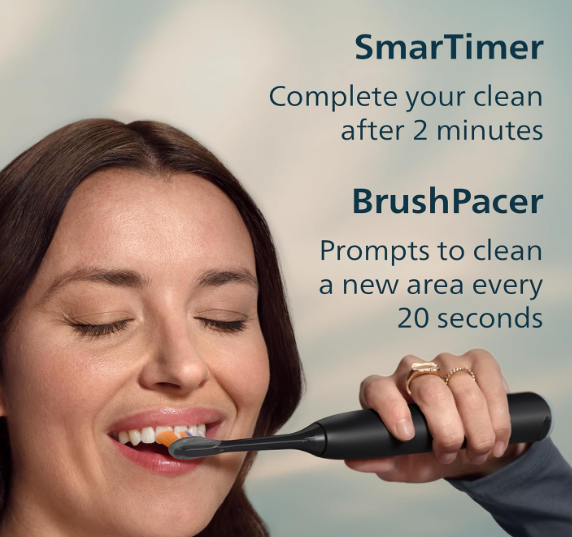
The SmarTimer helps us brush for the recommended duration, while the BrushPacer encourages us to move between sections of our mouth.
These features can be particularly valuable if we tend to rush through brushing.
Less Reliance on Manual Scrubbing
With a manual toothbrush, cleaning depends heavily on our hand movements.
The Sonicare 7300 generates its own rapid brushing motion, so we mainly need to guide the brush head carefully around our teeth.
This can make proper brushing easier for some users.
Is a Manual Toothbrush Still Effective?
Absolutely.
A soft manual toothbrush can clean teeth effectively when used with good technique, fluoride toothpaste, and an appropriate brushing duration.
The advantage of an electric model is that it can make certain aspects of effective brushing easier and more consistent.
We don’t necessarily need to spend a premium amount to maintain good oral hygiene, but the Sonicare 7300 can make the experience more convenient.
Is the Philips Sonicare 7300 Worth the Money?
This is where our evaluation becomes more personal.
The Sonicare 7300 was introduced with a U.S. manufacturer’s suggested retail price of $199.99.
That places it firmly in the premium electric toothbrush category.
At this price, we should expect more than basic vibration.
Fortunately, it offers several genuinely useful features, including adjustable intensity, pressure warnings, strong cleaning technology, and long battery life.
But not every feature provides equal value.
Features Worth Paying Extra For
We believe the most meaningful premium features are:
- The pressure sensor, which helps discourage overly aggressive brushing.
- Multiple intensity settings, which improve adaptability.
- A quality brush head designed for effective plaque removal.
- Reliable timing reminders.
- Long battery life and convenient charging.
These features have practical uses in our everyday oral care routine.
Features We Might Not Need
Smartphone connectivity, multiple specialized modes, and advanced progress reporting can be useful, but they aren’t essential for everyone.
Some people will enjoy tracking their brushing habits.
Others may open the app a few times and then stop using it.
If we already brush consistently and correctly, paying significantly more for connected features may be difficult to justify.
Long-Term Ownership Costs
The purchase price isn’t the only expense to consider.
Replacement brush heads create an ongoing cost, especially if we choose genuine premium Sonicare heads.
For example, if we replace the brush head four times per year, we should factor those purchases into our annual oral care budget.
Exact costs vary by retailer, package size, and location.
The Sonicare 7300 can be a worthwhile investment, but it isn’t necessarily the least expensive way to achieve excellent oral hygiene.
Who Should Buy the Philips Sonicare 7300?
We think the Sonicare 7300 is particularly suitable for several types of users.
People Upgrading From a Manual Toothbrush
If we’ve used a manual toothbrush for years, the Sonicare 7300 provides an opportunity to upgrade to guided, high-frequency cleaning.
Its pressure feedback and timing features can help us improve our routine.
People Who Brush Too Hard
The pressure sensor is especially relevant for anyone who tends to press aggressively against their teeth.
It provides immediate feedback that may encourage better habits over time.
People With Sensitive Teeth
The Sensitive mode and low intensity setting make this toothbrush adaptable for many people who prefer gentler brushing.
However, persistent tooth sensitivity should still be assessed by a dental professional.
People Who Travel Frequently
The advertised three-week battery life and available charging travel case make the Sonicare 7300 convenient for trips.
People Who Appreciate Premium Technology
If we enjoy connected devices and tracking healthy habits, the Sonicare mobile app can add another layer of functionality.
Who Should Avoid the Philips Sonicare 7300?
Despite its advantages, this isn’t the right toothbrush for everyone.
We might prefer a different model if:
- Our budget is limited and we only need effective basic brushing.
- We already own a high-quality sonic toothbrush that works well.
- We don’t care about smartphone connectivity or multiple cleaning modes.
- We want the lowest possible cost for replacement heads.
- We dislike high-frequency vibrations and strongly prefer another brushing mechanism.
In these situations, choosing a simpler electric toothbrush may be more practical.
An expensive toothbrush isn’t automatically the best toothbrush for every person.
How to Use the Philips Sonicare 7300 Properly
Even with advanced technology, brushing technique remains essential.
To get the most from the Sonicare 7300, we should follow a consistent routine.
Step 1: Choose the Right Brushing Mode
For everyday use, Clean mode is a practical starting point.
If our teeth or gums feel sensitive, we can choose Sensitive mode with low intensity.
Step 2: Apply Fluoride Toothpaste
Place an appropriate amount of fluoride toothpaste on the brush head.
We don’t need an excessive amount to achieve effective cleaning.
Step 3: Position the Brush at the Gumline
Hold the bristles gently against the teeth, approximately at a 45-degree angle toward the gumline.
Avoid pressing forcefully.
Step 4: Guide the Brush Slowly
Move the brush head gradually from tooth to tooth.
Unlike manual brushing, there’s no need for aggressive back-and-forth scrubbing.
Allow the sonic movement to do the work while ensuring the bristles contact all the necessary surfaces.
Step 5: Follow the Brushing Timer
Use the built-in timing guidance to cover the entire mouth.
Make sure we clean the outer, inner, and chewing surfaces of our teeth.
For most people, brushing twice daily for two minutes is the general recommendation.
Some specialized modes may have different programmed session lengths.
Step 6: Rinse and Store the Toothbrush
After brushing, rinse the head thoroughly and allow it to dry appropriately.
Follow the manufacturer’s instructions for cleaning and storing the handle.
And remember that even a premium electric toothbrush doesn’t replace daily cleaning between our teeth.
How to Maintain the Sonicare 7300
Proper maintenance can help preserve cleaning performance and keep the toothbrush hygienic.
Fortunately, caring for an electric toothbrush doesn’t have to be complicated.
Clean the Brush Head Regularly
Rinse the brush head after every use to remove toothpaste residue and debris.
Allow it to air dry between brushing sessions.
Replace Worn Brush Heads
BrushSync helps remind us when a replacement may be necessary.
Nevertheless, we should also inspect the bristles.
If they’re visibly worn, frayed, or damaged, replace the head sooner.
Keep the Handle Clean
Wipe the handle according to Philips’ cleaning instructions.
Pay attention to the area where the brush head connects to the handle, since toothpaste residue can accumulate there.
Avoid immersing charging equipment in water.
Check the Charging Accessories
Keep charging accessories dry and free from debris.
If the toothbrush stops charging properly, inspect the charging setup and follow Philips’ troubleshooting guidance rather than attempting to repair the sealed battery ourselves.
Common Philips Sonicare 7300 Problems
Although the Sonicare 7300 offers advanced technology, users may occasionally experience minor issues.
Here are some common situations and practical steps to consider.
| Problem | Possible explanation | What to do |
|---|---|---|
| Toothbrush feels too powerful | High intensity selected | Switch to low intensity or Sensitive mode |
| Strong buzzing sensation | Normal sonic operation | Allow time to adjust and avoid excessive pressure |
| Battery drains faster than expected | Usage patterns or battery aging | Check charging habits and battery condition |
| Pressure warning activates frequently | Too much brushing force | Reduce pressure |
| Brush head reminder appears | BrushSync replacement alert | Inspect and replace the head if needed |
| App does not connect | Bluetooth, compatibility, or permission issue | Check the app, phone settings, and Philips instructions |
| Toothbrush seems less effective | Worn bristles or technique issues | Inspect the brush head and brushing routine |
If a problem persists, manufacturer support is preferable to attempting unauthorized repairs.
Philips Sonicare 7300 vs Other Premium Toothbrushes
The Sonicare 7300 isn’t the only advanced electric toothbrush worth considering.
Other models, including higher-end Philips Sonicare products and Oral-B iO toothbrushes, offer alternative approaches to brushing.
The main distinction between traditional Sonicare models and Oral-B’s oscillating-rotating designs is how the brush heads move.
Sonicare uses rapid side-to-side bristle vibrations, while Oral-B’s round heads generally use oscillating or rotating movements.
Both approaches can provide effective cleaning when used correctly.
Our preference may depend on several factors:
- Whether we like sonic vibrations or a rotating brush head.
- How comfortable the brush feels around our gums.
- Replacement head costs.
- Available pressure feedback.
- Battery life and charging convenience.
- How much we value smartphone features.
For someone who enjoys the Sonicare brushing sensation, the 7300 is a strong premium option.
For someone who prefers a round, oscillating brush head, an Oral-B alternative may be more comfortable.
Neither system automatically guarantees better oral health for every individual.
Frequently Asked Questions About the Philips Sonicare 7300
1. Is the Philips Sonicare 7300 good for sensitive teeth?
Yes, the Philips Sonicare 7300 can be a good option for people with sensitive teeth because it offers a Sensitive brushing mode and three adjustable intensity levels.
We can begin with a lower setting to reduce discomfort while maintaining a consistent brushing routine.
However, sensitivity caused by cavities, exposed roots, or other dental conditions should be evaluated by a dentist.
2. How long does the Philips Sonicare 7300 last on a charge?
Philips advertises up to 21 days of battery life for the newer Sonicare Series 7300 under specified usage conditions.
Actual runtime may vary depending on how frequently we brush, selected settings, and battery condition.
For most users, the advertised battery performance makes it a convenient choice for travel.
3. Is the Philips Sonicare 7300 better than the 7100?
The Sonicare 7300 offers a higher manufacturer-advertised plaque-removal performance with its premium brush head configuration.
However, the Sonicare 7100 already includes many similar features, such as four cleaning modes, three intensity levels, pressure feedback, and connected functionality.
The better choice depends on the price difference and which brush head package best suits our needs.
4. Can we use the Philips Sonicare 7300 without the app?
Yes. The Philips Sonicare 7300 can perform its normal brushing functions without requiring a constant smartphone connection.
The mobile app provides additional tracking and progress features, but it isn’t necessary for everyday cleaning.
This makes the toothbrush suitable for people who prefer a straightforward brushing routine.
5. Is the Philips Sonicare 7300 worth buying in 2026?
Yes, the newer Philips Sonicare Series 7300 is worth considering in 2026, particularly for users who want premium sonic cleaning, customizable settings, and pressure feedback.
Its biggest limitation is price.
If we can find it at a reasonable discount, it becomes an especially appealing option. However, users who only need essential cleaning features may get better value from a less expensive Sonicare model.
Final Verdict: Is the Philips Sonicare 7300 a Good Toothbrush?
After examining its design, specifications, cleaning technology, and practical advantages, we can confidently say that the Philips Sonicare 7300 is a good electric toothbrush and a strong premium option for everyday oral care.
Its main strengths are the next-generation sonic motor, effective premium brush head design, four brushing modes, adjustable intensity, and pressure feedback.
These features work together to make brushing more adaptable and encourage healthier habits.
We also appreciate the long advertised battery life, convenient charging options, and BrushSync replacement reminders.
However, we shouldn’t overlook the cost.
The Sonicare 7300 is relatively expensive, and its premium replacement heads add to the long-term expense.
For someone simply looking to brush their teeth effectively, a less expensive Sonicare model may be perfectly adequate.
But for people who want advanced cleaning technology, greater customization, and useful feedback, the 7300 offers a compelling combination.
Our overall recommendation: The Philips Sonicare 7300 is worth buying if its premium features match our needs and the price fits our budget. It is particularly attractive for people upgrading from a manual toothbrush or an older basic electric model.
Ultimately, the best toothbrush is the one that helps us maintain a consistent, comfortable, and effective brushing routine. The Philips Sonicare 7300 provides plenty of technology to support that goal.