
Maintaining good oral hygiene goes beyond brushing your teeth. Water flossers have become one of the most recommended dental care tools for removing plaque and food debris between teeth, especially for people with braces, dental implants, or sensitive gums.
With the Philips Sonicare 1000 Compact Water Flosser, Philips aims to compete directly with established brands like Waterpik by offering a cordless, travel-friendly water flosser with a compact design. But does it live up to expectations?
In this review, we’ll examine its features, performance, battery life, advantages, disadvantages, and whether it’s worth buying compared to other portable water flossers on the market.
What Is the Philips Sonicare 1000 Compact Water Flosser?
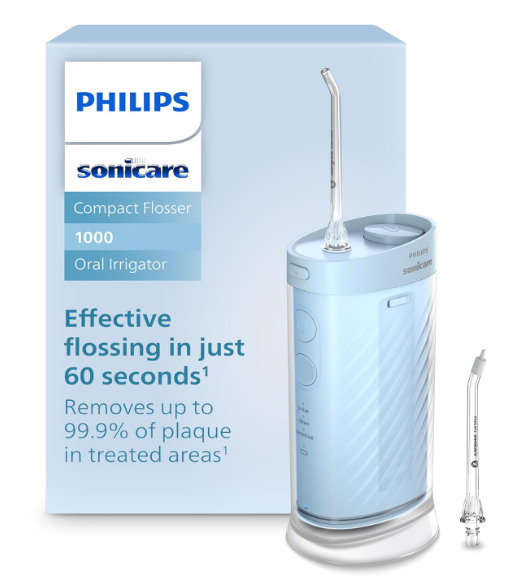
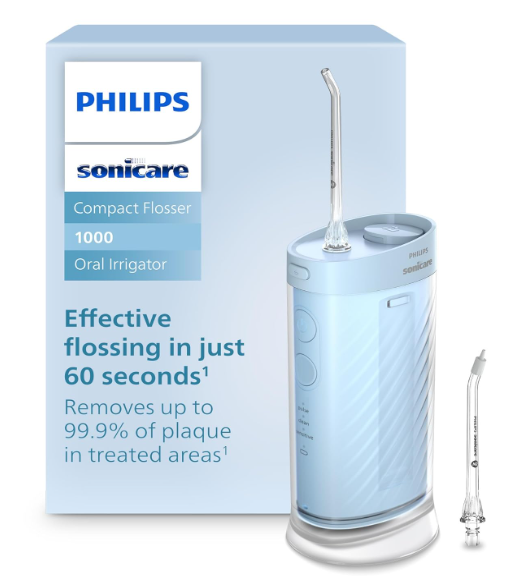
The Philips Sonicare 1000 Compact Water Flosser is a cordless oral irrigator designed for people who want to improve their interdental cleaning routine without relying solely on traditional dental floss.
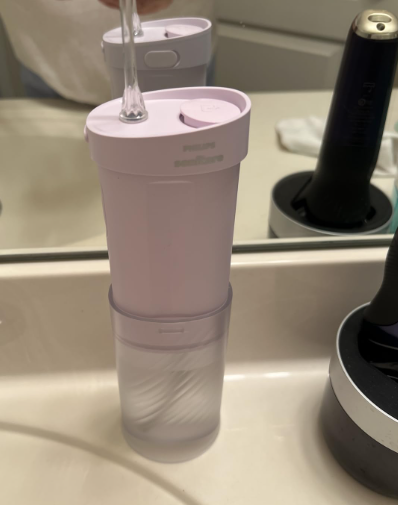
Its standout feature is its collapsible design, which significantly reduces its size when not in use, making it easy to pack in luggage or a travel bag.
Unlike the Philips Sonicare Cordless Power Flosser 3000, this model focuses on affordability and portability, making it an excellent entry-level option.
Compact Design Built for Travel
Truly Portable Size
One of its most impressive features is its retractable design.
When collapsed, it measures approximately:
- 14.5 cm (5.7 inches) tall
When fully extended with the nozzle attached, it reaches:
- 32 cm (12.6 inches) tall
This makes it one of the most travel-friendly water flossers currently available.
Integrated Nozzle Storage
Philips cleverly uses the refill compartment as a storage space for one nozzle, reducing the risk of losing accessories while traveling.
However, many users would likely appreciate the inclusion of a travel pouch for added protection.
Water Reservoir Capacity
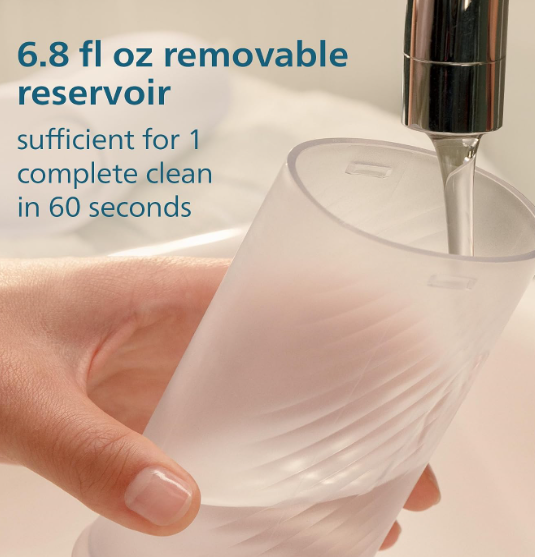
The removable water tank holds 200 ml (6.8 oz) of water.
While it’s not the largest reservoir available, it’s comparable to many cordless Waterpik models.
The smaller tank provides several benefits:
- Reduced overall size
- Lower weight
- Better portability
The downside is that some users may need to refill it to complete a thorough cleaning session.
Real-World Runtime
During testing, the approximate operating times were:
| Mode | Runtime |
|---|---|
| Sensitive | 1 minute 5 seconds |
| Pulse | 57 seconds |
| Clean | 53 seconds |
For most users, this is enough time to complete an effective flossing routine once they’re familiar with proper technique.
Those who prefer a slower, more detailed cleaning session may need to refill the tank midway through.
Filling and Cleaning the Reservoir
Philips offers two filling methods.
Fill Through the Top Port
This is the fastest and easiest method for everyday use.
Remove the Entire Reservoir
The reservoir can also be detached completely.
This makes it easier to:
- Empty leftover water
- Clean the inside thoroughly
- Prevent residue buildup
The reservoir fits tightly to prevent leaks, although it may feel stiff initially.
A helpful tip is to open the refill cap before collapsing the unit, allowing air to escape and making the process much smoother.
Three Cleaning Modes
The Philips Sonicare 1000 includes three operating modes.
Clean Mode
Provides a continuous stream of water.
This is the most powerful mode and will likely become the default choice for daily use.
Ideal for:
- Everyday cleaning
- Removing trapped food particles
- Maintaining healthy gums
Sensitive Mode
Reduces water pressure.
Recommended for:
- First-time water flosser users
- Sensitive gums
- Post-dental treatment care
Pulse Mode
Alternates water pressure to create a gentle massaging effect on the gums.
Many users enjoy this setting for improving comfort and stimulating gum tissue.
Built-In Quad Pacer
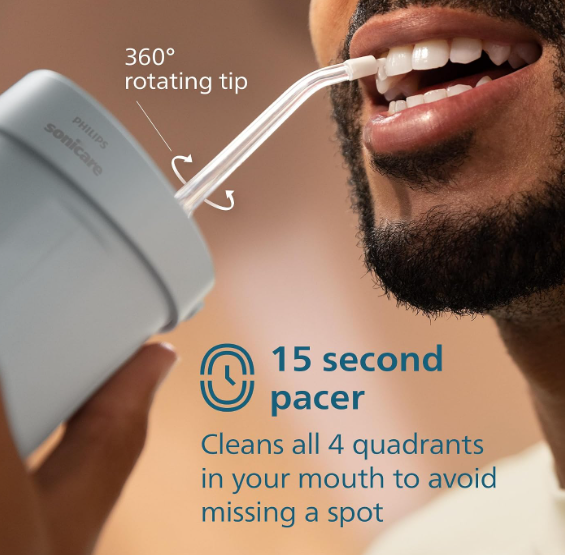
One of the most useful features is the built-in pacing system.
Every 15 seconds, the flosser briefly pauses, reminding users to move to the next section of the mouth.
A recommended routine is:
- 15 seconds upper outer teeth
- 15 seconds upper inner teeth
- 15 seconds lower outer teeth
- 15 seconds lower inner teeth
This results in approximately one minute of total flossing time.
The device also shuts off automatically after two minutes if left running.
Users who dislike timed routines can disable the pacer.
Water Pressure Performance
Philips doesn’t publish the exact water pressure specification.
In practice, the pressure is more than sufficient to remove food debris and clean between teeth effectively.
Although some competitors offer higher pressure, stronger isn’t always better, particularly for users with sensitive gums.
Included Nozzles
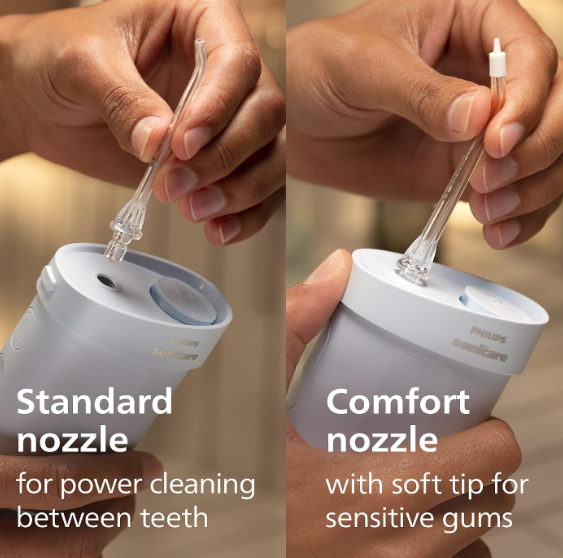
The package includes two different nozzle types.
N1 Standard Nozzle
Designed for everyday use.
Suitable for most users and daily oral hygiene.
N2 Comfort Nozzle
Features a soft rubber tip.
Recommended for:
- Sensitive gums
- Gentle cleaning
Changing nozzles is quick thanks to the eject button.
Philips recommends replacing nozzles every six months.
One drawback is that replacement packs include both nozzle types together, which may not suit users who prefer only one style.
Ergonomics
Although compact, the flosser is naturally bulkier than an electric toothbrush.
Its finish provides a comfortable grip, although it doesn’t feel quite as textured or slip-resistant as many Sonicare toothbrushes.
Another minor drawback is the rotating nozzle.
It can rotate, but it requires both hands because it feels relatively stiff during use.
Battery Life and Charging
The rechargeable battery provides approximately:
- 14 days of use
- Based on one one-minute session per day
A full recharge takes around 4 hours.
The LED indicator shows battery status clearly:
- Flashing green while charging
- Solid green when fully charged
The Biggest Drawback: Proprietary Charging Cable
Perhaps the most disappointing aspect is the charging system.
Instead of using USB-C, Philips relies on a proprietary charging connector.
This creates several inconveniences:
- You can’t charge it with your smartphone cable.
- Losing the cable makes replacement more difficult.
- It’s less convenient for frequent travelers.
While the cable uses a USB-A connector on one end, the flosser connection itself is proprietary.
Today, many users would expect USB-C.
Build Quality
The charging port is protected by a secure rubber cover that helps prevent water ingress.
Overall build quality feels solid and durable.
Additional highlights include:
- Two-year warranty
- Strong Philips customer support
- Attractive blue and purple color options
The only disappointment is the continued use of plastic packaging instead of more eco-friendly materials.
Philips Sonicare 1000 vs Waterpik
| Feature | Philips Sonicare 1000 | Waterpik Cordless |
|---|---|---|
| Collapsible design | ✔ Yes | Usually No |
| Travel-friendly | Excellent | Good |
| Water tank | 200 ml | Similar |
| Cleaning modes | 3 | Varies |
| USB-C charging | ✘ No | Depends on model |
| Price | Around $50 | Similar |
In terms of cleaning performance, both deliver comparable results.
The biggest advantage of the Philips model is its highly compact travel-friendly design.
Pros
- Extremely compact design
- Excellent for travel
- Built-in nozzle storage
- Three cleaning modes
- 15-second pacing system
- Good battery life
- Removable water reservoir
- Two-year warranty
Cons
- No travel case included
- Small water tank for some users
- Proprietary charging cable
- Nozzle rotation feels stiff
- Replacement nozzle packs are not flexible
Is the Philips Sonicare 1000 Compact Water Flosser Worth It?
If you’re looking for a portable water flosser that works well both at home and while traveling, the Philips Sonicare 1000 Compact Water Flosser is an excellent option.
It isn’t designed to outperform larger premium countertop models, but it strikes an impressive balance between portability, affordability, and cleaning performance.
Its compact folding design, effective cleaning capability, and reliable battery life make it one of the most appealing travel water flossers available today.
Although the proprietary charging cable and lack of a travel case are minor drawbacks, they don’t significantly detract from the overall experience.
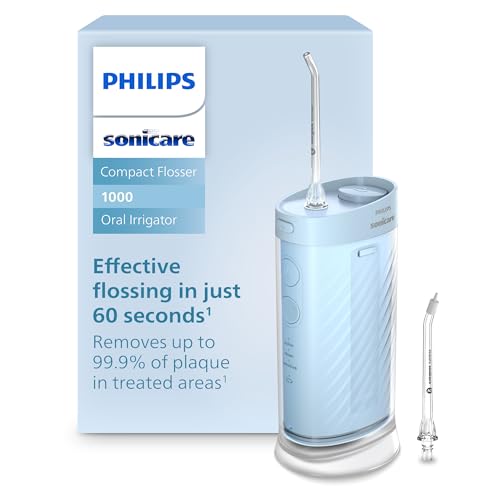
- Fast, effective, and ready to take anywhere: the Philips Sonicare Compact Flosser removes up to 99.9% of plaque¹ from be…
- Cordless convenience: the device is lightweight, slim, portable, and easy to use; the removable reservoir (200 ml / 6.8 …
- Customized routine with three flossing modes: Pulse to massage and stimulate gums, Clean for everyday use, and Sensitive…
Final Verdict
The Philips Sonicare 1000 Compact Water Flosser delivers an excellent combination of portability, performance, and value. It’s particularly well suited for frequent travelers, people with limited bathroom space, or anyone looking to upgrade their oral hygiene routine with a compact cordless water flosser. While Waterpik remains a leading name in the category, Philips offers a compelling alternative that performs well and stands out thanks to its innovative collapsible design.