
Why Charge Time Matters More Than We Think
Electric toothbrushes have quietly become one of those daily essentials we barely think about — until the battery dies at the worst possible moment. That’s why so many people search for the charge time of the Philips Sonicare 4100.
Nobody wants to pick up their toothbrush before bed and discover it has the energy of a sleepy sloth.
Fortunately, the Philips Sonicare 4100 balances long battery life with dependable charging performance. While it doesn’t charge as fast as a smartphone, it makes up for that with impressive endurance that keeps us brushing for days without worry.
How Long Does the Philips Sonicare 4100 Take to Charge?
The Philips Sonicare 4100 typically needs about 24 hours to fully charge from completely empty.
At first, that may sound lengthy. In today’s world, we’re used to gadgets charging at lightning speed. But electric toothbrushes operate differently. They prioritize battery longevity and safe charging over rapid power delivery.
The real advantage appears after charging finishes.
A complete charge usually delivers:
- Around 14 days of battery life
- Based on brushing twice daily
- Two-minute brushing sessions
That means many users only charge the toothbrush a couple of times each month.
Understanding the Charging System
Simple Yet Effective Charging Design
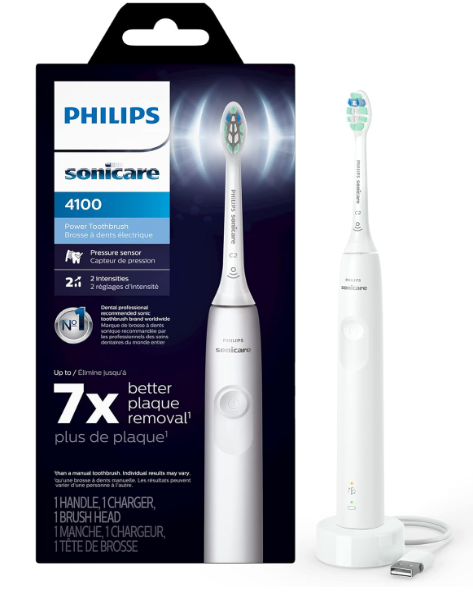
The Sonicare 4100 uses a compact charging base that keeps things refreshingly simple.
We place the toothbrush upright onto the charger, and the inductive charging system begins working automatically. There are no exposed charging pins or tiny connectors hiding toothpaste residue like forgotten cave paintings.
The charger focuses on:
- Convenience
- Water resistance
- Safety
- Minimal countertop clutter
Does the Sonicare 4100 Use Wireless Charging?
Technically, yes.
The toothbrush uses inductive charging technology, meaning electricity transfers wirelessly through the charging base rather than direct metal contact.
This helps improve:
- Durability
- Moisture protection
- Bathroom safety
- Long-term reliability
Bathrooms and electronics rarely make the world’s safest duo, so this design matters more than we sometimes realize.
What Happens During the First Charge?
When using the Sonicare 4100 for the first time, it’s smart to allow a full charge before regular brushing.
Although many units arrive partially charged, the initial full charge helps:
- Optimize battery calibration
- Improve long-term performance
- Ensure maximum runtime
Think of it like warming up before exercise. The toothbrush can work immediately, but giving it a proper start benefits the experience later.
Battery Life vs Charge Time
This is where the Philips Sonicare 4100 truly earns praise.
Yes, the charging process takes time. But the battery lasts long enough that charging rarely becomes annoying.
Typical Battery Expectations
| Usage Style | Estimated Runtime |
|---|---|
| Twice daily brushing | Around 14 days |
| Once daily brushing | Up to 3 weeks |
| Light occasional use | Even longer |
That kind of endurance changes the way we think about charging completely.
How to Know When the Battery Is Low
The Sonicare 4100 keeps battery indicators straightforward.
LED Battery Signals
Solid Green Light
The battery is adequately charged.
Flashing Amber Light
Battery level is low.
Flashing Green While Docked
The toothbrush is charging.
No confusing symbols. No cryptic icons requiring detective-level interpretation.
Can We Use It While Charging?
No.
The Philips Sonicare 4100 is designed to remain inactive during charging. This improves safety and protects the internal electronics from moisture-related electrical risks.
Since the battery lasts so long between charges, this limitation rarely causes inconvenience.
What Battery Does the Sonicare 4100 Use?
The toothbrush uses a rechargeable lithium-ion battery.
Lithium-ion technology offers several advantages:
- Longer lifespan
- Better energy retention
- Reduced memory effect
- Improved efficiency
This is one reason modern electric toothbrushes feel dramatically better than older rechargeable models from years ago.
Does Overnight Charging Damage the Battery?
This concern appears constantly online, and thankfully, the answer is reassuring.
The Sonicare 4100 includes charging management systems designed to reduce overcharging risks.
That means occasional overnight charging is perfectly fine.
However, constantly leaving the toothbrush permanently docked for months or years may gradually reduce battery health over the long term.
Best Charging Habits
For ideal battery longevity:
- Charge when necessary
- Remove after full charging occasionally
- Avoid complete battery depletion repeatedly
It’s less about perfection and more about balance.
How Long Will the Battery Last Before Wearing Out?
Most users get several years of solid battery performance before noticing major decline.
Typical lifespan:
- Around 3–5 years
- Sometimes longer with proper care
Battery lifespan depends on:
- Charging habits
- Environmental conditions
- Humidity exposure
- Frequency of use
Traveling With the Philips Sonicare 4100
The long battery life makes this toothbrush excellent for travel.
A fully charged Sonicare 4100 can easily handle:
- Weekend trips
- Business travel
- Short vacations
- Camping getaways
Many travelers don’t even bother packing the charger for shorter trips.
That’s a huge advantage compared to older electric toothbrushes that seemed to lose energy faster than a phone running mobile games all day.
Travel Charging Tips
Charge Before Leaving
Even if the battery isn’t fully low, topping it off helps avoid surprises.
Keep the Toothbrush Dry
Moisture buildup inside travel cases can affect electronics over time.
Avoid Extreme Heat
Leaving electronics inside a hot car is never ideal for lithium-ion batteries.
How the Sonicare 4100 Compares to Other Sonicare Models
Interestingly, many Sonicare models share similar charging times.
| Model | Charge Time | Battery Life |
|---|---|---|
| Sonicare 4100 | ~24 hours | ~14 days |
| Sonicare 5100 | ~24 hours | ~14 days |
| Sonicare 6100 | ~24 hours | ~14 days |
Higher-end models typically add:
- Extra brushing modes
- Smart sensors
- Premium charging accessories
- App connectivity
But the overall battery endurance remains surprisingly similar.
Why the Sonicare 4100 Still Feels Convenient
Here’s the fascinating thing about human psychology.
We don’t judge convenience purely by speed. We judge it by interruption.
A toothbrush requiring:
- One long charge every two weeks
Feels easier than a toothbrush requiring:
- Frequent short charges every few days
That’s exactly why many users love the Sonicare 4100 despite its slower charging process.
Can We Leave It Unused for Long Periods?
Yes, but there are smart storage habits worth following.
Before Long-Term Storage
- Charge the toothbrush first
- Store it in a cool, dry place
- Recharge every few months if unused
Lithium-ion batteries dislike sitting fully depleted for long periods.
Common Charging Problems and Fixes
Even reliable devices occasionally experience charging issues.
The Toothbrush Won’t Charge
Possible causes include:
- Loose power outlet
- Dirty charging base
- Incorrect alignment
- Water buildup
- Aging battery
Quick Troubleshooting Steps
- Unplug the charger
- Dry the toothbrush thoroughly
- Clean the charging base
- Try another outlet
- Leave charging for several hours
Sometimes deeply discharged batteries simply need patience before responding.
Battery Drains Faster Than Normal
Possible reasons include:
- Old battery age
- Constant dock charging
- Repeated full depletion
- Internal wear over time
After several years, reduced runtime is normal for rechargeable electronics.
How to Clean the Charging Base Properly
The charger itself needs occasional cleaning.
Safe Cleaning Process
- Unplug the charger first
- Use a damp cloth
- Avoid soaking it
- Dry thoroughly before reconnecting
Toothpaste residue has an impressive talent for appearing everywhere over time.
Should We Keep It on the Charger Daily?
There are two schools of thought.
Keeping It Docked
Pros:
- Always fully charged
- Convenient storage
- Easy access
Cons:
- Slightly more long-term battery stress
Charging Only When Needed
Pros:
- Potentially better battery longevity
- Reduced charging cycles
Cons:
- Requires occasional monitoring
In reality, both methods work fine for most users.
How Sonic Technology Affects Battery Efficiency
The Sonicare 4100 uses sonic vibration technology instead of aggressive rotating brush systems.
This approach offers:
- Efficient plaque removal
- Gentle brushing feel
- Lower mechanical stress
- Balanced energy consumption
The brush produces thousands of movements per minute while still maintaining excellent battery life.
That’s honestly impressive engineering for something sitting beside a bathroom sink.
Can We Use Third-Party Chargers?
Using the official Philips charger is strongly recommended.
Third-party chargers may:
- Deliver inconsistent voltage
- Reduce battery lifespan
- Cause charging problems
- Create compatibility issues
Since the original charger is durable and dependable, sticking with the official option is usually best.
What Happens if the Battery Dies Completely?
If the toothbrush becomes fully depleted:
- Charging response may initially seem slow
- It can require several hours before indicators appear
This sometimes causes unnecessary panic when the toothbrush simply needs time to recover.
Environmental Benefits of Rechargeable Toothbrushes
Rechargeable electric toothbrushes reduce disposable battery waste significantly.
Instead of constantly throwing away AA batteries, we recharge a single integrated battery for years.
That means:
- Less waste
- Fewer disposable materials
- Reduced environmental impact
While no electronic product is perfect environmentally, rechargeable systems are generally a smarter long-term choice.
Is the Philips Sonicare 4100 Charge Time Good or Bad?
Honestly, it depends on how we define convenience.
Compared to smartphones:
- Slow charging
Compared to real-world toothbrush practicality:
- Extremely convenient
The excellent battery endurance completely changes the experience.
Most users stop thinking about charging entirely because the toothbrush simply works day after day without drama.
And that’s arguably the highest compliment we can give any rechargeable device.
Who Will Love the Sonicare 4100 Battery Most?
This toothbrush works especially well for:
- Frequent travelers
- Busy professionals
- Students
- Minimalists
- People tired of charging everything constantly
It’s reliable in the same way a dependable coffee machine or favorite pair of sneakers becomes reliable — quietly and consistently.
Tips to Maximize Sonicare 4100 Battery Life
Avoid Frequent Full Depletion
Recharge before the battery becomes completely empty.
Keep It Dry
Moisture can slowly affect electronics over time.
Use the Original Charger
Proper voltage matters for long-term battery health.
Store at Moderate Temperatures
Extreme heat shortens lithium-ion lifespan.
Clean the Charger Occasionally
Residue buildup may interfere with charging efficiency.
Final Thoughts on Philips Sonicare 4100 Charge Time
The Philips Sonicare 4100 may not charge quickly by modern gadget standards, but its impressive battery life makes the longer charging process almost irrelevant in daily life.
A full charge takes around 24 hours, yet that single charging session delivers roughly two weeks of dependable brushing performance. That balance feels incredibly practical once we start using it consistently.
Instead of demanding constant attention like so many modern electronics, the Sonicare 4100 quietly handles its job with reliability and efficiency.
And honestly, that’s exactly what we want from a toothbrush.
FAQs
How long does the Philips Sonicare 4100 battery last?
The battery usually lasts around 14 days with twice-daily brushing sessions.
Can I leave the Sonicare 4100 charging overnight?
Yes. The toothbrush includes systems designed to help prevent overcharging during overnight charging.
Why is my Sonicare 4100 charging slowly?
A complete charge normally takes about 24 hours. If it takes much longer, check the outlet, charger, and battery condition.
Can I travel without the charger?
Absolutely. The long battery life makes the Sonicare 4100 excellent for short trips without carrying the charger.
Does the toothbrush stop charging automatically?
Yes. The Sonicare 4100 manages charging internally to help protect battery health once fully charged.