
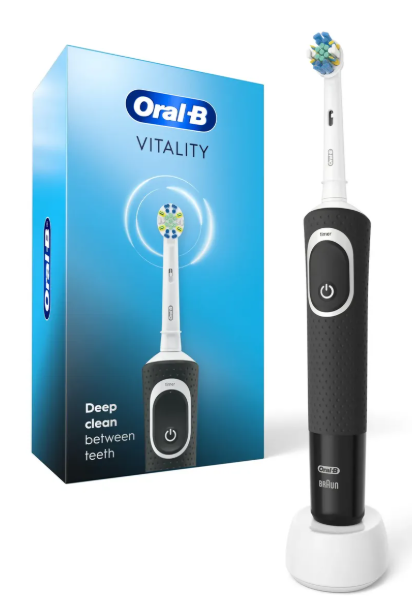
If you own an Oral-B Vitality electric toothbrush, understanding its battery type can help you maintain its performance, troubleshoot charging problems, and determine whether battery replacement is possible.
One of the most common questions users ask is: What battery type does the Oral-B Vitality use?
The answer depends on the specific model. Many newer Oral-B Vitality toothbrushes use a rechargeable nickel-metal hydride (NiMH) battery, while some older models contain a nickel-cadmium (NiCd) battery.
Unlike traditional battery-powered toothbrushes, most Oral-B Vitality models have an internal rechargeable battery that cannot be removed without opening the handle.
In this comprehensive guide, we’ll explore the Oral-B Vitality battery type, voltage, capacity, charging time, battery lifespan, replacement options, and troubleshooting solutions.
What Battery Type Does the Oral-B Vitality Use?
The Oral-B Vitality series primarily uses rechargeable batteries designed to supply power to its oscillating and rotating brushing mechanism.
However, battery chemistry can vary depending on the model and manufacturing generation.
The most commonly documented configurations include:
- NiMH (nickel-metal hydride): Found in many newer Oral-B Vitality models.
- NiCd (nickel-cadmium): Found in certain older Oral-B Vitality toothbrushes.
- Nominal battery voltage: Commonly 1.2 volts in documented Vitality configurations.
- Battery design: Internal rechargeable cell, generally not intended for consumer replacement.
- Charging method: Inductive charging through a compatible charging base.
The Oral-B Vitality does not normally require users to purchase disposable AA or AAA batteries.
Instead, the toothbrush includes a built-in rechargeable battery that receives power from its charging stand.
Why Does Oral-B Use Rechargeable Batteries?
Rechargeable batteries offer several advantages for electric toothbrushes.
First, they eliminate the need to replace disposable batteries regularly. This makes daily brushing more convenient and reduces the amount of battery waste generated over time.
Second, rechargeable batteries provide a practical power source for the toothbrush’s motor.
Finally, an internal battery allows manufacturers to design a compact handle with fewer openings.
For us, the main advantage is convenience: we can place the toothbrush on its charger rather than repeatedly buying replacement batteries.
Oral-B Vitality Battery Specifications
Before discussing replacement options, let’s review the typical battery specifications associated with different Oral-B Vitality models.
| Specification | Typical Details |
|---|---|
| Battery technology | NiMH or NiCd, depending on model |
| Nominal voltage | Commonly 1.2V |
| Battery design | Internal rechargeable cell |
| Capacity | Varies by model and production version |
| Charging method | Inductive charging base |
| Charging time | Approximately 18–22 hours for types 3708 and 3710 |
| Battery replacement | Not officially user-replaceable |
| Charging indicator | Absent on many standard Vitality models |
These specifications are general references rather than universal characteristics of every Oral-B Vitality toothbrush.
The exact battery configuration should always be checked against the model number and product documentation.
Oral-B Vitality Battery Voltage
Many Oral-B Vitality toothbrushes use a rechargeable battery with a nominal voltage of 1.2V.
This voltage is typical of individual NiMH and NiCd rechargeable cells.
However, it is important to understand that battery voltage and charger input voltage are completely different specifications.
For example, the charger connects to a household electrical outlet, while the toothbrush’s internal rechargeable battery operates at a much lower voltage.
If we are investigating battery replacement, matching the original battery voltage is essential.
Installing a battery with an incompatible voltage could damage the electronics or motor.
Oral-B Vitality Battery Capacity
Battery capacity is usually measured in milliamp-hours (mAh).
A higher mAh rating generally means a battery can store more electrical energy under comparable conditions.
However, the exact capacity of an Oral-B Vitality battery varies by model and manufacturing revision.
For example, a documented battery replacement guide for Vitality types 3708 and 3710 identifies an original 1.2V NiMH cell with a capacity of 700mAh in the toothbrush examined.
That does not mean every Vitality toothbrush contains the same battery.
Additionally, installing a higher-capacity battery does not automatically guarantee improved performance.
The charging system, battery chemistry, dimensions, and electrical connections must also be compatible.
Oral-B Vitality Battery Type by Model
The Oral-B Vitality family includes several toothbrushes with different designs, features, and production histories.
Understanding these differences is particularly important when researching replacement batteries.
Oral-B Vitality 100 Battery Type
The Oral-B Vitality 100 is an entry-level rechargeable electric toothbrush designed for everyday oral hygiene.
Many Vitality 100 handles, including documented Type 3710 models, use NiMH rechargeable batteries.
The battery powers the rotating and oscillating brush head and supports the built-in brushing timer.
Important characteristics include:
- Internal rechargeable battery.
- Compatible inductive charging stand.
- No need for disposable batteries.
- Relatively long charging time.
- Battery enclosed within the toothbrush handle.
Some versions require approximately 18–22 hours for a complete recharge.
If you own a Vitality 100, checking the four-digit type number on the handle is the most reliable way to identify its hardware configuration.
Oral-B Vitality Pro Battery Type
The Oral-B Vitality Pro is another rechargeable toothbrush within the Vitality family.
Published specifications for certain Vitality Pro versions identify a NiMH rechargeable battery.
Depending on the regional version, this toothbrush may include multiple brushing modes and other improvements over basic Vitality models.
However, having additional brushing modes does not necessarily mean that the toothbrush uses a different battery chemistry.
Charging time and battery endurance can also vary.
Some Vitality Pro product specifications list charging times of around 14–16 hours, while other Vitality models require considerably longer.
We should therefore avoid assuming that every toothbrush sold under the Vitality Pro name has exactly the same internal battery.
Oral-B Vitality Type 3709 Battery
The Type 3709 is an older Oral-B Vitality configuration.
Some of these toothbrushes were manufactured with nickel-cadmium batteries.
NiCd rechargeable batteries were widely used in older electronic appliances because they were durable and capable of providing consistent power.
However, NiCd batteries contain cadmium, a toxic heavy metal requiring appropriate disposal.
Certain repair guides also document variations in the batteries found inside Type 3709 toothbrushes.
Therefore, the original battery’s chemistry, dimensions, and connections should be verified before selecting any replacement.
Oral-B Vitality Types 3708 and 3710
Types 3708 and 3710 are associated with newer Vitality designs.
Repair documentation identifies a 1.2V NiMH rechargeable battery measuring approximately 49mm long and 14mm in diameter in these versions.
These cells resemble AA-format batteries in size, but their welded terminals and installation method make them different from ordinary consumer battery replacements.
Opening the toothbrush may require removing internal components and desoldering electrical connections.
For this reason, battery replacement is more complicated than inserting a new battery into a remote control.
NiMH vs NiCd Batteries in Oral-B Vitality Toothbrushes
Understanding the differences between NiMH and NiCd technology can help explain why battery performance varies between older and newer toothbrushes.
| Feature | NiMH Battery | NiCd Battery |
|---|---|---|
| Chemistry | Nickel-metal hydride | Nickel-cadmium |
| Nominal cell voltage | 1.2V | 1.2V |
| Energy density | Generally higher | Generally lower |
| Environmental concerns | Requires proper recycling | Contains toxic cadmium |
| Common application | Many newer Vitality models | Certain older Vitality models |
| Replacement compatibility | Must be verified | Must be verified |
Advantages of NiMH Batteries
NiMH technology offers several advantages for small rechargeable appliances.
These include:
- Higher energy storage potential compared with similarly sized traditional NiCd cells.
- No cadmium content.
- Wide availability of rechargeable cell formats.
- Practical performance for electric toothbrush motors.
For consumers, the main benefit is the possibility of reasonable battery endurance without requiring a particularly large battery.
However, NiMH batteries still degrade over time.
Disadvantages of NiMH Batteries
Although NiMH batteries are reliable, they are not immune to problems.
Common limitations include gradual capacity loss, sensitivity to excessive heat, and reduced performance after extended use.
Some cells can also experience self-discharge when left unused.
These characteristics help explain why an older toothbrush may no longer provide the same number of brushing sessions between charges.
Does Oral-B Vitality Use a Lithium-Ion Battery?
Many people assume that all modern rechargeable toothbrushes contain lithium-ion batteries.
That is not the case.
The documented Vitality models discussed here generally use NiMH or, in older versions, NiCd technology.
Other Oral-B product ranges may use lithium-ion batteries, but this does not establish the battery chemistry of a particular Vitality model.
If you are purchasing a replacement cell, never assume that a lithium-ion battery can substitute for the original NiMH or NiCd battery.
Different battery chemistries have different voltage and charging requirements.
Using an incompatible battery creates a risk of overheating, damage, or fire.
How Long Does the Oral-B Vitality Battery Last?
Battery runtime depends on several factors, including the model, battery age, usage frequency, and charging habits.
Oral-B indicates that battery life across its rechargeable toothbrush range can vary considerably, with some models providing approximately 5–14 days of use based on two daily brushing sessions lasting two minutes each.
Basic Vitality models tend to be toward the shorter end of the broader Oral-B battery-life range.
A healthy Vitality battery may provide several days of regular brushing before needing another charge.
However, there is no single battery-life figure that applies to every Vitality toothbrush.
Factors That Affect Battery Life
Several conditions can influence how long a charged toothbrush operates.
1. Battery age
Rechargeable batteries gradually lose capacity as they age.
2. Brushing frequency
Someone brushing three times daily will generally recharge more frequently than someone brushing twice daily.
3. Brushing duration
Extended brushing sessions increase energy consumption.
4. Storage temperature
Exposure to excessive heat may accelerate battery deterioration.
5. Charging condition
A damaged charger or poor charging connection may prevent the battery from receiving a complete charge.
6. Mechanical resistance
A damaged brush mechanism or internal motor problem can affect normal operation.
If the toothbrush starts losing power significantly faster than before, we should investigate both the battery and the charging system.
How Many Years Does an Oral-B Vitality Battery Last?
There is no guaranteed number of years that every Oral-B Vitality battery will remain functional.
Its lifespan depends on battery quality, age, storage conditions, charging patterns, and usage.
A rechargeable toothbrush battery may remain usable for several years, although capacity typically declines gradually.
We might notice that a toothbrush which originally lasted multiple days begins requiring daily charging.
Other possible symptoms include slower brush movement and unexpectedly short operating times.
However, a short runtime does not necessarily prove that the battery has failed.
Charging-base problems and internal electrical faults can produce similar symptoms.
How Long Does It Take to Charge an Oral-B Vitality?
One of the most noticeable characteristics of the Oral-B Vitality is its relatively long charging time.
According to Oral-B charging information, handles identified as Type 3708 and Type 3710 generally require approximately 18–22 hours for a complete charge.
Other models and regional versions may have different charging requirements.
The best approach is to check the manufacturer’s instructions for the exact toothbrush.
Why Does Oral-B Vitality Take So Long to Charge?
Charging speed depends on the battery chemistry and the design of the charging electronics.
The Vitality series uses a relatively simple charging system compared with some premium electric toothbrushes.
Its inductive charger transfers energy through the charging base without exposing conventional metal charging contacts on the toothbrush handle.
The charging circuit then supplies power to the internal battery.
A long charging time is not automatically a sign of a defective battery.
For many Vitality models, it is simply part of the original design.
How Do We Know When the Battery Is Fully Charged?
Many standard Oral-B Vitality toothbrushes do not include a charging indicator light.
This can make it difficult to determine whether the battery is charging or has reached full capacity.
Oral-B recommends checking charging progress by allowing the toothbrush to remain on its charger for approximately 30 minutes and then testing whether it operates.
If the toothbrush turns on, switch it off and return it to the charging stand for the full recommended charging period.
This does not provide an exact battery percentage, but it is a practical way to check whether the charger is supplying power.
Can You Replace the Oral-B Vitality Battery?
Technically, some Oral-B Vitality batteries can be replaced through specialist repair procedures.
However, Oral-B does not officially consider these batteries user-replaceable.
The rechargeable cell is enclosed within the toothbrush handle, and the housing is designed to protect the electronics from water.
Opening the handle can damage its sealing system and compromise water resistance.
Battery replacement may also require soldering and knowledge of electronic components.
For these reasons, Oral-B recommends using its authorized support and repair services rather than attempting battery replacement at home.
Why Is the Battery Not Easily Removable?
Electric toothbrushes regularly operate in wet environments.
To protect their internal electronic components, manufacturers use sealed handles.
A removable battery compartment would require additional waterproofing components.
By installing a rechargeable battery inside the handle, manufacturers can simplify the external design.
However, this design also makes repairs more complicated.
Is DIY Battery Replacement Worth It?
For someone with experience repairing small electronic devices, replacing a battery may be technically possible.
Independent repair specialists have documented the process for certain Vitality models.
However, the procedure can involve:
- Opening the toothbrush housing.
- Removing internal electronic components.
- Disconnecting or desoldering battery terminals.
- Identifying the correct replacement cell.
- Reassembling the device without damaging its circuitry.
- Evaluating whether the handle remains properly sealed.
A failed repair can make the toothbrush unsafe to use around water.
We generally recommend professional repair or replacement of the complete handle rather than attempting a DIY battery modification.
How to Identify the Correct Oral-B Vitality Replacement Battery
If a qualified repair technician is evaluating your toothbrush, identifying its exact hardware version is essential.
The marketing name alone is not always sufficient.
For example, a toothbrush sold as Vitality, Vitality 100, or Vitality Pro may use a hardware configuration shared with other models.
Step 1: Find the Four-Digit Type Number
Look at the bottom or rear of the toothbrush handle.
You may find a four-digit type number such as:
- 3708
- 3709
- 3710
This number can help identify the internal hardware design.
Step 2: Confirm the Original Battery Chemistry
The repair technician should verify whether the original battery uses NiMH or NiCd chemistry.
A battery that fits physically is not necessarily electrically compatible.
Step 3: Verify Voltage and Dimensions
The replacement battery must meet the electrical requirements of the toothbrush.
For certain Vitality models, a 1.2V cylindrical rechargeable cell is documented.
However, voltage alone is insufficient to establish compatibility.
Physical dimensions and terminal arrangement are equally important.
Step 4: Check the Terminal Configuration
Some internal toothbrush batteries have welded metal solder tabs.
These are designed to connect directly to the internal circuitry.
An ordinary rechargeable AA battery may not provide the correct connections.
For safety, battery soldering or replacement should be performed by a qualified technician.
Oral-B Vitality Battery Replacement Cost
The cost of repairing an Oral-B Vitality battery depends on the region, model, replacement part, and service provider.
There are generally three possible expenses:
| Expense | What It Includes |
|---|---|
| Replacement battery | Compatible rechargeable cell |
| Professional repair | Labor, installation, and testing |
| Replacement handle | New toothbrush handle if repair is uneconomical |
Because the Vitality is a relatively affordable electric toothbrush, professional battery replacement may sometimes cost almost as much as replacing the device.
Before paying for a repair, we recommend comparing the total service cost with the price of a new toothbrush.
However, if the repair is reasonably priced, restoring the existing device may reduce electronic waste.
Why Is My Oral-B Vitality Battery Not Charging?
If your toothbrush stops charging, the internal battery is only one possible cause.
Other potential problems include a defective charger, lack of electrical power, or damage to internal components.
The following troubleshooting steps can help identify the problem without opening the handle.
1. Check the Power Outlet
Start by verifying that the electrical outlet works.
Connect another device to the outlet to confirm that power is available.
If the toothbrush charger is connected to a bathroom cabinet socket, check whether that socket depends on a separate switch.
2. Inspect the Charging Base
Examine the charging stand for visible damage.
Look for:
- Damaged power cables.
- Cracked plastic.
- Moisture exposure.
- Unusual discoloration.
- Signs of overheating.
If the charger is visibly damaged, stop using it.
Do not attempt to operate damaged electrical equipment near water.
3. Position the Toothbrush Correctly
Place the toothbrush upright on its original compatible charger.
Make sure the handle is properly seated.
Then leave it for approximately 30 minutes before testing whether it turns on.
4. Allow a Complete Charging Cycle
A completely depleted Vitality battery may require a lengthy charging period.
For types 3708 and 3710, this can take up to 22 hours.
A toothbrush that fails to start after only a few minutes on the charger is not necessarily defective.
5. Inspect for Signs of Battery Deterioration
If the charger works and the toothbrush still cannot maintain power, the battery may have deteriorated.
This becomes more likely when the device is several years old and has gradually developed shorter runtime.
Nevertheless, the problem could also involve the charging circuit or motor.
Professional diagnosis is preferable to replacing parts without confirming the fault.
Oral-B Vitality Battery Drains Quickly: Common Causes
A toothbrush that turns on but runs out of power after one or two brushing sessions may have a battery-capacity problem.
However, several factors should be considered.
Aging Rechargeable Battery
Over time, the battery’s ability to store energy declines.
This can cause shorter operating periods even after a full charge.
Incomplete Charging
Removing the toothbrush before completing its recommended charging time may leave the battery partially charged.
This is particularly relevant for Vitality models requiring approximately 18–22 hours.
Excessive Heat
Storing the toothbrush near heaters or exposing it to high temperatures can negatively affect battery performance.
Charger Problems
An unreliable charging base can prevent the battery from reaching a full charge.
If the problem persists, a compatible charger can be tested by a technician to determine whether the charger or handle is responsible.
How to Make Your Oral-B Vitality Battery Last Longer
Although all rechargeable batteries eventually deteriorate, a few practical habits can help us preserve battery performance.
Follow the Recommended Charging Instructions
Use the charging procedure specified for the exact model.
Oral-B provides model-specific recommendations, so we should not assume that all electric toothbrushes have identical charging requirements.
Use the Correct Charger
Always use the supplied charger or a manufacturer-approved compatible replacement.
A charger with the wrong electrical characteristics may not function correctly.
Avoid Extreme Temperatures
Store the toothbrush in a cool, dry location away from excessive heat.
Normal bathroom temperatures are generally suitable, provided the device is not exposed to unusual environmental conditions.
Keep the Charger Clean
Toothpaste residue, moisture, and dirt can accumulate around the charging base.
Clean it according to the manufacturer’s instructions.
Always disconnect the charger from its power source before cleaning.
Do Not Ignore Charging Problems
If charging becomes unreliable, investigate the problem promptly.
Repeated attempts to operate a malfunctioning device may not solve the underlying issue.
Store the Toothbrush Properly
If you will not use the toothbrush for an extended period, follow the manufacturer’s storage guidance.
Avoid storing it in excessively hot environments.
When returning to regular use, allow a complete charging cycle if required.
Oral-B Vitality vs Oral-B Pro Battery: What’s the Difference?
The Oral-B Vitality and Oral-B Pro families include different models with varying battery configurations.
The Vitality range generally focuses on straightforward functionality and affordability.
The Pro range includes toothbrushes with additional features, depending on the specific model.
However, the Pro name alone does not guarantee lithium-ion technology or a particular charging speed.
| Feature | Oral-B Vitality | Oral-B Pro |
|---|---|---|
| Product positioning | Entry-level | Basic to more advanced |
| Rechargeable battery | Yes | Yes, on rechargeable models |
| Battery chemistry | NiMH or older NiCd versions | Varies by model |
| Charging time | Often relatively long | Model-dependent |
| Battery indicator | Often absent on basic models | Available on many models |
| Official user battery replacement | Generally not supported | Generally not supported |
When comparing toothbrushes, actual operating time, charging duration, and available replacement services are more useful than relying only on the product family name.
Is It Better to Replace the Battery or Buy a New Oral-B Vitality?
This depends on the toothbrush’s age, condition, and repair costs.
If the toothbrush is relatively new and still under warranty, contacting Oral-B support should be the first option.
If the device is several years old, compare professional repair costs with the cost of a replacement handle.
When Battery Repair May Make Sense
Repair may be worthwhile when:
- The toothbrush is otherwise in excellent condition.
- A qualified technician can perform the work safely.
- A compatible battery is available.
- The repair costs significantly less than replacement.
- The handle can be safely reassembled and evaluated.
When Buying a New Toothbrush May Be Better
Replacing the toothbrush may be more practical when:
- The motor is also malfunctioning.
- The handle has cracks or water damage.
- The charging electronics are defective.
- Professional repair costs approach the price of a new device.
- The battery cannot be replaced without compromising safety.
For many consumers, buying a replacement toothbrush may be the simpler option.
However, we should consider repair when it is practical and safely available.
How to Dispose of an Old Oral-B Vitality Battery
Rechargeable toothbrush batteries should not be treated like ordinary household waste.
Both NiMH and NiCd batteries require appropriate recycling.
NiCd batteries are particularly important to handle carefully because they contain cadmium.
The safest approach is to take an unwanted toothbrush to an approved electronics or battery recycling collection point.
Avoid puncturing, crushing, burning, or short-circuiting its internal battery.
If the battery is sealed inside the handle, follow local recycling instructions for small electronic appliances.
We should not dismantle the device solely for recycling unless the applicable instructions permit it and the process can be performed safely.
Frequently Asked Questions About Oral-B Vitality Battery Type
1. What Kind of Battery Is Inside an Oral-B Vitality Toothbrush?
Many newer Oral-B Vitality toothbrushes use an internal rechargeable nickel-metal hydride (NiMH) battery. Certain older models use nickel-cadmium (NiCd) batteries. The exact battery type depends on the toothbrush’s hardware version.
2. Does the Oral-B Vitality Use AA or AAA Batteries?
Most rechargeable Oral-B Vitality toothbrushes do not use removable consumer AA or AAA batteries. Some internal rechargeable cells are similar in size to AA batteries, but they are installed inside the handle and may have specialized electrical connections.
3. Can I Replace My Oral-B Vitality Battery at Home?
Oral-B does not officially support consumer battery replacement in its sealed rechargeable toothbrush handles. Although independent repair procedures exist for certain models, replacement can require soldering and may damage the handle’s water resistance. Professional repair is the safer option.
4. How Long Does an Oral-B Vitality Battery Take to Charge?
For Oral-B Vitality handle types 3708 and 3710, a complete charge typically takes approximately 18–22 hours. Other Vitality versions may have different charging times. Check the instructions for your exact model.
5. Why Does My Oral-B Vitality Battery Die So Quickly?
A rapidly draining battery may be caused by battery aging, incomplete charging, charging-base problems, or internal electrical faults. First verify that the charger works and allow the full recommended charging time. If the problem continues, contact an authorized service center.
Conclusion: Understanding the Oral-B Vitality Battery Type
The Oral-B Vitality battery type depends on the specific toothbrush model.
Many newer versions, including documented Vitality 100 and Vitality Pro configurations, use rechargeable NiMH batteries. Certain older Oral-B Vitality models use NiCd technology.
These batteries are installed inside the toothbrush handle and are generally not designed for routine consumer replacement.
For commonly documented configurations, the nominal battery voltage is 1.2V, while charging times can reach approximately 18–22 hours.
If your Oral-B Vitality no longer holds a charge, start by checking the charging base, power outlet, and recommended charging duration.
If the battery has deteriorated, professional repair or replacing the toothbrush may be appropriate.
Ultimately, understanding your toothbrush’s exact battery configuration helps you troubleshoot problems, make informed repair decisions, and maintain reliable brushing performance over time.