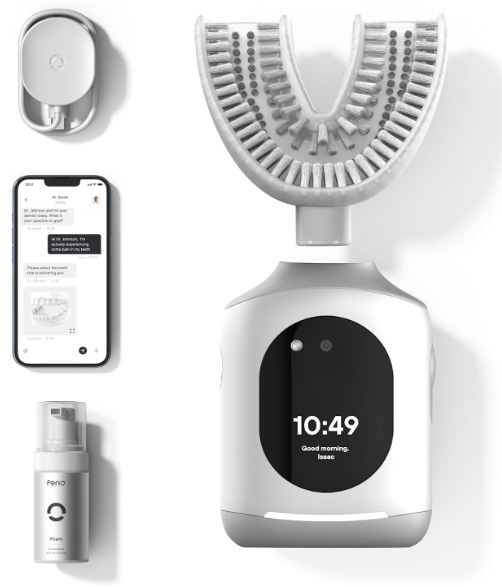
U-shaped toothbrushes look like they belong in the future. Instead of moving a small brush around the mouth for two minutes, we place a curved mouthpiece over our teeth, switch it on, and let dozens—or even thousands—of bristles work at once.
At least, that is the promise.
Manufacturers often advertise these devices as automatic, hands-free, 360-degree toothbrushes capable of cleaning every tooth in as little as 10, 20, or 30 seconds. That sounds incredibly appealing when mornings are hectic, children refuse to brush, or limited hand mobility makes ordinary brushing difficult.
But are U-shaped toothbrushes good, or are they simply clever gadgets wrapped in attractive marketing?
The fairest answer is that their effectiveness varies dramatically. Some early and inexpensive U-shaped brushes have performed poorly in clinical testing, occasionally removing little more plaque than not brushing. However, newer designs with nylon bristles, better-fitting mouthpieces, controlled movement, and independent evidence may perform more effectively. At least one U-shaped toothbrush line has received the American Dental Association Seal of Acceptance for plaque removal and gingivitis prevention when used as directed.
So we should not place every mouthpiece toothbrush in the same basket. The shape alone does not determine whether the brush works. Fit, bristle material, movement, brushing duration, gumline contact, technique, and supporting evidence all matter.
Let us open this dental toolbox and see what these unusual brushes can—and cannot—do.
What Is a U-Shaped Toothbrush?
A U-shaped toothbrush is an oral-care device built around a curved mouthpiece that fits over the upper and lower dental arches. Its interior contains rows of bristles or flexible silicone projections intended to contact several teeth simultaneously.
Most models fall into one of three groups:
- Manual silicone mouthpieces that users bite and move by hand
- Vibrating U-shaped brushes with soft silicone nodules
- Automatic mouthpiece brushes using nylon bristles and powered movement
Unlike an ordinary toothbrush, which cleans only a few tooth surfaces at a time, a mouthpiece brush attempts to clean most or all teeth simultaneously.
The idea is seductive. Instead of washing every window in a house one by one, we press a button and clean the entire building at once. The problem is that mouths are not identical buildings. Teeth lean, rotate, overlap, erupt unevenly, and sit inside differently shaped dental arches.
A universal mouthpiece may fit one person reasonably well and barely touch another person’s gumline.
How Do U-Shaped Toothbrushes Work?
Most powered U-shaped toothbrushes use vibrations to move their bristles against the teeth. The user applies toothpaste—sometimes a proprietary foam—places the tray inside the mouth, bites gently, and activates the device.
Some manufacturers instruct users to move the handle from side to side. Others describe their products as completely hands-free. Brushing cycles can range from approximately 10 seconds to two minutes, depending on the device.
The intended process is simple:
- Toothpaste is distributed around the mouthpiece.
- The tray is positioned over the teeth.
- Bristles contact the front, back, and chewing surfaces.
- A motor vibrates or moves the bristles.
- The user removes and rinses the mouthpiece.
The machine may technically operate as designed, yet that does not guarantee good plaque removal. Vibrating close to a tooth is not the same as scrubbing its surface correctly.
Why Bristle Contact Matters
Dental plaque forms a sticky bacterial film. It tends to accumulate along the gumline, between teeth, around crowded areas, and beside dental restorations.
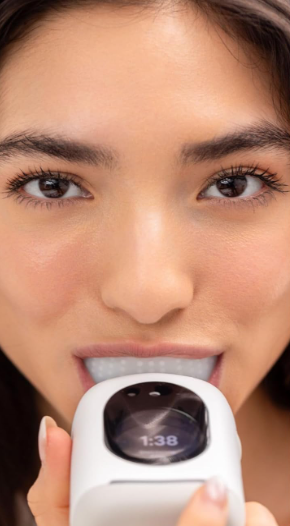
To remove it effectively, bristles must physically reach these locations with suitable pressure and movement. If a U-shaped tray floats a few millimeters away from the gumline, its motor can buzz like an angry bee without accomplishing much.
This contact problem explains why mouthpiece fit is one of the biggest differences between a promising automatic toothbrush and an ineffective novelty.
Are U-Shaped Toothbrushes Actually Good?
Some can be useful, but we should not assume that all U-shaped toothbrushes clean well.
A randomized clinical trial published in 2020 tested one automatic U-shaped electric toothbrush against a conventional powered toothbrush and no brushing. The tested U-shaped device was not effective at removing plaque, while the conventional powered toothbrush performed substantially better.
A later clinical evaluation published in 2025 also found that although users considered a U-shaped electric toothbrush comfortable, it did not improve plaque removal compared with the alternatives examined.
Those findings should make us skeptical of broad promises such as “complete cleaning in 10 seconds.”
However, they do not prove that every future mouthpiece toothbrush must fail. Device designs differ. Some use short silicone projections, while others use angled nylon bristles, customized mouthpieces, or mechanical motions that push the bristles against dental surfaces.
The ADA currently lists an Autobrush U-Shaped Toothbrush Series carrying its Seal of Acceptance. According to the ADA, acceptance is based on evidence that the product is safe and effective at removing plaque and helping prevent and reduce gingivitis when used as directed.
Therefore, our practical conclusion is more nuanced:
A U-shaped toothbrush can be good only when its particular design has adequate fit, effective bristles, correct movement, realistic instructions, and trustworthy evidence.
The word particular matters. We are evaluating a product, not merely a shape.
Why Some U-Shaped Toothbrushes Perform Poorly
Many low-cost models share weaknesses that limit their ability to clean thoroughly.
The Mouthpiece May Not Fit
Human dental arches vary in width, length, depth, and curvature. A tray sold in one adult size cannot perfectly fit every mouth.
When the tray is too wide, bristles may miss the teeth. When it is too narrow, the mouthpiece can bend, feel uncomfortable, or fail to seat fully. If it is too shallow, the bristles may not reach the gumline.
Imagine wearing someone else’s shoes and expecting them to support every part of your feet. Even when the labeled size appears correct, the contours may be wrong.
Silicone Nubs May Lack Cleaning Action
Many inexpensive U-shaped toothbrushes use soft silicone fins instead of traditional nylon bristles. Silicone can feel gentle, but very soft, widely spaced projections may slide over plaque rather than disrupt it effectively.
Softness is not automatically a virtue. A feather is gentle too, but we would not use one to clean mud from a hiking boot.
Vibration Is Not the Same as Brushing
A powerful-sounding motor may create an impressive sensation without producing meaningful bristle movement against the teeth.
Effective brushing requires contact, motion, coverage, and time. If one element is missing, the device may offer noise instead of cleaning.
The Gumline Can Be Missed
Plaque often gathers where teeth meet the gums. Traditional brushing techniques deliberately angle the bristles toward this border.
A fixed mouthpiece cannot always adapt to different tooth heights, gum contours, recession, crowding, or rotated teeth. Consequently, it may polish the broad front surfaces while leaving the most important edges untouched.
Very Short Cycles Raise Questions
Speed is one of the main selling points of automatic toothbrushes. Yet a 10-second cycle gives the device little time to create repeated mechanical contact across every tooth surface.
A shorter session is not necessarily ineffective if the technology genuinely cleans all teeth at once. Nevertheless, we should demand evidence rather than accepting the stopwatch as proof.
“Faster” and “better” are cousins, not twins.
U-Shaped Toothbrush Benefits
Although performance concerns are real, these brushes offer several potential advantages.
They Can Make Brushing Feel Easier
The simple mouthpiece format requires fewer deliberate hand movements than a manual toothbrush. This may appeal to people who dislike conventional brushing or struggle to guide a small brush around every tooth.
Ease of use matters because the perfect toothbrush is useless when it remains beside the sink.
They May Help People With Limited Dexterity
People with arthritis, tremors, joint pain, reduced grip strength, neurological conditions, or certain physical disabilities may find ordinary brushing difficult.
A well-designed mouthpiece brush could reduce the fine motor control needed to clean the mouth. However, assistance or occasional conventional brushing may still be necessary when the device misses certain areas.
They Can Make Children More Interested in Brushing
Colorful lights, unusual shapes, foam toothpaste, and short brushing cycles may make the routine feel like a game.
For a child who fights every brushing session, increased willingness can be meaningful. Nevertheless, enthusiasm should not replace cleaning quality. Parents should inspect the teeth and gumline rather than assuming that a cheerful child equals a plaque-free child.
They Attempt to Standardize Coverage
Traditional brushing depends heavily on technique. We can spend two minutes brushing and still repeatedly skip the backs of the lower front teeth.
A properly fitted automatic mouthpiece aims to reduce this inconsistency by placing bristles around multiple surfaces at once. In theory, that makes coverage less dependent on memory.
They May Save Time
Some devices promise complete cycles shorter than the conventional two-minute routine. For busy users, this is probably the greatest attraction.
We should view time savings as a bonus only after cleaning effectiveness has been established. Saving 90 seconds is not a bargain if plaque stays behind.
U-Shaped Toothbrush Disadvantages
Before replacing our current brush, we should understand the trade-offs.
Quality Varies Wildly
The market contains everything from carefully engineered oral-care devices to anonymous silicone trays sold with exaggerated claims.
Two products may look almost identical in photographs while behaving very differently inside the mouth.
One Size Rarely Fits Everyone
Even brands that provide several sizes may struggle to accommodate unusual arch shapes, missing teeth, severe crowding, dental appliances, or prominent gums.
They May Miss Interdental Plaque
No toothbrush shape reliably replaces floss, interdental brushes, or another dentist-recommended method of cleaning between teeth.
A mouthpiece may touch the visible surfaces while leaving the narrow spaces between neighboring teeth largely undisturbed.
Replacement Mouthpieces Can Be Expensive
Some systems require proprietary brush heads, foaming toothpaste, subscriptions, or frequent replacement parts.
The initial price may resemble the tip of an iceberg, with ongoing costs hiding underneath.
Cleaning the Device Requires Care
A large mouthpiece traps saliva, toothpaste, and debris across many small bristle clusters. Poor rinsing or damp storage can make it unpleasant and unhygienic.
They Can Create False Confidence
This may be the largest disadvantage. When a device feels advanced, we naturally assume it must work.
Bright LEDs, smartphone apps, sonic vibrations, and futuristic packaging do not directly measure plaque removal. A humble brush used correctly can outperform an expensive machine used blindly.
U-Shaped Toothbrush vs. Regular Toothbrush
A regular manual toothbrush offers direct control. We can angle it toward the gumline, spend extra time around crowded teeth, and adapt the pressure as we move.
Its weaknesses are equally familiar: success depends on patience and technique.
| Feature | U-Shaped Toothbrush | Regular Manual Toothbrush |
|---|---|---|
| Cleaning method | Multiple teeth simultaneously | Small area at a time |
| Technique required | Usually lower, but instructions matter | Moderate to high |
| Fit sensitivity | High | Low |
| Gumline control | Limited by mouthpiece design | Excellent with proper technique |
| Typical cost | Moderate to high | Low |
| Portability | Often bulky | Excellent |
| Evidence | Product-specific and mixed | Long-established |
| Time required | Often short | Usually about two minutes |
For most people, a soft-bristled manual toothbrush remains a dependable and inexpensive option when used properly.
The ADA advises brushing twice daily for two minutes with fluoride toothpaste and selecting a brush that can comfortably reach all areas of the mouth. It also emphasizes that both manual and powered toothbrushes can be effective.
U-Shaped Toothbrush vs. Electric Toothbrush
Conventional electric toothbrushes use a small oscillating, rotating, or vibrating head. They still require us to guide the brush tooth by tooth, but the motor supplies much of the cleaning motion.
Systematic evidence generally supports powered toothbrushes as effective plaque-removal tools, with certain oscillating-rotating models showing modest advantages over manual brushes or other powered technologies.
| Feature | U-Shaped Automatic Brush | Conventional Electric Brush |
|---|---|---|
| User movement | Minimal to moderate | Must be guided around the mouth |
| Fit dependency | Very high | Very low |
| Plaque evidence | Mixed and model-specific | Broad supporting evidence |
| Gumline targeting | Depends on tray contact | Easier to control |
| Brushing time | Often 10–60 seconds | Usually two minutes |
| Learning curve | Low | Low to moderate |
| Best feature | Convenience | Predictable cleaning performance |
For someone choosing without access to product-specific clinical evidence, a reputable conventional electric toothbrush is usually the safer bet.
Are U-Shaped Toothbrushes Good for Adults?
They may suit certain adults, particularly those who value convenience or have difficulty using a standard brush.
An adult considering one should ask:
- Does the mouthpiece fit without painful pressure?
- Do the bristles visibly contact the gumline?
- Does the brand provide independent clinical evidence?
- Has the exact model earned a recognized dental seal?
- Are replacement mouthpieces readily available?
- Can the user still clean between the teeth?
- Does the mouth feel and look clean afterward?
Adults with gum disease, extensive restorations, implants, bridges, severe crowding, or significant gum recession should ask a dental professional whether the device can clean around their specific dental work.
A general advertising video cannot evaluate an individual mouth.
Are U-Shaped Toothbrushes Good for Kids?
We should be especially careful when choosing these devices for children.
Children often lack the coordination or motivation required for thorough brushing, which makes an automatic tray seem ideal. Unfortunately, a poorly fitting mouthpiece may leave plaque behind along erupting molars, crooked baby teeth, and uneven gumlines.
A U-shaped toothbrush may serve as a motivational aid, but parents should not treat it as automatically superior.
What Parents Should Check
After brushing, parents can occasionally use a plaque-disclosing product approved for home use or visually inspect the gumline under good lighting.
Watch for:
- Persistent yellow or white buildup near the gums
- Bleeding during brushing
- Bad breath that quickly returns
- Food remaining around molars
- Red or swollen gums
- New chalky or brown spots on teeth
If these signs appear, the current routine is not doing enough, regardless of how much the child enjoys the device.
Supervision Still Matters
Young children generally need an adult to supervise and often finish the brushing process. A mouthpiece brush should not become a dental babysitter.
We can let technology participate without letting it take full responsibility.
Are U-Shaped Toothbrushes Good for People With Disabilities?
This is one area where mouthpiece devices may offer meaningful practical value.
People with reduced mobility or caregivers helping another person may struggle with the complex movements required to brush every tooth surface. A mouthpiece design can simplify positioning and reduce brushing time.
However, accessibility and effectiveness must be considered together. A device that is easier to use but cleans incompletely may need to be combined with:
- Caregiver-assisted brushing
- A conventional electric toothbrush
- Interdental brushes
- Water flossing
- More frequent professional cleaning
- Personalized recommendations from a dentist or hygienist
In some situations, partial independent cleaning followed by occasional assistance may still improve dignity and daily consistency. Oral care does not always have to be an all-or-nothing contest.
Can U-Shaped Toothbrushes Replace Flossing?
No. Even a well-designed mouthpiece toothbrush primarily addresses exposed tooth surfaces.
Adjacent teeth create tight contact points where toothbrush bristles cannot reliably enter. Plaque and food can remain below these contacts and beside the gums.
Depending on our oral health and spacing, a dental professional may recommend:
- Traditional floss
- Floss picks
- Interdental brushes
- Soft picks
- A water flosser
- Specialized tools for bridges or braces
The U-shape surrounds the teeth, but it does not magically erase the microscopic alleys between them.
Do U-Shaped Toothbrushes Whiten Teeth?
A toothbrush does not chemically bleach teeth unless it is used with a whitening substance designed for that purpose.
Effective brushing can remove some external stains caused by coffee, tea, tobacco, or pigmented foods. That may make teeth appear cleaner and slightly brighter.
However, an ineffective U-shaped toothbrush could remove fewer surface stains than a good manual or conventional electric brush.
Be cautious with products promising dramatic whitening through LED lights alone. Attractive blue illumination does not necessarily mean that clinically meaningful whitening is occurring.
Are Silicone U-Shaped Toothbrushes Good?
Silicone models are often inexpensive, soft, colorful, and widely marketed for children.
Their comfort may be excellent. Their plaque removal may not be.
Silicone bristles must make sufficient contact with the teeth and move forcefully enough to disrupt plaque. Very short, flexible nodules may bend away from curved or crowded surfaces.
The 2020 clinical trial that found poor plaque removal involved a tested U-shaped automatic design, illustrating that the mouthpiece concept does not guarantee effective cleaning. We should not automatically extend that result to every model, but it provides a strong reason to avoid purchasing solely on appearance or advertising.
When no credible testing exists, we are effectively volunteering our teeth for the experiment.
What About Newer Nylon-Bristle Mouthpiece Brushes?
Newer automatic toothbrushes increasingly use nylon bristles rather than simple silicone fins. This change may improve their ability to contact and sweep dental surfaces.
Research into newer mouthpiece designs has shown that some devices can remove more plaque than no brushing, although performance still depends on the exact design and comparator.
This distinction is important. “Better than no brushing” is a low bar. Ideally, a product should also demonstrate that it performs reasonably against a proven manual or powered toothbrush.
When evaluating impressive percentage claims, check what the device was compared with:
- No brushing
- A manual toothbrush
- A powered toothbrush
- A shortened brushing session
- A full two-minute session
- The same product under different settings
A race result means little until we know who else was on the track.
How to Choose a Good U-Shaped Toothbrush
We should shop like skeptical researchers, not dazzled spectators.
1. Look for Independent Evidence
Search for clinical studies involving the exact model or product line. Manufacturer-funded research is not automatically invalid, but methods, comparison groups, brushing duration, and conflicts of interest should be transparent.
2. Check for Recognized Acceptance
An ADA Seal of Acceptance indicates that a product has submitted evidence supporting the claims approved by the ADA. The seal applies to a specific product—not every toothbrush with a similar shape.
3. Prefer Real Bristle Contact
Look for clear information about bristle material, angles, density, and movement. Marketing language such as “sonic,” “360-degree,” or “ultrasonic” means little without effective contact.
4. Select the Correct Size
A mouthpiece should match the user’s dental arch. Multiple sizes or customized fitting may improve coverage.
5. Read the Instructions Carefully
Some devices need side-to-side movement. Others require separate upper and lower cycles. Using the product like a motionless bite guard may produce poor results when movement is expected.
6. Examine Replacement Costs
Calculate the annual expense of mouthpieces, toothpaste, cleaning accessories, and subscriptions.
7. Check Compatibility
Braces, missing teeth, implants, bridges, crowns, sensitive gums, and unusual bite relationships may affect suitability.
How to Use a U-Shaped Toothbrush Correctly
Always follow the instructions supplied with the exact device. A typical routine may include the following steps:
- Rinse the mouthpiece before use.
- Apply the recommended amount and type of toothpaste.
- Insert the tray and center it over the teeth.
- Bite gently rather than clenching hard.
- Activate the brushing cycle.
- Perform any required side-to-side or circular movement.
- Complete additional cycles when instructed.
- Spit and rinse the mouth.
- Rinse the device thoroughly.
- Allow it to air-dry in a clean location.
Using excessive toothpaste may create foam without improving cleaning. Pressing too hard can also distort the tray and pull the bristles away from the surfaces they are meant to reach.
Do Not Assume Hands-Free Use
Unless the manufacturer specifically validates stationary use, gentle movement may be necessary. Read the manual instead of copying a social-media demonstration.
How Can We Tell Whether It Is Cleaning Properly?
Our tongue can notice obvious roughness, but it is not a laboratory instrument. Teeth may feel smooth while plaque remains at the gumline.
A more useful home evaluation includes:
- Inspecting the teeth under bright light
- Checking for plaque near lower front teeth
- Looking behind the upper molars
- Watching for gum bleeding
- Using plaque-disclosing tablets occasionally
- Asking a hygienist to evaluate the results
Take a clear photograph before switching brushes and another after several weeks. Although this is not a clinical test, visible changes in gum redness or plaque buildup may reveal problems.
Dental checkups provide the most reliable feedback. A hygienist can often tell whether our daily method consistently misses the same locations.
Warning Signs That the Brush Is Not Working
Stop trusting the convenience alone when we notice:
- Increasing plaque or tartar
- Frequent gum bleeding
- Red, puffy, or tender gums
- Persistent bad breath
- Teeth feeling fuzzy soon after brushing
- Food trapped around back teeth
- New cavities
- Gumline staining
- The tray failing to contact several teeth
- Damaged or flattened bristles
Bleeding gums should not simply be accepted as proof that a powerful brush is “deep cleaning.” Persistent bleeding can indicate inflammation, unsuitable pressure, or another oral-health problem requiring professional assessment.
Who Should Avoid a U-Shaped Toothbrush?
A dentist may advise against certain mouthpiece brushes for people with:
- Severe dental crowding
- Active gum disease
- Painful gum recession
- Loose teeth
- Complex implants or bridges
- Recent oral surgery
- Significant mouth ulcers
- Poorly fitting dental appliances
- Braces not supported by the product
- A strong gag reflex
- An arch size outside the available range
This does not mean that every person in these groups can never use one. It means that a universal tray may not adequately adapt to their needs.
Can We Use a U-Shaped Toothbrush as a Secondary Brush?
Yes, and this may be a sensible compromise.
Someone who enjoys the device but doubts its gumline coverage could use it during one daily session and use a proven manual or conventional electric toothbrush during the other.
Another approach is to use the mouthpiece when time, fatigue, or physical limitations make standard brushing difficult, while performing a more detailed clean later.
This strategy recognizes a basic truth: imperfect cleaning can be better than skipped cleaning, but it should not quietly replace a method that was working well.
Common U-Shaped Toothbrush Myths
Myth 1: More Bristles Always Mean Better Cleaning
Bristles help only when they touch the right surfaces and move effectively. Ten thousand misplaced bristles can lose to a few hundred well-positioned ones.
Myth 2: Sonic Vibration Automatically Removes Plaque
Vibration may support cleaning, but plaque still requires mechanical disruption. Sound and sensation are not substitutes for contact.
Myth 3: Every Tooth Gets Equal Attention
A mouthpiece attempts simultaneous coverage, but rotated, short, crowded, or partially erupted teeth may receive less contact.
Myth 4: A Ten-Second Cycle Equals Two Minutes of Brushing
That comparison requires credible product-specific evidence. We should not accept it merely because all teeth enter the tray simultaneously.
Myth 5: U-Shaped Brushes Are Either All Excellent or All Useless
The evidence does not support either extreme. Some tested products have performed poorly, while at least one product line has satisfied ADA acceptance requirements.
Are Cheap U-Shaped Toothbrushes Worth It?
A very inexpensive model may be tempting, especially when we want to test the concept.
However, cheap mouthpiece brushes often provide little information about:
- Clinical testing
- Bristle quality
- Motor movement
- Materials
- Manufacturing standards
- Replacement schedules
- Warranty coverage
- Size selection
Saving money on a device that fails to remove plaque is false economy. Dental treatment costs far more than a reliable toothbrush.
We do not necessarily need the most expensive model. We need the one whose claims are supported and whose mouthpiece fits.
The Final Verdict: Are U-Shaped Toothbrushes Good?
U-shaped toothbrushes are a promising idea, but the category has an uneven record.
Some models offer comfort, convenience, novelty, and accessibility. They may help users who otherwise brush inconsistently, dislike conventional brushing, or have limited hand movement. Better mouthpiece designs may also overcome weaknesses found in earlier silicone devices.
Yet convenience should never be mistaken for effectiveness.
Clinical research has shown that at least some automatic U-shaped toothbrushes remove plaque poorly. At the same time, newer or differently engineered products cannot fairly be judged solely by the failures of older designs, and one U-shaped product series currently carries the ADA Seal of Acceptance.
Our answer, then, is conditional:
A well-designed, correctly fitted, independently tested U-shaped toothbrush can be good. A generic mouthpiece with weak silicone nubs and unsupported 10-second claims is unlikely to be a dependable replacement for proper brushing.
Before switching, we should examine the evidence, confirm the fit, follow the instructions, continue cleaning between the teeth, and monitor our gum health.
The best toothbrush is not the one that looks most futuristic. It is the one that reliably removes plaque from our particular mouth, twice a day, without turning the routine into a battle.


Frequently Asked Questions
1. Do dentists recommend U-shaped toothbrushes?
Dentists do not generally recommend every U-shaped toothbrush as a category. Recommendations depend on the exact product, available evidence, fit, and the user’s oral condition. Some tested models have shown weak plaque removal, while at least one product line has received the ADA Seal of Acceptance.
2. Are U-shaped toothbrushes better than electric toothbrushes?
Not generally. Conventional powered toothbrushes have a broader body of supporting research and allow more precise gumline control. A particular U-shaped device could work well, but it should provide credible comparative evidence before we assume it is better.
3. Can we use normal toothpaste with a U-shaped toothbrush?
That depends on the manufacturer. Some models accept ordinary fluoride toothpaste, while others recommend foam or a proprietary formula for better distribution. Follow the device instructions, but verify that the recommended product contains fluoride when appropriate for the user.
4. How long should we use a U-shaped toothbrush?
Use it for the full cycle specified by its manufacturer. Some models require repeated cycles or movement during use. A short advertised cycle should be trusted only when the exact product has convincing evidence supporting that brushing duration.
5. Are U-shaped toothbrushes safe for gums?
A properly designed and correctly sized device may be safe when used as directed. A poor fit, excessive biting pressure, damaged bristles, or inadequate cleaning can irritate gums or allow inflammation to develop. Stop using it and consult a dental professional if pain, persistent bleeding, swelling, or gum damage occurs.