
Buying a premium electric toothbrush feels a little different from buying an ordinary manual brush. When we spend serious money on a Philips Sonicare, especially models such as DiamondClean, ProtectiveClean, ExpertClean, or the Sonicare 9900 Prestige, we naturally expect it to last.
But electronics are electronics. Batteries can stop holding a charge. Handles can suddenly refuse to turn on. Motors may become noisy. Charging bases occasionally fail. And when something goes wrong, one question quickly moves to the front of our minds: What does the Philips Sonicare warranty actually cover?
For many rechargeable Philips Sonicare products, the answer starts with a two-year limited warranty from the purchase date. Philips’ U.S. support information states that Sonicare toothbrushes are generally backed by a two-year warranty, and numerous individual Sonicare models are officially listed with a two-year limited warranty.
That sounds simple enough. In reality, warranty coverage has a few moving parts.
The type of failure matters. Your location matters. The exact model matters. Proof of purchase matters. And perhaps most importantly, there is a big difference between a manufacturing defect and damage caused through normal wear, misuse, or accidental damage.
So, rather than drowning ourselves in legal language, let’s break the Philips Sonicare warranty down the way we would want someone to explain it to us.
How Long Is the Philips Sonicare Warranty?
Most rechargeable Philips Sonicare electric toothbrushes carry a two-year limited warranty, typically measured from the original purchase date.
Philips’ U.S. personal-care warranty states that qualifying products purchased in the United States or Canada are covered against defects in materials or workmanship for two years from the purchase date, provided that valid proof of purchase is available.
Philips also lists a two-year limited warranty on numerous Sonicare product specification pages, including several DiamondClean and FlexCare models.
In practical terms, if we bought our Sonicare on May 10, 2026, we would normally expect the standard two-year warranty period to run until approximately May 10, 2028, subject to the warranty terms applicable in our country.
However, we should never assume every Sonicare product follows exactly the same timetable.
Some Sonicare Models Can Have Different Warranty Periods
Certain models or product categories may carry shorter coverage.
For example, Philips’ Central America warranty information states that electric toothbrushes generally receive 24 months of warranty coverage, while Philips Sonicare PowerUp and Philips One by Sonicare are listed with 12 months of coverage in that region.
Philips’ U.S. Sonicare guarantee information has likewise historically identified the PowerUp battery toothbrush as having a one-year warranty rather than the standard two years.
That is why checking the documentation for the exact HX model number is so important.
A Sonicare family name is not always enough.
“DiamondClean,” for example, can refer to multiple generations and model variants. The full model might look something like HX9353/80 or another HX-number combination.
Where Can We Find the Sonicare Model Number?
The exact model information can usually be found on the toothbrush, packaging, purchase invoice, or Philips product documentation.
Philips’ support pages specifically advise users to search with the complete model number and note that Sonicare toothbrush model numbers commonly contain an HX prefix and a slash-based product code.
Finding that number before contacting support can save us the digital equivalent of walking through a maze in the dark.
What Does the Philips Sonicare Warranty Cover?
At its core, the standard warranty is designed to protect us from problems caused by defects in materials or workmanship during the warranty period.
That distinction is crucial.
A warranty is not an insurance policy for everything that could possibly happen to a toothbrush. Think of it more like a safety net under the manufacturing process.
If the toothbrush fails because something was defective inside the product, that may fall within warranty coverage. If we drop it from a second-floor balcony and the handle cracks in half, that is an entirely different story.
Philips’ U.S. warranty states that qualifying products are protected against defects in materials or workmanship during the applicable two-year period.
Typical Problems That May Lead to a Warranty Claim
Depending on the circumstances, problems worth investigating under warranty can include:
- A Sonicare handle that unexpectedly stops powering on despite proper charging
- A rechargeable battery that appears to have suffered an abnormal premature failure
- A toothbrush that no longer charges using the correct compatible charger
- A motor or internal mechanism that stops vibrating
- An electronic fault affecting normal operation
- A charging system that fails despite following Philips troubleshooting instructions
- Another functional defect that appears related to manufacturing rather than damage, misuse, or ordinary deterioration
That does not mean Philips automatically approves every claim involving those symptoms.
The company may first ask us to perform troubleshooting steps to determine whether the toothbrush itself is defective.
For example, Philips currently provides troubleshooting instructions for Sonicare toothbrushes that are not charging and directs users toward warranty support when those steps do not solve the problem.
What Is Not Covered by the Philips Sonicare Warranty?
This is the section many people skip until they actually need the warranty.
Don’t.
Understanding exclusions beforehand can prevent a lot of frustration.
Philips’ U.S. warranty documentation excludes certain parts subject to normal wear, accessories, replacement batteries, consumables such as toothbrush heads, and damage resulting from circumstances such as accidents, misuse, abuse, inadequate care, unauthorized attachments, missing parts, or use at an incorrect voltage.
In other words, a warranty protects against qualifying defects. It does not promise that every component of the toothbrush will remain cosmetically and mechanically perfect forever.
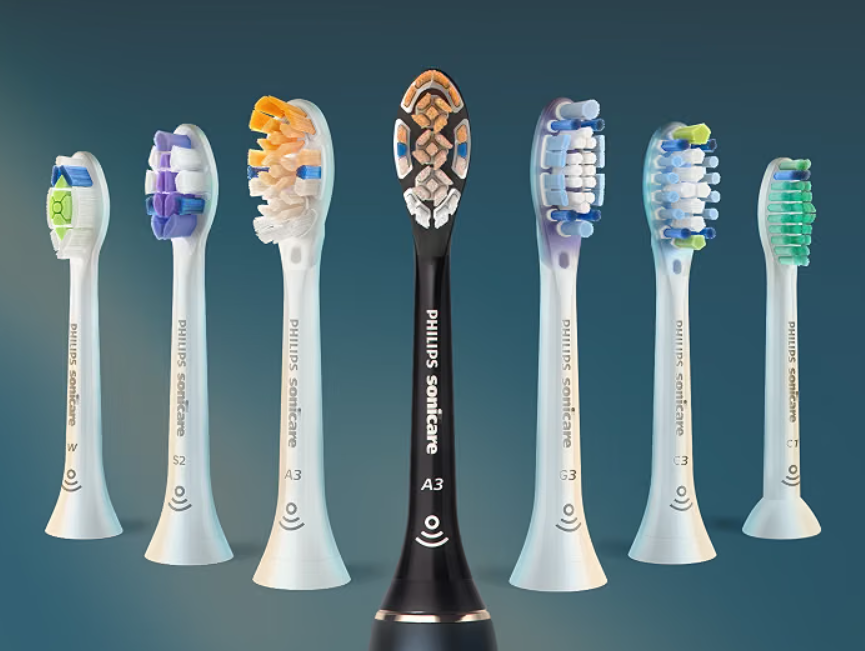
Sonicare Brush Heads Are Normally Consumables
One of the most common misunderstandings involves brush heads.
Brush heads wear down by design.
Their bristles bend. Indicator bristles fade. Cleaning performance gradually decreases. Eventually, we replace them.
That is normal consumption rather than a manufacturing failure in the toothbrush handle.
Philips’ warranty material specifically identifies toothbrush heads as consumable components that are generally excluded from standard warranty protection.
If a brush head looks tired after months of twice-daily brushing, the warranty department is unlikely to treat that the same way it would treat an electronic handle that suddenly died.
Normal Wear and Tear Is Different From a Defect
Imagine using the same pair of running shoes every morning.
After hundreds of kilometres, the soles eventually show wear. We would not usually describe that as a factory defect.
A toothbrush is similar.
Cosmetic scratches, fading, abrasions, minor surface marks, and other expected signs of use may fall under normal wear rather than warranty protection. Older official Sonicare warranty documentation specifically identifies chips, scratches, abrasions, discoloration, and fading among examples of normal wear excluded from coverage.
The key question is whether the product failed because it was defective or simply aged through ordinary use.
Does the Sonicare Warranty Cover Battery Problems?
Battery problems are probably among the biggest concerns owners have with rechargeable toothbrushes.
After all, the battery is the beating heart of the handle. Once it becomes unreliable, even the fanciest Sonicare starts feeling like an expensive bathroom ornament.
A sudden battery-related failure within the warranty period may justify contacting Philips support, particularly when the product cannot charge or operate normally and troubleshooting does not resolve the problem.
Philips explicitly directs users experiencing unresolved charging problems toward its warranty-support process and states on its U.S. troubleshooting page that Sonicare toothbrushes and flossers are backed by a two-year warranty.
Battery Degradation and Battery Failure Are Not Always the Same Thing
Rechargeable batteries naturally lose some capacity as they age.
That means we need to distinguish between gradual battery aging and an abnormal failure.
Suppose a toothbrush originally lasted two weeks between charges and, several years later, now needs charging considerably more often. That could represent normal battery aging.
Now imagine a six-month-old toothbrush that suddenly refuses to charge at all.
Those two situations look very different.
The second case is much more likely to make us investigate warranty eligibility.
Troubleshoot Charging Before Starting the Claim
Before assuming the battery is dead, Philips recommends checking issues such as whether we are using the correct charger and whether the power source is functioning properly. Sonicare chargers are not universally interchangeable across every model.
This is worth doing.
A dead wall outlet can look surprisingly similar to a dead toothbrush.
Does the Philips Sonicare Warranty Cover the Charger?
The answer may depend on the exact model, region, and cause of failure.
Chargers are commonly included with rechargeable Sonicare products, but warranty treatment can vary depending on whether an item is considered part of the covered product, an accessory, or has failed because of damage or misuse.
For that reason, we should not automatically assume that every charger problem receives the same treatment as a defective handle.
The most reliable approach is to locate the model number, identify the charger originally supplied with that model, and start through the official Philips support page.
Philips’ Sonicare support system lets users locate their specific product and access troubleshooting, warranty information, repair information, or the product-exchange process.
Do We Need a Receipt for a Philips Sonicare Warranty Claim?
Proof of purchase is one of the most important pieces of the puzzle.
Philips’ U.S. warranty specifies that the purchase date must be supported by valid proof of purchase.
That proof establishes when the warranty began.
Without it, Philips may have difficulty confirming that the product is still within the qualifying period.
What Can Count as Proof of Purchase?
The exact evidence accepted can vary by market and claim process, but an original store receipt, online retailer invoice, order confirmation, or other legitimate document showing the purchase can be useful.
Whenever we buy an expensive electric toothbrush, keeping a digital copy of the receipt is a smart habit.
Take a photo. Save the PDF. Put it in cloud storage. Email it to yourself.
The receipt seems meaningless on purchase day. Eighteen months later, when the handle suddenly refuses to wake up, it can become the most valuable piece of paper in the bathroom.
Do We Have to Register a Philips Sonicare for the Warranty?
Product registration can be useful, but buyers should distinguish registration requirements from proof-of-purchase requirements.
Philips encourages owners to register Sonicare toothbrushes through its support platform, where registration, product support, troubleshooting, and warranty-related services are available.
Even after registering, however, keeping the original purchase evidence remains sensible because the warranty period is tied to the purchase date.
Why Registration Is Still Worth Considering
Registration may make it easier to keep product information associated with our account and find model-specific support later.
And let’s be realistic: two years is a long time to remember whether the toothbrush under the sink is an HX9911, HX9912, or something completely different.
Registering the device reduces that uncertainty.
How to Make a Philips Sonicare Warranty Claim
The process can differ between countries, but Philips provides model-specific warranty and support tools online.
A sensible claim process looks like this:
| Step | What to Do | Why It Matters |
|---|---|---|
| 1 | Find the exact Sonicare model number | Warranty terms can differ by model |
| 2 | Locate your receipt or purchase evidence | Establishes the warranty start date |
| 3 | Follow Philips troubleshooting guidance | Some problems can be solved without replacement |
| 4 | Visit the Philips support page for your country | Warranty processes vary by region |
| 5 | Select your specific product | Gives access to relevant warranty options |
| 6 | Start the warranty exchange, repair, or contact process | Philips determines the available remedy |
| 7 | Keep claim confirmations and correspondence | Useful until the case is resolved |
Philips’ U.S. Sonicare support page currently provides a warranty-exchange process in which users can search for their toothbrush model and begin a warranty request.
What Information Should We Have Ready?
Before opening the claim, it helps to have the product nearby.
We may need the full model number, purchase date, retailer information, proof of purchase, and a description of the fault.
The clearer the explanation, the easier troubleshooting becomes.
Instead of simply saying, “My toothbrush doesn’t work,” we might explain that the handle no longer switches on, has been charged with its original charger, another outlet was tested, and the problem continues.
That paints a much clearer picture.
Will Philips Repair or Replace a Broken Sonicare?
The available remedy depends on the applicable warranty policy and region.
In the United States, Philips’ personal-care warranty states that the company agrees to replace a qualifying defective product without charge and may refund the purchase price if it cannot provide a replacement.
Other markets may operate differently.
Some Philips support pages refer more broadly to repair, exchange, replacement, or warranty service.
This is why we should avoid assuming that every approved claim automatically results in a brand-new identical toothbrush.
The Replacement May Not Always Be the Exact Same Model
Consumer electronics change quickly.
A Sonicare model sold today may be discontinued before its warranty expires.
If an identical model is unavailable, the resolution may depend on Philips’ applicable warranty procedures and replacement inventory.
The important point is that warranty remedies follow the terms supplied for the product and country rather than whatever outcome we personally prefer.
Does a Warranty Replacement Restart the Two-Year Warranty?
Not necessarily.
This is an especially important detail.
Philips’ regional warranty information for Central America states that replacing or repairing a product within the legal or extended warranty period does not create a new warranty period.
So we should not automatically assume that receiving a replacement after 20 months gives us another full 24 months.
Local consumer law may provide additional rights, and policies differ between countries, so the applicable regional warranty terms should always take priority.
Can Using Non-Philips Brush Heads Affect the Warranty?
This topic deserves caution because warranty language can vary by product and region.
Older official Sonicare warranty documentation states that Philips recommends genuine Sonicare brush heads and warns that damage caused by unauthorized replacement parts or unauthorized brush heads may not be covered.
The important word here is damage.
We should check the specific terms supplied with our model rather than assuming that simply attaching any third-party brush head automatically cancels every aspect of the warranty.
Still, when a third-party accessory physically damages the handle, creates excessive vibration, fits incorrectly, or causes another problem, warranty coverage can become more complicated.
When in doubt, genuine compatible heads provide the simplest route.
What About Accidental Damage?
A standard manufacturer’s warranty is primarily about defects, not accidents.
Philips’ U.S. warranty expressly excludes damage resulting from accidents, misuse, abuse, and lack of reasonable care.
So if we accidentally crush the toothbrush inside luggage, damage it through improper use, or subject it to conditions outside its specifications, a normal warranty claim may not apply.
This is the difference between saying:
“The motor failed during normal use.”
and:
“I dropped it onto a tile floor and now the handle is cracked.”
Both problems leave us with a broken toothbrush, but they have very different warranty stories.
Philips Sonicare Warranty vs. 90-Day Money-Back Guarantee
These two programs are easy to confuse.
They are not the same thing.
A warranty addresses qualifying defects over a defined period. A money-back guarantee lets eligible customers return a qualifying product because they are not satisfied with it, subject to the promotion’s terms.
In the United States, Philips currently advertises a 90-day money-back guarantee for qualifying Sonicare rechargeable products alongside the two-year warranty. The current promotional page says eligible products must be purchased before December 30, 2027 and registered for the promotion before that date, while accessories, parts, brush heads, and certain products are excluded.
That program is promotional and region-specific, so shoppers outside the U.S. should not assume the same offer exists locally.
Does Philips Sonicare Have an Extended Warranty?
In some regions and for selected products, Philips may offer additional warranty benefits or extended coverage.
Philips’ Central America warranty information, for example, states that an extended warranty is available for some selected models and that this additional coverage does not restrict consumers’ statutory warranty rights.
Availability may depend on product registration, promotion, product type, purchase region, or other conditions.
Therefore, if extended coverage is important to us, we should check the specific Sonicare model page and local Philips warranty portal at the time of purchase.
Does the Philips Sonicare Warranty Work Internationally?
We should be careful with this assumption.
Warranty policies, responsible Philips entities, statutory consumer rights, product specifications, and service procedures differ by country.
A toothbrush bought in one country and taken permanently to another may not necessarily receive the same support process that applies in its original market.
Before importing a high-end Sonicare because the price looks irresistible, it is worth checking whether warranty service will be available where we actually live.
Saving $40 on the purchase loses some of its sparkle if a warranty claim later requires navigating another country’s support system.
What Happens if the Warranty Has Expired?
An expired warranty does not automatically mean the toothbrush belongs in the bin.
First, troubleshoot the problem.
Charging failures, brush-head issues, unusual noises, weak vibration, app problems, and other symptoms may have solutions that do not require replacing the handle.
Philips maintains model-specific troubleshooting information, manuals, support articles, and contact channels on its product-support pages.
Depending on the problem and region, repair or replacement options may also exist outside warranty.
Should We Repair or Replace an Older Sonicare?
That comes down to economics.
If we own an entry-level toothbrush that has been used heavily for five years, replacing it may make more sense than investing heavily in repair.
A premium DiamondClean or Prestige model creates a different calculation.
We should consider product age, repair availability, battery condition, replacement cost, and whether newer models provide features we actually care about.
Not every upgrade needs to become an excuse to buy another shiny gadget.
Sometimes the most financially sensible toothbrush is simply the one we already own.
How to Protect Our Sonicare Warranty
Warranty problems are easier to avoid than to solve.
A few habits go a long way.
Keep the receipt. Record the model number. Use the correct charger. Follow the cleaning instructions. Avoid incompatible attachments. Do not expose the charger or electronics to conditions prohibited by the manufacturer. And if the toothbrush begins behaving strangely, investigate early rather than waiting until the warranty expires.
Think of the warranty like an umbrella.
It is wonderfully useful when the rain starts, but only if we remembered where we left it.
Is the Philips Sonicare Warranty Good?
A two-year manufacturer’s warranty on many rechargeable Sonicare toothbrushes gives buyers meaningful protection against qualifying defects during the early life of the product. Philips also provides model-specific troubleshooting and warranty-exchange support in markets such as the United States.
However, we need to understand what the warranty is—and what it isn’t.
It is not unlimited accidental-damage insurance.
It generally does not cover disposable brush heads or routine wear.
It does not guarantee that every battery showing some age-related decline will qualify for replacement.
And warranty terms are not identical worldwide.
The best strategy is simple: check the warranty for our exact Sonicare model and purchase country, keep proof of purchase, and contact Philips promptly if a genuine functional defect appears.
Closing Thoughts on the Philips Sonicare Warranty
The Philips Sonicare warranty is fairly straightforward once we strip away the formal language.
Most rechargeable Sonicare electric toothbrushes come with around two years of manufacturer’s warranty protection, though specific models and regional policies can differ. The warranty generally focuses on defects in materials or workmanship rather than brush-head wear, accidental damage, misuse, or normal cosmetic aging.
Our strongest tools are surprisingly simple: the model number and the receipt.
Keep both.
If the toothbrush suddenly stops charging, refuses to vibrate, or develops another serious fault during the warranty period, follow Philips’ troubleshooting steps and then begin the warranty-support process if the issue remains.
One final reminder: warranty policies can change, and local consumer-protection laws can provide rights beyond a manufacturer’s written warranty. Always verify the current terms for your exact model and country before making a claim.
Frequently Asked Questions About Philips Sonicare Warranty
1. How long is the Philips Sonicare warranty?
Many rechargeable Philips Sonicare toothbrushes come with a two-year limited warranty from the original purchase date. However, some products can have different coverage periods. Philips lists certain models, such as PowerUp or Philips One by Sonicare in some regions, with shorter warranty periods. Always check the documentation for your exact HX model and country.
2. Does Philips Sonicare replace a toothbrush under warranty?
For qualifying claims, replacement is one possible remedy. Philips’ U.S. personal-care warranty states that eligible defective products can be replaced without charge and that Philips may refund the purchase price if it cannot provide a replacement. Procedures can differ elsewhere.
3. Does the Philips Sonicare warranty cover the battery?
A premature internal failure that prevents a qualifying toothbrush from charging or functioning normally may be worth submitting for warranty assessment. Normal rechargeable-battery deterioration from age and use is different from an abnormal defect. Philips recommends troubleshooting charging problems before beginning a warranty request.
4. Are Sonicare brush heads covered by warranty?
Standard replacement brush heads are generally treated as consumables and are normally excluded from Philips’ standard personal-care warranty.
5. Can I claim a Sonicare warranty without a receipt?
Philips’ warranty terms generally require valid proof of purchase to establish that the product is within the qualifying warranty period. For the smoothest claim, keep the original receipt, retailer invoice, or other accepted purchase documentation.