
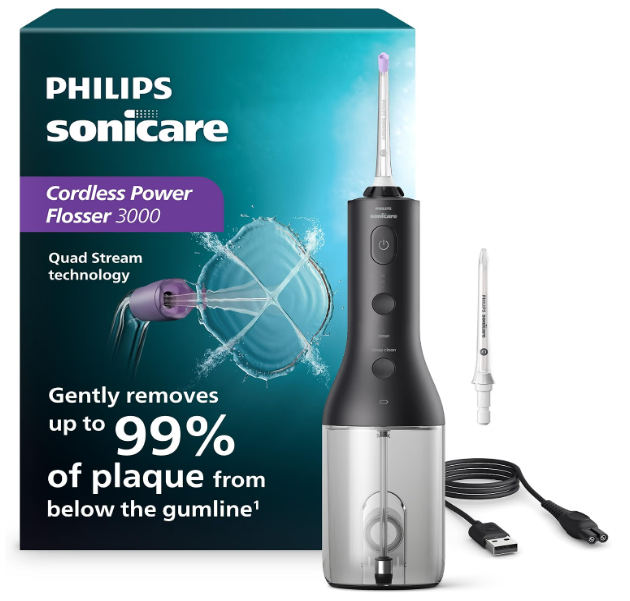
A Philips Sonicare Power Flosser can make daily oral care feel almost effortless—right up until it refuses to cooperate. Maybe the motor runs but no water comes out. Perhaps the pressure suddenly feels weak, the reservoir leaks, the nozzle sprays sideways, or the cordless unit seems completely dead.
That is where Philips Sonicare flosser troubleshooting becomes useful.
Fortunately, many Power Flosser problems are surprisingly simple. A kinked hose, trapped air, incorrectly seated reservoir, clogged nozzle, low battery, or mineral buildup can make a perfectly functional flosser behave as though something serious has failed.
Instead of immediately assuming our Sonicare needs replacing, we can troubleshoot it systematically.
In this guide, we’ll work through the most common Philips Sonicare Power Flosser problems, explain what may be causing them, and show what we can safely try at home. We’ll cover both countertop and cordless models, including Power Flosser 3000, 5000, and 7000 products where applicable.
Philips Sonicare Flosser Troubleshooting: Start With a Quick Diagnosis
Before dismantling anything—or angrily pressing the power button ten more times—we should identify exactly what the flosser is doing.
Different symptoms point toward different causes.
| Problem | Likely Cause | First Thing to Check |
|---|---|---|
| No water coming out | Airlock, clogged nozzle, reservoir issue | Prime the flosser |
| Weak water pressure | Blockage, low setting, mineral buildup | Increase intensity and clean nozzle |
| Flosser won’t turn on | Power or battery problem | Charger/outlet |
| Water leaking | Reservoir/nozzle connection | Locate exact leak |
| Water flow stops intermittently | Mode/pacer or obstruction | Check settings |
| Nozzle sprays incorrectly | Clogged or worn nozzle | Clean or replace nozzle |
| Countertop unit makes noise but no water flows | Pump needs priming | Run at high intensity |
| Cordless unit loses power quickly | Low or aging battery | Fully recharge |
| Hose seems blocked | Kink or internal buildup | Straighten hose |
| Pressure feels too strong | Intensity setting too high | Reduce intensity |
This simple diagnosis saves us from fixing the wrong problem.
Philips Sonicare Power Flosser Has No Water Flow
Probably the most common complaint sounds something like this:
“The Sonicare turns on, but no water comes out.”
The good news? A running motor usually means the unit is receiving power. The problem is often somewhere along the water path.
Check That the Reservoir Contains Enough Water
It sounds obvious, but we should start here.
Fill the reservoir with lukewarm water without exceeding its maximum fill indicator. If we’re using a countertop Power Flosser, make sure the reservoir sits completely on the base.
A reservoir that looks seated but is sitting slightly above its connection may prevent the unit from drawing water correctly.
Philips specifically advises pressing the countertop reservoir firmly into place so there is no gap between the reservoir and base during setup.
Prime the Philips Sonicare Power Flosser
A new Power Flosser—or one that has been sitting unused—can contain air instead of water inside its system.
Think of it like trying to drink through a straw before the liquid reaches the top. The pump may be working perfectly while moving nothing useful.
For applicable countertop Power Flossers, Philips recommends pointing the nozzle toward the sink, putting the handle below the bottom of the reservoir, moving the pause switch to its operating position, setting the intensity to maximum, and allowing the unit to run for up to approximately 30 seconds.
Water should eventually begin flowing.
Why Priming Matters
The pump needs a continuous water path.
Trapped air can interrupt that path, particularly after:
- First-time setup
- Long periods without use
- Cleaning the reservoir
- Transporting the flosser
- Letting the reservoir run completely dry
Once water reaches the pump and hose, normal operation usually resumes.
Check the Pause Switch on Countertop Models
Here is another wonderfully simple problem that can masquerade as a broken flosser.
Certain countertop Sonicare Power Flossers have a pause switch on the handle. The base can be powered on while that switch prevents water from leaving the nozzle.
In other words, we hear the machine and assume water should be blasting out—but the handle is essentially telling the machine to hold its horses.
Make sure the pause control is positioned for water flow.
During initial setup, Philips instructs users to point the nozzle toward the sink and move the pause switch upward to start the stream.
Philips Sonicare Flosser Nozzle May Be Clogged
If the pump operates but water barely emerges—or nothing emerges—the nozzle deserves our attention.
Minerals from water, dried residue, or debris can gradually restrict the tiny water passages.
How to Clean a Blocked Sonicare Flosser Nozzle
Remove the nozzle from the handle and rinse it thoroughly under warm water.
Philips also recommends periodically cleaning clogged Power Flosser nozzles with diluted white vinegar. Its support guidance describes using a mixture of approximately two parts warm water to one part white vinegar before rinsing the nozzle thoroughly afterward.
We should never force needles, pins, or other sharp objects into a nozzle opening. Besides potentially damaging the internal shape, we may turn a minor clog into a permanently distorted spray pattern.
Signs the Nozzle Needs Cleaning
Look for symptoms such as:
- Uneven water streams
- Water shooting sideways
- Noticeably reduced pressure
- Pulsing that feels abnormal
- Delayed water flow
- Complete loss of flow
If cleaning restores normal pressure, we’ve found our culprit.
If not, trying another compatible nozzle can help us determine whether the problem is the nozzle or the flosser itself.
Philips Sonicare Flosser Has Weak Water Pressure
Weak pressure can be particularly confusing because the machine technically works.
The stream simply feels tired.
Before assuming the pump is dying, we should work through the easy possibilities.
Increase the Intensity Setting
Some countertop Sonicare Power Flossers offer multiple intensity levels, with Philips documenting up to 10 intensity settings on applicable models.
Make sure we haven’t accidentally lowered the setting.
If the machine was recently moved or cleaned, a control may simply have been changed.
Test progressively higher settings rather than immediately jumping from gentle pressure to maximum pressure inside the mouth.
Check for Mineral Buildup
Hard water can gradually leave deposits inside water-carrying appliances.
The effect is similar to plaque narrowing a pipe: water still passes through, but less efficiently.
Philips recommends periodic cleaning of Power Flosser internal components using warm water with a small quantity of white vinegar, followed by a complete rinse using clean warm water.
If pressure has gradually weakened over several months rather than collapsing overnight, buildup becomes a particularly reasonable suspect.
Philips Sonicare Power Flosser Hose Is Kinked
This issue applies primarily to countertop models.
Look at the hose connecting the base and handle.
Is it:
- Twisted?
- Folded behind the machine?
- Trapped beneath something?
- Bent sharply near the handle?
- Wrapped too tightly during storage?
A kink acts like stepping on a garden hose.
The pump continues working, but the water has nowhere sensible to go.
Philips’ own no-flow troubleshooting guidance recommends gently stretching the hose to remove possible kinks before testing again.
Do not aggressively pull or stretch the hose. We simply want it to sit naturally without sharp bends.
Philips Sonicare Flosser Won’t Turn On
Now we move from plumbing problems to electrical ones.
If pressing the power button produces no sound, lights, vibration, or pump activity, water flow is no longer our first concern.
Power is.
Troubleshooting a Countertop Sonicare Flosser
For a countertop unit, check:
- The power adapter connection at the flosser.
- The wall socket.
- Any switched outlet controlling that socket.
- Whether a power strip has been turned off.
- Whether the cable shows visible damage.
Testing another working appliance in the same outlet can quickly tell us whether the socket is the problem.
Likewise, moving the flosser to a known working outlet helps isolate the issue.
Never continue using an appliance with damaged electrical components or suspicious water intrusion.
Troubleshooting a Cordless Sonicare Flosser
A cordless model introduces another variable: the battery.
Connect the flosser to its intended charging system and allow it to recharge properly before testing again.
If it has been unused for a long period, a five-minute charge may not tell us much. Give the battery time to recover.
We should also inspect the charging area for:
- Moisture
- Dirt
- Debris
- Damaged cables
- Poor connections
Use the charger or charging arrangement specified for our exact model rather than assuming every Sonicare accessory is interchangeable.
Philips Sonicare Flosser Is Not Charging
When a cordless flosser refuses to charge, we can approach the problem like detectives rather than repeatedly reconnecting the same cable.
First, confirm the outlet works.
Next, check the charging equipment and connection.
Then look at the flosser itself.
Try Another Power Source
A bathroom outlet may be protected by a residual-current or ground-fault system that has tripped.
If the charger seems completely inactive, test another appropriate outlet.
If charging begins elsewhere, the flosser wasn’t the problem.
Inspect the Charger and Connection
Look carefully for bent connectors, unusual looseness, damaged insulation, corrosion, or debris.
We should not attempt homemade electrical repairs on waterproof oral-care devices. Once water, electricity, and improvised repairs enter the same conversation, the sensible answer is professional service.
Philips Sonicare Flosser Leaking Water
Water flossers contain water, so finding a little moisture around them doesn’t automatically indicate failure.
The important question is:
Where exactly is the water coming from?
Small Amount of Water Near the Cordless Nozzle Release
On certain Cordless Power Flosser models, Philips explains that water draining through the hole below the nozzle-release button is normal. The opening allows unused water to drain from the nozzle area.
That means a few drops there shouldn’t immediately send us shopping for a replacement.
Water Leaking From the Base
This deserves more attention.
If water appears to be leaking from the bottom of the unit itself rather than from an expected drainage point or removable reservoir, stop and inspect it carefully.
Philips states that water leaking from the bottom of the Power Flosser base while the tank is being filled may indicate internal damage and advises stopping use and contacting support.
We shouldn’t attempt to seal a suspicious internal leak with glue, tape, silicone, or similar DIY fixes.
Water eventually finds its way around temporary patches.
Check the Reservoir First
Before concluding the housing is broken, remove and reinstall the reservoir.
Make sure:
- It sits correctly.
- It isn’t overfilled.
- No visible crack is present.
- The connection area is clean.
- Nothing is preventing it from seating completely.
Dry the entire unit first, refill it, and observe where fresh water appears. That makes the true source much easier to locate.
Philips Sonicare Flosser Stops or Pauses During Use
An intermittent pause isn’t always a malfunction.
Some Power Flosser modes intentionally change water delivery as part of their pacing system.
Philips describes a pacer feature on applicable models that briefly interrupts flow at intervals to signal that it’s time to move to another section of the mouth.
That tiny hesitation is intentional.
A longer, unpredictable shutdown is different.
When the Pause Is Probably Normal
We are probably seeing normal behavior when:
- The pause repeats consistently.
- The unit immediately resumes.
- No warning light appears.
- Water pressure remains normal.
- The same behavior occurs at predictable intervals.
When the Pause May Signal a Problem
Investigate further when:
- The machine completely shuts down.
- It requires restarting.
- Pressure fades before stopping.
- The battery indicator suggests low power.
- The motor sound changes dramatically.
- The hose collapses or kinks.
Consistency is the clue. Features behave predictably; faults generally don’t.
Philips Sonicare Flosser Sprays Everywhere
Sometimes the flosser works too enthusiastically.
Before blaming the machine for redecorating the bathroom mirror, check technique and nozzle condition.
Philips recommends positioning applicable Power Flosser nozzles approximately 90 degrees to the gumline and leaning over the sink so excess water can drain from the mouth.
Put the nozzle in position before starting the stream whenever the operating instructions for our model call for it.
If the water exits the nozzle sideways even when pointed into the sink, clean the nozzle.
A distorted spray after cleaning may mean the nozzle itself needs replacement.
Philips Sonicare Quad Stream Nozzle Not Working Properly
The Quad Stream nozzle intentionally creates a broader pattern than a conventional single-stream nozzle.
That wider flow shouldn’t be confused with a faulty nozzle.
However, the streams should still behave consistently.
If one section becomes noticeably weaker, the nozzle may contain buildup.
Remove it, rinse it thoroughly, and perform the manufacturer-recommended cleaning procedure.
Philips currently lists F1 Standard, F2 Comfort, and F3 Quad Stream nozzle types for various Power Flosser models and notes that compatible Sonicare Power Flosser nozzles should be used rather than assuming unrelated nozzle systems will fit.
Philips Sonicare Flosser Nozzle Keeps Coming Off
A nozzle should sit securely once installed.
If it repeatedly detaches, begin by removing it and reinstalling it carefully.
On applicable countertop models, Philips instructs us to press the nozzle into the handle until it clicks into place.
Also make sure we aren’t accidentally touching the nozzle-release control while using the handle. Philips specifically cautions against unintentionally pressing the eject button during use.
If multiple compatible nozzles refuse to remain attached, the handle’s retaining mechanism may require service.
Sonicare Power Flosser Makes a Strange Noise
Water flossers aren’t silent. Pumps naturally produce mechanical sound and vibration.
What matters is whether the noise has changed.
A louder, rougher, or unusually high-pitched sound accompanied by reduced water flow often points us toward the water supply rather than immediately toward motor failure.
Check:
- Reservoir water level
- Reservoir seating
- Hose position
- Nozzle blockage
- Whether the system needs priming
A pump attempting to move air can sound very different from one moving water.
If the noise remains abnormal even with strong, consistent water flow, discontinue use if we suspect internal mechanical damage and consult Philips support.
How to Clean a Philips Sonicare Flosser When Troubleshooting
Cleaning isn’t merely cosmetic.
A clean water path is part of troubleshooting.
Clean the Reservoir
Empty leftover water after use and rinse the reservoir.
For applicable countertop models, Philips says the removable reservoir can be washed by hand with warm water and mild soap, with dishwasher cleaning supported for certain reservoirs according to its cleaning instructions.
Always follow the manual for the exact model before placing components in a dishwasher.
Clean the Nozzle
Remove the nozzle and rinse it under warm water.
Periodic vinegar cleaning can help tackle mineral buildup.
After any vinegar treatment, rinse thoroughly.
Nobody wants their morning oral-care routine tasting like salad dressing.
Flush the Internal Water Path
For deeper maintenance, Philips describes cleaning applicable Power Flossers by running diluted white vinegar and warm water through the internal system, then repeating the process with clean warm water to rinse it.
This can be particularly helpful when pressure has slowly declined.
What We Should Avoid
Avoid experimenting with harsh household chemicals.
We shouldn’t use substances simply because they dissolve mineral deposits in a kitchen or bathroom. The Power Flosser is an oral-care device with seals, tubing, plastics, and components designed for specific cleaning methods.
When in doubt, stick to the cleaning instructions provided for the exact model.
Resetting a Philips Sonicare Power Flosser
People often search for a mysterious universal “Sonicare Flosser reset.”
In many cases, there isn’t a magical reset sequence that repairs blocked plumbing, a depleted battery, or a damaged pump.
A practical restart is still worth trying.
Turn the unit off, disconnect it from power when applicable, empty and reseat the reservoir, reconnect everything, and restart it.
For a cordless model, fully charge it before testing.
If the symptom involves water flow, prime the system afterward.
Think of restarting as clearing the starting conditions—not repairing hardware.
Philips Sonicare Power Flosser Modes Seem Wrong
Different Sonicare Power Flossers can include different operating modes.
Philips documents combinations such as Clean, Deep Clean, Sensitive, and Massage/Gum Health depending on the model and market.
That matters because pulsing behavior may change between modes.
If the water suddenly feels different, check which mode is selected before assuming pressure has failed.
A family member may have changed it. We may have pressed a button accidentally. Sometimes the “malfunction” is simply a setting we forgot existed.
Philips Sonicare Flosser Troubleshooting After Long-Term Storage
A flosser that worked six months ago may behave strangely when pulled from a cabinet today.
Water left inside can evaporate. Mineral deposits can harden. A cordless battery may be deeply discharged.
Our recovery sequence should be simple:
- Inspect the unit for visible damage.
- Clean and rinse the reservoir.
- Install a clean compatible nozzle.
- Fully charge a cordless model.
- Fill with fresh lukewarm water.
- Prime the water system.
- Test at the sink before using it in the mouth.
- Clean the internal water path if flow remains weak.
We shouldn’t rush straight to maximum-pressure oral use after months of inactivity. Test the machine first.
When Should We Replace the Sonicare Flosser Nozzle?
Cleaning cannot make a nozzle immortal.
With continued use, nozzle surfaces and internal passages can eventually wear or become difficult to keep clean.
Philips currently recommends replacing compatible Power Flosser nozzles about every six months.
Earlier replacement makes sense if the nozzle:
- Cracks
- Becomes damaged
- No longer attaches securely
- Produces an abnormal stream despite cleaning
- Shows obvious wear
A replacement nozzle is also an excellent diagnostic tool. If a new compatible nozzle immediately restores pressure, we have isolated the problem without touching the pump.
When Philips Sonicare Flosser Troubleshooting Doesn’t Work
Eventually we reach the point where troubleshooting becomes repair work.
That distinction matters.
If we’ve confirmed that the reservoir is seated, water is available, the hose isn’t kinked, the nozzle is clear, the system is properly primed, and power is reaching the unit—but the flosser still refuses to pump—an internal fault becomes more plausible.
Philips itself recommends repair or exchange when its prescribed no-water troubleshooting process fails.
Stop Troubleshooting and Contact Support If
We should seek manufacturer support when:
- Water leaks from an electrical/base area.
- The power cable is damaged.
- The housing is cracked.
- The unit smells burnt.
- The pump repeatedly stops.
- A fully charged cordless unit immediately dies.
- The machine won’t power on from a confirmed working supply.
- Water still won’t flow after priming and cleaning.
- Multiple compatible nozzles produce the same failure.
At that stage, opening the housing ourselves may create more problems than it solves.
A Simple Philips Sonicare Flosser Troubleshooting Order
When we want the fastest possible diagnosis, use this sequence:
- Check power or battery.
- Fill the reservoir correctly.
- Reseat the reservoir.
- Check the handle pause control if equipped.
- Straighten the countertop hose.
- Prime the water system.
- Increase pressure temporarily for testing.
- Remove and clean the nozzle.
- Try another compatible nozzle.
- Clean the internal water path.
- Check for abnormal leaks.
- Contact Philips if the problem remains.
Why this order?
Because it moves from easy, reversible causes toward more serious ones.
There is little point worrying about a failed pump before checking whether a kinked hose has turned our sophisticated oral irrigator into an expensive water bottle.
How to Prevent Future Philips Sonicare Flosser Problems
The easiest malfunction to fix is the one we prevent.
A few habits can dramatically reduce headaches.
Empty stale water rather than leaving the reservoir full for extended periods. Rinse the nozzle regularly. Keep the unit clean and dry externally. Avoid sharply bending countertop hoses. Periodically clean mineral buildup according to Philips’ instructions. Replace worn nozzles rather than forcing damaged ones to continue working.
For cordless versions, recharge the battery appropriately instead of storing the unit dead for extended periods.
And perhaps most importantly, pay attention to gradual changes.
A pressure drop that happens slowly over three months is useful information. It points toward buildup much more strongly than a machine that worked perfectly yesterday and is completely dead today.
Final Thoughts on Philips Sonicare Flosser Troubleshooting
A malfunctioning Power Flosser can feel complicated because electricity, pumps, tubing, pressure controls, batteries, reservoirs, and nozzles all meet in one small appliance.
But Philips Sonicare flosser troubleshooting becomes much easier when we divide the system into three simple questions:
Does it have power?
Can water reach the pump?
Can water move freely through the nozzle?
If the answer to all three is yes, we’re already close to finding the problem.
No water flow often traces back to priming, reservoir seating, a pause control, hose restriction, or a clogged nozzle. Weak pressure frequently points toward settings or buildup. Some small amounts of drainage can be normal, while leakage from the base deserves much more attention.
We don’t need to attack every possible cause simultaneously. Work methodically, test after each adjustment, and stop once the problem disappears.
That’s the real trick.
Troubleshooting shouldn’t resemble throwing darts in the dark. It should feel more like following water through a pipe—one connection at a time.
Frequently Asked Questions
Why is my Philips Sonicare flosser running but no water comes out?
The system may need priming, the reservoir may not be seated correctly, the handle pause switch may be stopping the flow, the hose may be kinked, or the nozzle may be clogged. Start by confirming the water supply and connections, then prime the flosser and clean the nozzle.
How do we unclog a Philips Sonicare Power Flosser?
Remove and rinse the nozzle under warm water. Philips recommends diluted white vinegar as part of periodic nozzle and internal-system cleaning for applicable Power Flosser models. Rinse everything thoroughly with clean warm water afterward.
Why does my Sonicare Power Flosser have weak pressure?
Check the intensity setting first. If it is already appropriately high, inspect the nozzle and hose for restrictions. Mineral deposits inside the water path can also gradually reduce performance, so manufacturer-recommended cleaning may help.
Is it normal for a Philips Sonicare cordless flosser to leak a little water?
It depends on where the water appears. Philips states that on certain Cordless Power Flosser models, a small amount of water draining from the hole below the nozzle-release button is normal. Leakage from the base or damaged housing is a different situation and should be investigated.
When should we replace a Philips Sonicare Power Flosser instead of troubleshooting it?
Consider professional service or replacement when the machine has an internal leak, electrical damage, a persistent charging or power failure, or no water flow after the reservoir, nozzle, hose, settings, and priming procedure have all been checked. If the unit remains under warranty, contact Philips before attempting internal repairs.