
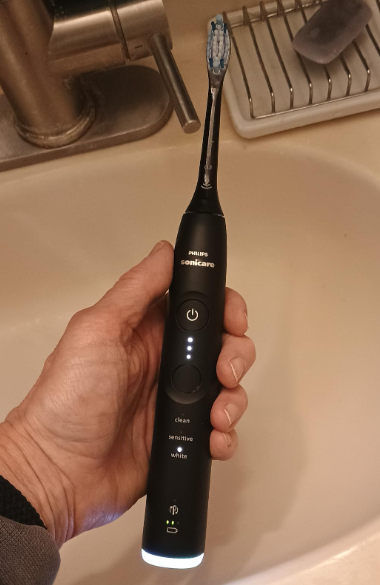
A standard adult toothbrush is usually about 7 to 8 inches long, although its exact length depends on the brand, handle design, brush-head shape, and whether it is manual or electric.
Children’s toothbrushes are generally shorter, often measuring approximately 5 to 7 inches, while many electric toothbrushes measure around 8 to 10 inches tall once the removable brush head is attached. Some powered models can be even taller, particularly when they have a thick handle, extended neck, or charging attachment.
So, how many inches is a toothbrush? There is no single universal measurement, but most everyday toothbrushes fall comfortably between 5 and 10 inches in total length.
That might sound like a wide range. However, comparing a toddler’s tiny brush with a full-sized electric toothbrush is a little like comparing a teaspoon with a serving spoon. Both perform similar jobs, but they are designed for different users, spaces, and movements.
In this guide, we will examine average toothbrush dimensions, compare adult and children’s models, explain how to measure a toothbrush accurately, and discuss why brush size matters more than we might initially think.
How Many Inches Is a Standard Toothbrush?
Most standard manual toothbrushes for adults measure approximately 7 to 8 inches from the bottom of the handle to the tip of the brush head.
A particularly compact travel toothbrush might be shorter than 7 inches, while a toothbrush with an extended or highly curved handle could exceed 8 inches. Manufacturers do not have to make every model the same length, so small variations are perfectly normal.
As a practical rule, we can use these approximate measurements:
| Toothbrush type | Typical total length |
|---|---|
| Toddler toothbrush | 5 to 6 inches |
| Children’s toothbrush | 5.5 to 7 inches |
| Adult manual toothbrush | 7 to 8 inches |
| Travel toothbrush | 4 to 7 inches |
| Electric toothbrush with head | 8 to 10 inches |
| Electric toothbrush handle only | 7 to 8.5 inches |
These figures should be treated as general ranges rather than strict manufacturing standards. Toothbrush designs vary considerably, especially among electric models.
For example, one independently measured Oral-B Pro electric toothbrush was approximately 9.1 inches tall with its brush head attached and about 7.7 inches without the head. This provides a useful real-world example of why electric toothbrushes often look and feel taller than manual brushes.
The Quick Answer in Inches and Centimeters
For anyone who simply needs a fast conversion, here is the basic answer:
- A 7-inch toothbrush is about 17.8 centimeters
- An 8-inch toothbrush is about 20.3 centimeters
- A 9-inch electric toothbrush is about 22.9 centimeters
- A 10-inch electric toothbrush is about 25.4 centimeters
One inch equals exactly 2.54 centimeters. Therefore, we can convert a toothbrush measurement from inches to centimeters by multiplying the number of inches by 2.54.
For example:
7.5 inches × 2.54 = 19.05 centimeters
That means a typical 7.5-inch manual toothbrush is roughly 19 centimeters long.
Why Toothbrushes Do Not Have One Standard Length
At first glance, toothbrushes appear fairly uniform. We see a handle, a narrow neck, and a bristled head. Look closer, though, and the differences become surprisingly obvious.
Some handles are straight and thin. Others are curved, rubberized, wide, flexible, or sculpted to fit the fingers. Some brush heads are narrow and rectangular, while others are rounded, oval, angled, or circular.
These design choices affect total length.
Handle Shape Changes the Measurement
A longer handle may offer more leverage and make it easier to reach the back teeth. A shorter handle may feel more controllable, particularly for children or people with smaller hands.
Manufacturers also shape handles to improve grip. Rubber panels, thumb rests, flexible necks, and raised sections can increase width without necessarily increasing length.
The best handle is not automatically the longest one. It is the one we can hold securely and maneuver without squeezing too hard.
Brush-Head Design Affects Overall Length
A manual toothbrush usually has its brush head permanently connected to the handle. Its total measurement includes the complete head, neck, and grip.
Electric toothbrushes are different. The brush head is normally detachable and adds several inches to the motorized handle. As a result, the same electric toothbrush can have two valid measurements:
- The height of the handle alone
- The height of the complete toothbrush with its head attached
When shopping online or choosing a travel case, we should check which measurement the seller provides.
Age-Specific Designs Create More Variation
A toddler cannot comfortably use the same brush as a fully grown adult. Children’s toothbrushes therefore tend to have:
- Shorter handles
- Smaller brush heads
- Softer bristles
- Wider grips
- Rounded edges
- Lightweight construction
The American Dental Association advises caregivers to use a child-sized toothbrush with soft bristles and a head small enough to move easily around the child’s mouth and reach every tooth surface.
That guidance focuses less on an exact number of inches and more on practical fit. After all, a brush can look perfectly sized on a ruler yet feel awkward inside a particular mouth.
How Long Is an Adult Manual Toothbrush?
An adult manual toothbrush is commonly 7 to 8 inches long. Many everyday models sit near the middle of that range at approximately 7.5 inches.
The length is generally divided among three main areas:
- The handle
- The narrow neck
- The bristled head
The handle accounts for most of the brush’s total length. The head is usually only around an inch long, although compact and full-sized heads differ.
Oral-B notes that compact toothbrush heads are smaller and contain fewer bristles than full-sized heads. People with small mouths may find a compact head easier to move around difficult areas.
This distinction is important because two toothbrushes can have similar total lengths while feeling completely different in the mouth. A brush with a long handle and compact head might be far easier to control than a shorter brush with a bulky head.
Is an Eight-Inch Toothbrush Too Long?
No. An 8-inch toothbrush is within the normal adult range.
It may feel large to someone with small hands, but length alone does not determine comfort. Handle thickness, weight distribution, neck angle, and brush-head size can make a bigger difference.
An 8-inch toothbrush with a slim handle may feel lighter and more precise than a 7-inch toothbrush with a thick rubber grip.
Is a Seven-Inch Toothbrush Full-Sized?
Yes. A 7-inch toothbrush can still be considered a full-sized adult toothbrush.
“Full-sized” often refers to the brush head rather than the total length of the product. Therefore, we should not assume that a 7-inch brush has a compact head or that an 8-inch brush has a large one.
Reading the package or product description gives us a clearer answer.
How Many Inches Is a Children’s Toothbrush?
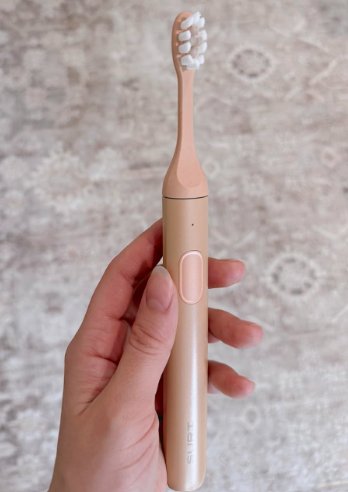
A children’s toothbrush commonly measures between 5.5 and 7 inches, depending on the age group for which it was designed.
Toddler brushes are usually near the lower end of this range. Brushes for older children may be almost as long as adult brushes but still have smaller heads and easier-to-grip handles.
Children’s toothbrushes come in different shapes and sizes because a child’s hands, coordination, teeth, and mouth continue changing while they grow.
A typical breakdown might look like this:
Toddler Toothbrush Length
A toddler toothbrush is often approximately 5 to 6 inches long.
Its handle may be short but relatively wide. That chunky shape helps a young child hold the brush, although an adult will usually perform or closely supervise the brushing.
The head should be very small and easy to guide around newly erupted teeth.
Toothbrush Length for Ages Three to Six
A brush for children between approximately three and six years old may measure 5.5 to 6.5 inches.
At this stage, the handle often includes:
- A non-slip grip
- A thumb guide
- Bright characters or patterns
- A suction-cup base
- An age recommendation
These features can affect the total dimensions without changing the brush’s cleaning ability.
Toothbrush Length for Older Children
Children between roughly six and twelve years old may use brushes measuring around 6 to 7 inches.
Their brushes begin to resemble adult models but usually retain a smaller head and softer, child-friendly design. Manufacturers often print an age range on the packaging, which is generally more useful than choosing purely by total length.
When Can a Child Use an Adult Toothbrush?
There is no magical birthday when every child suddenly needs an adult brush.
A child may be ready when the adult brush head fits comfortably, reaches the rear teeth, and can be controlled without causing gagging or missing surfaces. Until then, a child-sized brush remains the more practical choice.
The mouth should guide the decision—not the calendar alone.
How Many Inches Is an Electric Toothbrush?
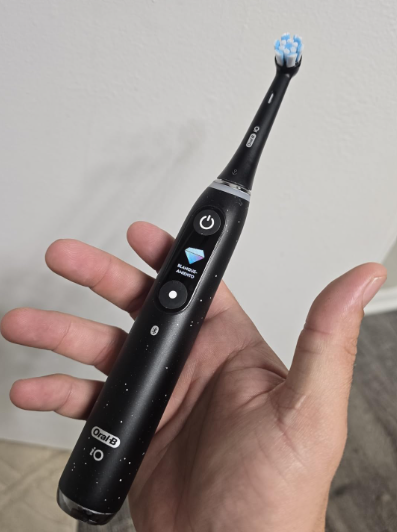
A complete electric toothbrush commonly measures approximately 8 to 10 inches tall with its replacement head attached.
The handle alone is often around 7 to 8.5 inches, although compact battery-powered brushes can be shorter.
Electric models are generally larger because the handle must contain some combination of:
- A motor
- A rechargeable battery
- Electronic controls
- A pressure sensor
- Indicator lights
- A display
- Wireless components
It is essentially a miniature appliance dressed as a toothbrush.
Some electric toothbrushes are close to 10 inches in height, and product testing has found certain tall models measuring about 10 inches before being placed on their charging bases.
Round-Head Electric Toothbrush Dimensions
Electric toothbrushes with small circular heads often have thick, cylindrical handles. The round head may be compact inside the mouth, even though the complete brush is relatively tall.
This combination can work well for people who want a small cleaning head but do not mind holding a heavier handle.
Sonic Toothbrush Dimensions
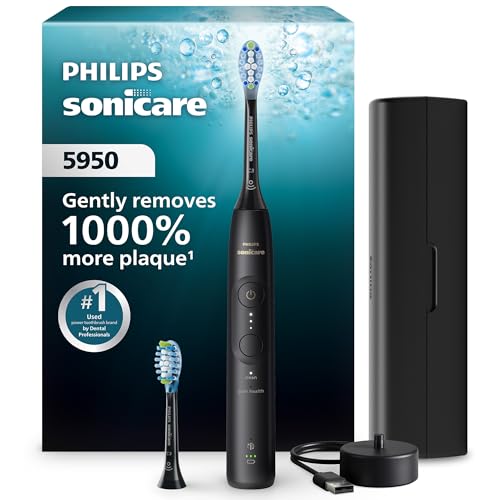
Sonic toothbrushes commonly have elongated brush heads resembling those on manual toothbrushes. Their handles tend to be slim, although they still contain a battery and motor.
Many complete sonic brushes fall around 9 to 10 inches tall, but individual models vary.
Does the Charging Base Count?
Normally, no.
When measuring a toothbrush, we usually measure only the brush itself. The charging base is considered a separate accessory.
However, the total standing height of the brush on its charger may matter when placing it under a bathroom shelf or inside a cabinet. In that situation, we should measure:
- The charging base
- The toothbrush standing on the base
- Any required clearance for lifting the brush
A toothbrush that technically fits beneath a shelf may still be impossible to remove unless we leave extra space above it.
Manual vs. Electric Toothbrush Size
Manual and electric toothbrushes are designed around different mechanical needs.
A manual toothbrush can remain thin because our hand supplies all the movement. An electric toothbrush needs a larger body because its motor produces the cleaning action.
| Feature | Manual toothbrush | Electric toothbrush |
|---|---|---|
| Typical length | 7–8 inches | 8–10 inches |
| Handle width | Slim | Medium to thick |
| Weight | Very light | Heavier |
| Brush head | Fixed | Usually removable |
| Travel space | Minimal | More space required |
| Charging equipment | None | Often required |
| Internal components | None | Motor and battery |
Neither size is automatically better.
A manual toothbrush is easier to pack, replace, and store. An electric brush may offer timers, pressure feedback, or powered movement, but it occupies more room on the countertop.
The ideal choice depends on how the brush feels in our hand and whether its head can reach every area comfortably.
How Long Is a Travel Toothbrush?
A travel toothbrush can measure anywhere from approximately 4 to 7 inches, depending on its design.
Some travel models fold in half. Others have a removable head or a cap that becomes part of the handle. A full-sized manual toothbrush may also be marketed as travel-friendly simply because it includes a protective cover.
Foldable Travel Toothbrushes
A folding toothbrush may be only 4 to 5 inches long when closed and approximately 6 to 7 inches when opened.
This is useful when every inch of luggage space matters. The folding design protects the bristles and prevents the brush from rubbing against other bathroom items.
However, we should allow the brush to dry whenever possible. Closing a damp brush immediately can trap moisture inside the cover.
Electric Travel Toothbrushes
Electric brushes may remain 8 to 10 inches tall, but their travel cases often add considerable width and length.
A case may need space for:
- The toothbrush handle
- One or more brush heads
- A charging cable
- A plug adapter
- A protective cap
When buying a replacement case, measuring the brush ourselves is often safer than relying on a generic “universal” label.
How Big Is a Toothbrush Head?
Although the entire brush may be 7 or 8 inches long, the brush head is far smaller.
An adult manual brush head is often roughly:
- 1 to 1.25 inches long
- 0.4 to 0.6 inches wide
- Less than an inch tall when the bristles are included
Children’s heads are typically shorter and narrower. Round electric heads may be close to an inch in diameter.
These measurements vary by design, and there is no perfect head size for every person.
Dental guidance consistently emphasizes maneuverability. The head should be small enough to reach all tooth surfaces, especially the rear molars. Oral-B similarly recommends choosing a head small enough to clean every surface effectively and a handle that is comfortable to hold.
Why a Smaller Head Can Be Helpful
A small head may make it easier to clean:
- Behind the final molars
- Along crowded teeth
- Around braces
- Near wisdom teeth
- Along the inside surfaces of front teeth
- Inside a small or narrow mouth
A larger head may cover more surface with each stroke, but speed means little when the brush cannot reach the target.
Think of it like cleaning a narrow window frame. A broad sponge covers the glass quickly, but a small brush reaches the corners.
Can a Toothbrush Head Be Too Small?
It can feel too small for some users, particularly those with large mouths who prefer broader coverage.
However, a small head is not inherently ineffective. It may simply require slightly more deliberate positioning.
The quality of brushing depends heavily on reach, technique, pressure, brushing time, and consistency—not just the number of bristles touching the teeth at once.

![IONIC KISS Ionic Toothbrush [Body] with Superfine Soft Bristles E...](https://m.media-amazon.com/images/I/313tIw9EPBL._AC_.jpg)
How to Measure a Toothbrush Correctly
Measuring a toothbrush is simple, but we need to decide which dimension we actually require.
For total length, follow these steps:
- Place the toothbrush on a flat surface.
- Straighten it naturally without bending the neck.
- Position the zero mark of a ruler at the bottom of the handle.
- Measure to the highest point of the brush head or bristles.
- Record the result in inches.
- Measure the width at the widest part of the handle if needed.
For an electric toothbrush, take separate measurements with and without the head.
Measuring a Curved Toothbrush
If the handle is curved, we normally measure the straight-line distance from one end to the other.
This is the most useful measurement for:
- Storage drawers
- Travel cases
- Product packaging
- Cabinet clearance
- Shipping boxes
Measuring along every curve would produce a longer number, but it would not tell us whether the toothbrush fits inside a straight case.
Measuring for a Toothbrush Holder
Length is not the only dimension that matters.
To determine whether a brush fits a holder, measure:
- Maximum handle width
- Maximum handle depth
- Diameter near the base
- Height of the holder
- Space between slots
A manual toothbrush may fit through a narrow holder opening, while a thick electric handle may not.
Do Not Forget the Brush Head
The handle may fit perfectly while the brush heads collide with one another.
Leave enough spacing to prevent wet bristles from touching neighboring brushes. This also helps airflow reach each head.
Does Toothbrush Length Affect Cleaning?
Total length has little direct effect on how well a toothbrush removes debris or plaque.
A longer brush does not automatically clean more deeply, just as a longer pen does not write better sentences.
What matters is whether the design allows us to:
- Reach the rear teeth
- Control the brush accurately
- Hold it without discomfort
- Apply gentle pressure
- Angle the bristles properly
- Brush for the recommended amount of time
Colgate notes that a small toothbrush head can improve access to different areas of the mouth, while soft bristles are generally recommended for removing plaque and food debris without unnecessary harshness.
Long Handles May Improve Reach
A slightly longer handle can make it easier to reach the back of the mouth, particularly for an adult assisting a child or caregiver helping another person.
A long handle can also improve leverage, but too much leverage may encourage excessive pressure.
Short Handles May Improve Control
A compact handle can feel precise and balanced. This can be useful for children, travelers, or anyone who prefers holding the brush close to its neck.
However, a handle that is too short may disappear into a large hand and become difficult to maneuver.
The goal is balance: enough length for reach, enough grip for control.
What Toothbrush Size Is Best for a Small Mouth?
For a small mouth, we should focus primarily on the head size, not the overall number of inches.
A 7.5-inch brush with a compact head may be more suitable than a 7-inch brush with a broad head.
Look for descriptions such as:
- Compact head
- Small head
- Sensitive head
- Precision head
- Child-sized head
- Slim neck
Compact heads are often preferred by people who gag easily or struggle to clean behind the final molars.
A small head should still have a comfortable arrangement of soft bristles and a neck long enough to reach the rear teeth.
What Toothbrush Size Is Best for Large Hands?
People with large hands may prefer a handle that is:
- Longer
- Wider
- Textured
- Slightly heavier
- Rubberized
- Contoured around the thumb
A thin manual brush can be modified with an adaptive grip or handle sleeve. This may also help people with arthritis, reduced dexterity, or difficulty closing their fingers tightly.
An electric toothbrush naturally has a thicker handle, which some users find easier to hold. Others find the added weight tiring.
The better option is the one we can control gently for the complete brushing session.
Can Toothbrush Size Trigger Gagging?
Yes, a toothbrush that feels too large—especially at the head—may contribute to gagging.
This is more likely when:
- The head touches the rear of the tongue
- The neck is unusually thick
- Too much toothpaste creates foam
- The brush is pushed too far backward
- The user is anxious or brushing too aggressively
Switching to a compact head may help. Brushing slowly, breathing through the nose, and beginning with the front teeth can also make the experience less overwhelming.
Persistent or severe gagging should be discussed with a dentist or healthcare professional, particularly when it interferes with effective oral hygiene.
How Toothbrush Size Influences Storage
A toothbrush seems small until we try to fit several of them into a crowded bathroom drawer.
Before choosing a storage solution, consider:
- Total brush length
- Handle diameter
- Brush-head width
- Charger dimensions
- Cable length
- Ventilation
- Shelf clearance
An 8-inch drawer may not hold an 8-inch toothbrush comfortably because the interior space can be smaller than the drawer’s outside measurement.
Electric toothbrushes often require vertical storage. If the brush is 9.5 inches tall, we may want at least 11 inches of clearance so it can be lifted from the charger easily.
How Long Is a Toothbrush Package?
A toothbrush package is usually longer than the toothbrush itself.
A 7.5-inch manual brush might come in packaging measuring 9 to 10 inches or more. The extra room accommodates:
- Hanging tabs
- Protective plastic
- Branding
- Instructions
- Tamper-resistant seals
Electric toothbrush packaging is substantially larger because it may contain the charger, replacement heads, travel case, instructions, and accessories.
Do not use package dimensions as the toothbrush’s actual dimensions. Product listings sometimes display shipping-box measurements rather than the size of the device, which can produce wildly misleading results.
How to Choose the Right Toothbrush Length
There is no reason to search for one mathematically perfect length. Instead, we can use a simple checklist.
Choose a toothbrush that:
- Reaches the back teeth without straining the wrist.
- Has a head small enough to move around every tooth.
- Feels balanced rather than top-heavy.
- Fits securely in the hand.
- Does not cause gagging.
- Fits the available storage or travel case.
- Uses soft bristles unless a dental professional recommends otherwise.
- Can be moved gently without excessive pressure.
A toothbrush is a daily tool, not a decorative ruler. Comfort and access matter more than whether it measures exactly 7.2 or 7.8 inches.
Signs Your Toothbrush May Be Too Large
A toothbrush may be too large when:
- It repeatedly hits the opposite side of the mouth
- The head cannot reach behind the back molars
- Brushing causes gagging
- The handle feels clumsy
- The user skips difficult areas
- The head rubs against the cheeks
- A child cannot control it
Signs Your Toothbrush May Be Too Small
It may be too small when:
- The handle is difficult to grip
- Fingers slide toward the brush head
- The user needs to bend the wrist excessively
- Brushing feels slow or awkward
- The handle disappears inside the palm
- It lacks sufficient reach for assisted brushing
Common Objects About the Same Length as a Toothbrush
It can be easier to imagine toothbrush size by comparing it with familiar objects.
A standard 7- to 8-inch manual toothbrush is roughly comparable to:
- A standard wooden pencil
- A large dinner knife handle
- A small television remote
- The long side of a letter-sized sheet divided into thirds
- Two credit cards placed end to end, with some overlap
An electric toothbrush measuring 9 to 10 inches may be closer in height to:
- A tall drinking glass
- A small kitchen utensil
- A compact reusable water bottle
- A sheet of paper measured along its shorter side
These comparisons are approximate, but they help when we do not have a ruler nearby.
Final Thoughts: How Many Inches Is a Toothbrush?
So, how many inches is a toothbrush?
A typical adult manual toothbrush is approximately 7 to 8 inches long. A children’s brush usually measures around 5 to 7 inches, while a complete electric toothbrush is often 8 to 10 inches tall.
Those ranges give us a helpful starting point, but they do not tell the entire story.
The size of the brush head, the thickness of the handle, the angle of the neck, and the overall balance can influence comfort more than total length. A toothbrush should feel like an extension of the hand—easy to guide, light enough to control, and small enough to explore every corner of the mouth.
When choosing a toothbrush, we should not chase a precise number simply because it sounds standard. Instead, we should choose the brush that reaches every tooth, feels comfortable, and encourages us to brush consistently.
After all, even the most advanced toothbrush cannot help much if it stays untouched beside the sink.
Frequently Asked Questions
1. How long is a regular toothbrush in inches?
A regular adult manual toothbrush is usually around 7 to 8 inches long. Some compact models are slightly shorter, while brushes with extended handles may be longer.
2. How many inches is an electric toothbrush?
Most electric toothbrushes measure approximately 8 to 10 inches with the brush head attached. The handle alone is commonly around 7 to 8.5 inches.
3. How long is a child’s toothbrush?
A child’s toothbrush is generally about 5.5 to 7 inches long. Toddler models may be closer to 5 inches, while brushes for older children can approach adult length.
4. Is toothbrush length important?
Length affects grip, reach, storage, and comfort, but it does not directly determine cleaning quality. Brush-head size, soft bristles, access to all teeth, gentle pressure, and good technique matter more.
5. What size toothbrush should an adult use?
Most adults can use a 7- to 8-inch manual toothbrush comfortably. The head should be small enough to reach the back molars, and the handle should feel secure without requiring a tight grip.