
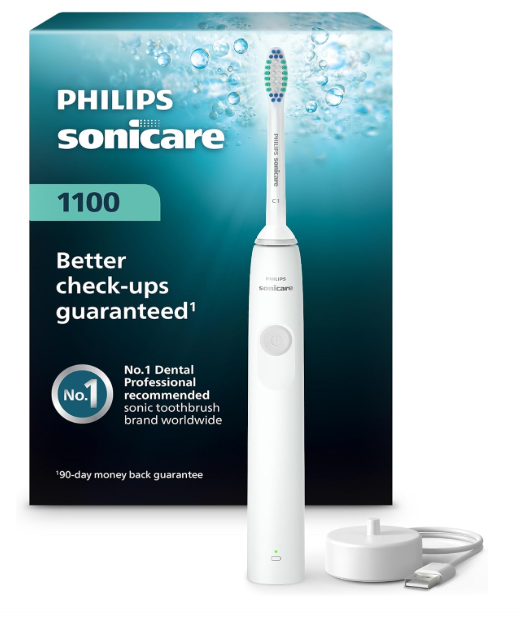
Why This Comparison Matters More Than Most People Think
Shopping for an electric toothbrush sounds simple until we actually start comparing models. Suddenly, we find ourselves staring at nearly identical devices with wildly different price tags, feature lists, and promises. That is exactly what happens when comparing the Philips Sonicare 4100 and the Philips Sonicare 1100.
At first glance, they seem like twins separated only by a few dollars. But once we dig deeper, the differences begin to feel surprisingly important.
One toothbrush focuses on simplicity and affordability. The other quietly introduces smarter features designed to improve our brushing habits over time.
So which one deserves a spot on our bathroom counter?
Let’s break everything down — from cleaning performance and comfort to battery life and long-term value — to discover whether the Philips Sonicare 4100 is truly worth paying more for.
A Quick Overview of the Sonicare Family
Philips has built one of the strongest reputations in electric oral care. The Sonicare lineup has become almost synonymous with premium brushing experiences, much like certain smartphone brands dominate their category.
The company offers everything from ultra-basic models to advanced smart toothbrushes loaded with sensors and app connectivity.
The Sonicare 1100 and 4100 sit toward the affordable end of the spectrum, but they target different kinds of users.
The Sonicare 1100 focuses on:
- Simplicity
- Budget-friendly performance
- Essential cleaning
Meanwhile, the Sonicare 4100 emphasizes:
- Smarter brushing
- Better gum protection
- A more refined experience
Even though they belong to the same family, they behave very differently in daily use.
Philips Sonicare 1100 Explained
Who Is the Sonicare 1100 Designed For?
The Sonicare 1100 is ideal for people who want an affordable electric toothbrush without unnecessary extras.
It works especially well for:
- First-time electric toothbrush users
- Students
- Teenagers
- Travelers
- Budget-conscious households
- Minimalists
The philosophy behind the 1100 is simple:
Keep brushing easy.
There are no complicated settings or advanced controls. We simply turn it on and brush.
That simplicity is part of its charm.
Main Features of the Sonicare 1100
The Sonicare 1100 includes:
- Sonic cleaning technology
- Rechargeable battery
- 2-minute SmartTimer
- QuadPacer intervals
- Lightweight ergonomic handle
- Compact design
It strips away premium features and focuses on delivering the essential Sonicare cleaning experience.
And honestly, for many people, that is more than enough.
Philips Sonicare 4100 Explained
Who Is the Sonicare 4100 Best For?
The Sonicare 4100 targets users who want more than basic brushing.
It is especially appealing for:
- Adults focused on oral health
- People with sensitive gums
- Users upgrading from cheap electric brushes
- Buyers looking for long-term value
- Anyone who brushes too hard
The 4100 takes the Sonicare foundation and adds smarter technology that improves daily brushing habits.
Main Features of the Sonicare 4100
The 4100 includes:
- Sonic cleaning technology
- Pressure sensor
- Two brushing intensity levels
- SmartTimer
- QuadPacer
- BrushSync reminders
- Longer battery performance
- More premium handle design
These additions may sound small on paper, but they create a dramatically better experience over time.
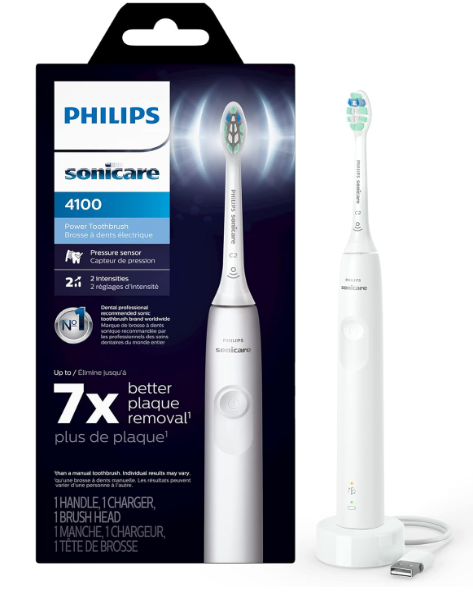
Philips Sonicare 4100 vs 1100 Comparison Table
| Feature | Sonicare 1100 | Sonicare 4100 |
|---|---|---|
| Sonic Cleaning | Yes | Yes |
| Pressure Sensor | No | Yes |
| Intensity Levels | 1 | 2 |
| SmartTimer | Yes | Yes |
| QuadPacer | Yes | Yes |
| BrushSync | Limited | Yes |
| Battery Life | Good | Better |
| Premium Feel | Basic | More Refined |
| Best For | Budget users | Everyday long-term use |
At first glance, the differences may not seem huge.
But once we start brushing with them daily, the gap becomes more noticeable.
Cleaning Performance: Do They Actually Clean Differently?
This is where things get interesting.
Both toothbrushes use Philips Sonicare’s famous sonic cleaning system. That means both deliver thousands of brush movements every minute.
As a result, both models provide:
- Better plaque removal than manual brushing
- Improved gum stimulation
- A cleaner mouth feel
- Enhanced reach between teeth
So does the 4100 clean dramatically better?
Not exactly.
Instead, it helps us brush more effectively.
That distinction matters.
How Sonicare Technology Works
Sonic toothbrushes clean differently from rotating electric brushes.
Instead of aggressively spinning, Sonicare brushes create high-speed vibrations that move fluid around teeth and gums.
Think of it like tiny waves washing plaque away.
This technology helps:
- Remove debris
- Reach difficult spaces
- Improve freshness
- Reduce buildup
- Support healthier gums
Even the entry-level 1100 benefits from this advanced cleaning style.
Why the Pressure Sensor Changes Everything
The Biggest Advantage of the Sonicare 4100
The pressure sensor is easily the most important upgrade.
Many people unknowingly brush too hard. Ironically, they believe harder brushing means cleaner teeth.
In reality, aggressive brushing can cause:
- Gum recession
- Tooth sensitivity
- Enamel erosion
- Gum irritation
The Sonicare 4100 gently warns us when we apply too much pressure.
The 1100 offers no such protection.
That single feature can make a huge difference over the years.
How the Pressure Sensor Works
When brushing pressure becomes excessive:
- The toothbrush changes vibration patterns
- The handle alerts the user
- Brushing intensity subtly adjusts
It feels less like an alarm and more like a gentle reminder.
That quiet guidance helps us build healthier habits over time.
Battery Life Comparison
Sonicare 1100 Battery Performance
The 1100 performs surprisingly well for an entry-level toothbrush.
Most users can expect:
- Around two weeks of brushing
- Reliable charging performance
- Good travel convenience
That is already impressive compared to many cheaper electric toothbrushes.
Sonicare 4100 Battery Performance
The 4100 generally lasts even longer.
Users often report:
- Better battery consistency
- Longer intervals between charging
- Stronger long-term battery stability
For travelers, this becomes surprisingly valuable.
Nobody enjoys carrying extra chargers.
Design and Comfort Differences
Which Toothbrush Feels Better?
The Sonicare 1100 feels practical and lightweight.
The Sonicare 4100 feels more refined.
The difference resembles economy seating versus premium economy on a flight. Both work, but one feels noticeably more comfortable.
Sonicare 1100 Design
The 1100 offers:
- Lightweight construction
- Simple matte finish
- Basic controls
- Functional appearance
It feels intentionally uncomplicated.
Sonicare 4100 Design
The 4100 adds:
- Better grip texture
- More polished materials
- Improved ergonomics
- More premium visual styling
The difference is subtle but absolutely noticeable during daily use.
Noise Levels and Brushing Feel
Both toothbrushes are quieter than many rotating brushes.
However, the 4100 tends to feel smoother and slightly more refined.
The 1100 has a sharper buzzing sensation.
The 4100 feels more controlled.
These small differences become surprisingly important when we use a toothbrush twice every day.
Brush Heads Compatibility
Do Both Models Use the Same Brush Heads?
Yes — and this is excellent news.
Both toothbrushes support multiple Philips Sonicare brush heads.
This allows users to customize their brushing experience based on personal needs.
Popular options include:
- Plaque Control heads
- Gum Care heads
- Sensitive heads
- Whitening heads
- Premium Clean heads
That flexibility extends the usefulness of both toothbrushes.
BrushSync Reminder Technology
The Sonicare 4100 supports BrushSync reminders.
This feature tracks brush head usage and reminds us when it is time for replacement.
Most people keep brush heads too long, reducing cleaning effectiveness.
The 1100 may lack full BrushSync functionality depending on the specific version purchased.
Everyday User Experience
What It Feels Like to Use the Sonicare 1100
The 1100 feels straightforward.
We turn it on.
We brush.
We finish.
There is something refreshing about that simplicity.
For users who dislike overly complicated gadgets, the 1100 can feel perfect.
What It Feels Like to Use the Sonicare 4100
The 4100 feels smarter.
It quietly guides us toward better brushing habits without becoming annoying.
The pressure sensor creates reassurance, especially for people worried about gum sensitivity.
It transforms brushing from a routine into a more personalized experience.
Price Difference: Is the 4100 Worth the Extra Money?
This is the question most buyers truly care about.
If both toothbrushes clean well, why spend more?
The answer depends entirely on our priorities.
When the Sonicare 1100 Makes More Sense
The 1100 is the better choice if we:
- Want the cheapest quality Sonicare
- Prefer simplicity
- Need a travel toothbrush
- Are buying for teenagers
- Do not care about advanced features
- Just want effective sonic cleaning
It delivers strong value at a lower price point.
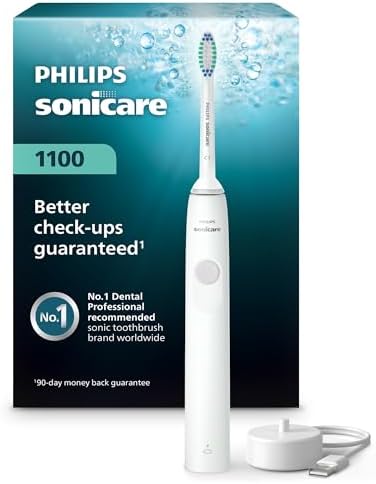
- The C1 Simply Clean brush head with soft, flexible bristles removes more plaque than a manual toothbrush while protectin…
- Electric toothbrush for adults providing gentle yet effective cleaning: the Advanced Sonic Technology pulses fluid betwe…
- Optimize your routine: EasyStart for a gradual, gentle increase in brushing power, SmarTimer informing when you’ve reach…
When the Sonicare 4100 Makes More Sense
The 4100 becomes the smarter investment if we:
- Brush aggressively
- Have sensitive gums
- Want extra comfort
- Appreciate premium design
- Plan to use the toothbrush for years
- Value smart features
The pressure sensor alone may justify the price increase.
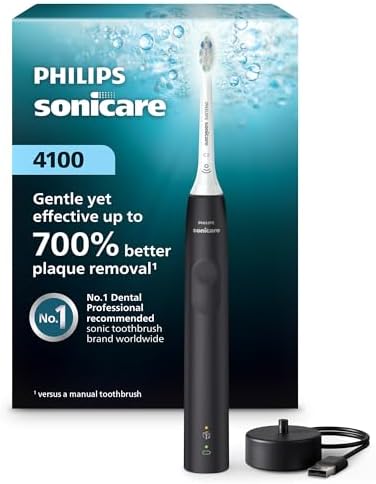
- The C2 Optimal Plaque brush head with soft, flexible, stain-removal bristles helps whiten and polish your teeth; it also…
- Electric toothbrush for adults providing gentle yet effective cleaning: the Advanced Sonic Technology pulses fluid betwe…
- Safe and gentle electric toothbrush with pressure sensor: if you apply too much pressure, the handle will pulse slightly…
Long-Term Durability
Both toothbrushes are reliable, but the 4100 generally feels more durable.
Its:
- Materials feel sturdier
- Finish ages better
- Components feel more refined
- Battery consistency appears stronger
The 1100 remains dependable, but it is clearly built with affordability as the priority.
Travel Friendliness
Why the Sonicare 1100 Works Well for Travel
The 1100 shines during travel because it is:
- Lightweight
- Simple
- Compact
- Easy to replace if lost
It feels like the practical road-trip toothbrush.
Why the Sonicare 4100 Also Travels Well
The 4100 counters with:
- Better battery performance
- Improved comfort
- More premium construction
- Smarter brushing protection
Frequent travelers may appreciate its refinement over time.
Who Should Avoid the Sonicare 1100?
The 1100 may not be ideal for people who:
- Brush too hard
- Have gum recession
- Experience tooth sensitivity
- Want premium features
- Prefer customizable brushing
For these users, the 4100 offers much better long-term value.
Who Should Avoid the Sonicare 4100?
Ironically, the 4100 can feel unnecessary for some people.
We may prefer the 1100 if we:
- Hate extra technology
- Want absolute simplicity
- Need a backup toothbrush
- Rarely use advanced settings
- Care most about affordability
Sometimes less really is more.
Dentist Perspective on Sonicare 4100 vs 1100
Many dentists recommend Sonicare toothbrushes because sonic cleaning supports healthier gums and better plaque removal.
However, dentists especially appreciate pressure sensors because overbrushing is incredibly common.
That gives the 4100 a meaningful advantage in preventive oral care.
Smarter brushing habits often matter more than stronger brushing.
Which Toothbrush Feels More Premium?
Without question, the Sonicare 4100 feels more upscale.
Everything from the grip texture to the vibration quality feels more refined.
The 1100 feels functional.
The 4100 feels intentional.
That difference becomes clearer the longer we use them.
Final Verdict: Philips Sonicare 4100 vs 1100
The Philips Sonicare 1100 and 4100 are both excellent electric toothbrushes, but they serve different kinds of users.
The Sonicare 1100 succeeds because it keeps things simple. It delivers effective sonic cleaning without adding unnecessary complexity or cost.
The Sonicare 4100, however, introduces meaningful improvements that genuinely enhance daily brushing. The pressure sensor alone can help protect gums and enamel over time.
If we simply want affordable sonic cleaning, the 1100 is a fantastic choice.
If we want smarter oral care, better comfort, and improved long-term brushing habits, the 4100 earns its higher price tag.
Sometimes the best toothbrush is not the one with the most features.
It is the one that quietly helps us take better care of our teeth every single day.
FAQs
Is the Philips Sonicare 4100 better than the 1100?
Yes, the 4100 is generally better because it includes a pressure sensor, dual intensity settings, and more advanced brushing support.
Does the Sonicare 1100 clean as well as the 4100?
Both clean very well using sonic technology, but the 4100 helps users brush more safely and effectively.
Is the pressure sensor really important?
Yes. Many people brush too hard without realizing it, which can damage gums and enamel over time.
Can both toothbrushes use the same brush heads?
Yes, both support a wide range of Philips Sonicare brush heads.
Which toothbrush is better for beginners?
The Sonicare 1100 is excellent for beginners who want simplicity, while the 4100 is better for users wanting smarter brushing guidance.