
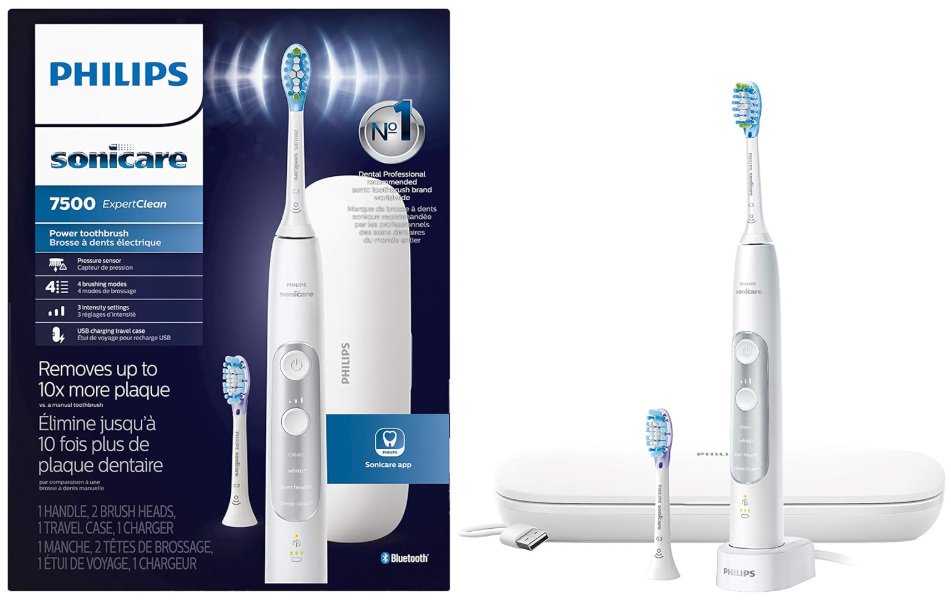
When we shop for an electric toothbrush, it’s easy to fall into the rabbit hole of shiny promises, endless features, and marketing buzzwords that sound like they belong in a spaceship rather than a bathroom. Yet when comparing the Philips Sonicare 4100 and the Philips Sonicare 7500, the decision becomes surprisingly interesting.
One model is simple, affordable, and focused. The other is loaded with premium extras designed to make brushing feel almost luxurious.
So which one should we actually buy?
That’s exactly what we’re unpacking today. We’ll compare performance, cleaning power, smart features, battery life, comfort, value, and long-term ownership experience to help you choose the right Sonicare toothbrush without wasting money on features you may never use.
Why Philips Sonicare Toothbrushes Are So Popular
There’s a reason Philips dominates conversations around electric toothbrushes.
Sonicare brushes use high-frequency sonic vibrations that create fluid movement between teeth and along the gumline. Instead of simply scrubbing like a manual toothbrush, they create a sweeping cleaning action that feels more like a pressure washer for plaque.
That sounds dramatic, but once we switch from manual brushing to Sonicare, the difference becomes obvious within days.
Common benefits include:
- Cleaner feeling teeth
- Reduced plaque buildup
- Better gum health
- Easier brushing technique
- Less aggressive brushing pressure
- Improved consistency
The real question is whether the jump from the 4100 to the 7500 is actually worth the extra cash.
Quick Overview: Philips Sonicare 4100 vs 7500
Before diving deep, let’s simplify the core difference.
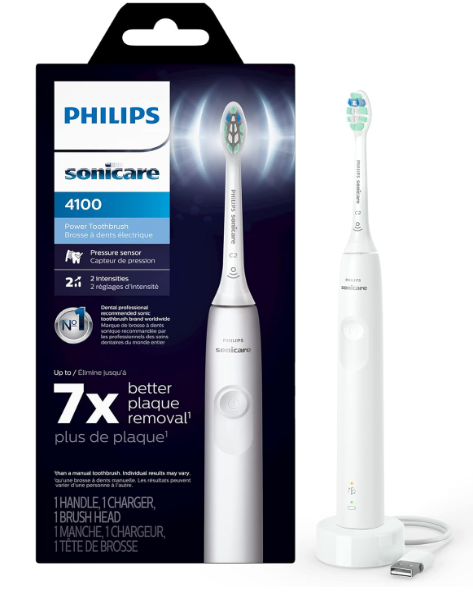
Philips Sonicare 4100
The 4100 is the “smart minimalist” option.
It focuses on:
- Effective cleaning
- Pressure protection
- Excellent battery life
- Simplicity
- Affordability
It avoids overwhelming features and gives us the essentials.
Philips Sonicare 7500
The 7500 is the premium experience.
It adds:
- Multiple cleaning modes
- Intensity adjustments
- App connectivity
- Personalized feedback
- Premium charging accessories
- Advanced gum care support
Think of it like comparing a reliable compact car to a luxury SUV packed with technology.
Both get us where we need to go. One just adds leather seats and ambient lighting.
Design Differences That Matter More Than We Think
At first glance, both brushes look similar. Slim handle. Minimal buttons. Modern design.
But once we hold them, the differences become clearer.
Philips Sonicare 4100 Design
The 4100 feels:
- Lightweight
- Minimalist
- Straightforward
- Easy to travel with
Its simplicity is actually part of its charm.
There’s one brushing mode and very little to distract us. It’s like opening a clean workspace with no clutter.
Philips Sonicare 7500 Design
The 7500 feels noticeably more premium.
We immediately notice:
- Better grip texture
- More refined materials
- Extra control buttons
- A richer finish
- A more sophisticated charging setup
It feels closer to a high-end tech gadget than a toothbrush.
Cleaning Performance: Is the 7500 Actually Better?
This is where things get interesting.
Because despite the massive price difference, both toothbrushes clean extremely well.
The Sonic Technology Is Similar
Both models use Sonicare sonic vibration technology capable of tens of thousands of brush movements per minute.
That means both:
- Remove plaque effectively
- Improve gum health
- Clean far better than manual brushes
- Reach difficult areas
For basic cleaning alone, the 4100 already performs impressively well.
Where the 7500 Pulls Ahead
The 7500 gains an edge because of customization.
Extra Cleaning Modes
The 7500 includes specialized modes such as:
- Clean
- White+
- Gum Health
These modes alter brushing patterns and timing.
For example:
- Gum Health mode feels gentler and massages gums
- White+ focuses more aggressively on surface stains
It’s similar to having multiple driving modes in a car.
The destination is the same, but the ride changes.
Pressure Sensor Comparison
Both brushes include pressure sensors, and honestly, this feature alone can dramatically improve oral health.
Many of us brush too hard without realizing it.
Overbrushing can lead to:
- Gum recession
- Tooth sensitivity
- Enamel wear
Philips Sonicare 4100 Pressure Sensor
The 4100 alerts us when brushing pressure becomes excessive.
Simple. Effective.
Philips Sonicare 7500 Pressure Sensor
The 7500 takes this further with smarter adaptive feedback and app integration.
Instead of merely warning us, it helps coach better habits over time.
That may sound unnecessary at first, but habit correction can genuinely improve brushing technique.
Smart Features: Necessary or Just Fancy?
This is probably the biggest dividing line between these two brushes.
Philips Sonicare 4100 Keeps Things Simple
No Bluetooth.
No app coaching.
No brushing reports.
We just:
- Pick up the toothbrush
- Brush
- Finish
Honestly, many people love that simplicity.
No notifications.
No syncing.
No tech headaches.
Philips Sonicare 7500 Adds Smart Coaching
The 7500 connects to the Sonicare app through Bluetooth.
The app can:
- Track brushing habits
- Show missed areas
- Monitor brushing pressure
- Recommend better techniques
- Track brush head replacement
For some users, this becomes incredibly motivating.
It turns brushing into a measurable routine rather than a mindless task.
But not everyone wants their toothbrush acting like a fitness tracker.
Battery Life Comparison
Battery performance is excellent on both models.
Philips Sonicare 4100 Battery Life
The 4100 shines here.
We typically get:
- Around 2 weeks of use
- Sometimes longer with moderate brushing
That makes it ideal for:
- Travel
- Small bathrooms
- Minimal charging hassle
Philips Sonicare 7500 Battery Life
The 7500 also offers strong battery performance.
However:
- Extra features consume more power
- Bluetooth can slightly reduce longevity
Still, battery life remains very good and rarely becomes an issue.
Charging Systems and Accessories
Here’s where the premium pricing becomes more visible.
Philips Sonicare 4100 Accessories
Usually includes:
- Charging base
- One brush head
- Basic setup
Simple and functional.
Philips Sonicare 7500 Accessories
Often includes:
- Premium charging glass or stand
- Travel charging case
- Multiple brush heads
- Better packaging
The unboxing experience feels dramatically more upscale.
Like comparing economy seating to business class.
Both planes land safely, but one feels much more comfortable.
Noise and Brushing Feel
Electric toothbrushes can sometimes feel like tiny power tools.
Thankfully, Sonicare brushes are smoother than many oscillating competitors.
4100 Brushing Feel
The 4100 feels:
- Consistent
- Gentle
- Lightweight
- Easy to control
It’s excellent for first-time electric toothbrush users.
7500 Brushing Feel
The 7500 feels:
- More refined
- More customizable
- Slightly smoother
- More adaptive
The intensity settings help personalize the brushing experience.
That’s particularly helpful for users with:
- Sensitive gums
- Dental work
- Whitening concerns
Who Should Buy the Philips Sonicare 4100?
The 4100 is perfect for people who want:
Reliable Cleaning Without Complexity
If we care most about:
- Better oral hygiene
- Simplicity
- Affordability
- Long battery life
…the 4100 is incredibly hard to beat.
Best Users for the 4100
The 4100 works especially well for:
- Students
- Busy professionals
- First-time electric toothbrush buyers
- Travelers
- Budget-conscious shoppers
It gives us the “core Sonicare experience” without unnecessary extras.
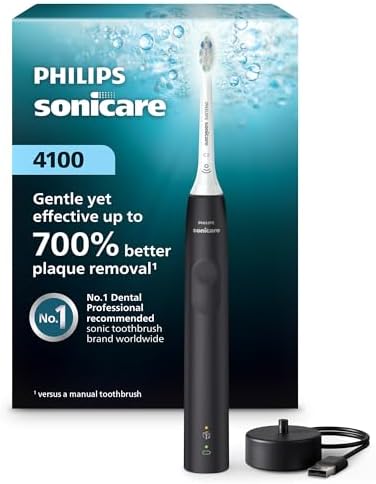
- The C2 Optimal Plaque brush head with soft, flexible, stain-removal bristles helps whiten and polish your teeth; it also…
- Electric toothbrush for adults providing gentle yet effective cleaning: the Advanced Sonic Technology pulses fluid betwe…
- Safe and gentle electric toothbrush with pressure sensor: if you apply too much pressure, the handle will pulse slightly…
Who Should Buy the Philips Sonicare 7500?
The 7500 targets users who want a premium brushing ecosystem.
Best Users for the 7500
The 7500 makes sense for:
- Tech enthusiasts
- Users with gum concerns
- People focused on whitening
- Buyers who enjoy smart tracking
- Those upgrading from lower-end Sonicare models
If brushing feels like an important self-care ritual, the 7500 can feel genuinely satisfying to use.

- The information below is per-pack only
- Plaque Removal: Achieve up to 10x more plaque removal compared to a manual toothbrush
- Pressure Sensor: Smart pressure sensor alerts you when brushing too hard, protecting your gums
Brush Head Compatibility
Both toothbrushes support many Sonicare brush heads.
That’s a major advantage.
We can customize brushing by choosing heads designed for:
- Plaque control
- Whitening
- Gum care
- Sensitive teeth
Popular compatible options include:
- C2 Optimal Plaque Control
- W2 Optimal White
- G3 Premium Gum Care
This flexibility helps extend the usefulness of both toothbrushes.
Travel Experience Comparison
Travel convenience matters more than we expect.
Traveling With the 4100
The 4100 wins on portability.
Why?
- Lightweight
- Compact
- Minimal accessories
- Excellent battery life
We can throw it into a bag and forget about charging for days.
Traveling With the 7500
The 7500 offers a more premium travel experience.
Its charging travel case feels luxurious, especially for frequent travelers.
However:
- It takes up more space
- Includes more components
- Feels slightly bulkier
Durability and Long-Term Ownership
Philips Sonicare brushes generally have strong reputations for durability when properly maintained.
4100 Durability
The 4100’s simpler construction can actually be an advantage.
Fewer smart features often means:
- Fewer potential issues
- Easier maintenance
- Longer practical lifespan
Simplicity ages well.
7500 Durability
The 7500 also feels well-built, but advanced technology introduces more variables.
Over time:
- Apps evolve
- Bluetooth standards change
- Batteries age
That doesn’t make it unreliable, but premium electronics naturally involve more complexity.
Value for Money: Which One Is Smarter Financially?
This is the heart of the debate.
The 4100 Delivers Exceptional Value
Dollar for dollar, the 4100 may be the smarter purchase for most people.
Why?
Because the cleaning performance already feels premium.
The jump in price to the 7500 mostly buys:
- Convenience
- Customization
- Smart coaching
- Luxury features
Not necessarily dramatically cleaner teeth.
When the 7500 Is Worth the Extra Cost
The 7500 becomes worth it if:
- We genuinely use the smart features
- We enjoy personalized routines
- We value premium experiences
- We want gum-care-focused modes
- We like tracking habits
For some people, that added engagement improves consistency.
And consistency is everything in oral care.
Daily Experience: The Emotional Difference
This might sound strange, but toothbrushes are emotional products.
We use them every day.
Twice a day.
Half asleep.
Rushing to work.
Preparing for bed.
How the 4100 Feels Emotionally
The 4100 feels dependable.
Like:
- A reliable friend
- A clean workspace
- A minimalist lifestyle choice
No drama. Just effective brushing.
How the 7500 Feels Emotionally
The 7500 feels indulgent.
Like:
- Premium headphones
- A luxury smartwatch
- A spa-like routine
It transforms brushing from a chore into a small personal ritual.
That emotional experience matters more than spec sheets suggest.
Which Brush Is Better for Sensitive Teeth?
Both can work well for sensitive teeth, but the 7500 gains an advantage.
Why the 7500 Helps Sensitive Users
Its:
- Intensity controls
- Gum-care modes
- Adaptive settings
…allow finer personalization.
If we experience:
- Gum tenderness
- Sensitivity after whitening
- Dental procedures
…the 7500 provides more flexibility.
Still, the 4100 remains gentle compared to many cheaper electric toothbrushes.
Ease of Use Comparison
Not everyone wants complexity.
4100 Simplicity
The 4100 is refreshingly straightforward.
One mode.
Minimal setup.
Instant usability.
That’s ideal for people who hate overcomplicated gadgets.
7500 Learning Curve
The 7500 introduces:
- Multiple settings
- App syncing
- Feature management
Some users love this.
Others ignore half the features after a week.
That’s the honest reality.
Price Difference: Is It Justified?
The price gap between these models can be significant.
And whether that gap feels justified depends entirely on personality.
Choose the 4100 If We Want:
- Great cleaning
- Strong value
- Minimalism
- Fewer distractions
- Lower cost
Choose the 7500 If We Want:
- Premium comfort
- Personalized brushing
- Smart tracking
- Advanced gum care
- Luxury accessories
Neither choice is wrong.
They simply target different lifestyles.
Final Verdict: Philips Sonicare 4100 vs 7500
If we strip away the marketing and focus on practical reality, here’s the truth:
The Philips Sonicare 4100 is probably the better value for most people.
It cleans exceptionally well, protects gums, offers excellent battery life, and keeps things beautifully simple.
But the Philips Sonicare 7500 creates a richer experience.
It adds comfort, personalization, coaching, and premium touches that can genuinely make brushing more enjoyable and more consistent.
In the end, this isn’t really a battle between good and bad.
It’s a choice between:
- Essential efficiency
or - Premium personalization
And honestly? Both are excellent paths toward healthier teeth.
Frequently Asked Questions
Is the Philips Sonicare 7500 worth the extra money over the 4100?
Yes, if we value smart features, multiple brushing modes, and premium accessories. Otherwise, the 4100 already delivers outstanding cleaning performance at a lower price.
Do both toothbrushes use the same brush heads?
Yes. Both models are compatible with many Sonicare brush heads, including plaque control, whitening, and gum care options.
Which toothbrush is better for beginners?
The 4100 is generally better for beginners because it’s simple, lightweight, and easy to use without complicated settings.
Does the Philips Sonicare 7500 clean teeth better?
Not dramatically. Both clean extremely well. The 7500 mainly improves customization and user experience rather than delivering massively superior cleaning power.
Which model has better battery life?
The 4100 typically offers slightly better battery longevity because it has fewer power-hungry smart features.