
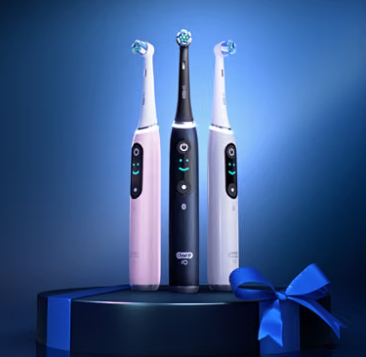
The Oral-B iO 9 modes are one of the main reasons this electric toothbrush stands out in Oral-B’s premium lineup. Instead of giving us one fixed brushing experience, the iO Series 9 offers several settings designed for different situations, from everyday cleaning to sensitive teeth, gum care, whitening, and tongue cleaning.
The Oral-B iO Series 9 includes seven brushing modes: Daily Clean, Sensitive, Super Sensitive, Gum Care, Intense Clean, Whitening, and Tongue Clean.
At first, seven settings can seem like a lot. After all, we’re still brushing our teeth, right?
Yes, but the idea is similar to having different gears on a bicycle. We could technically use one gear all the time, but changing it makes certain situations easier and more comfortable. The brushing modes work in much the same way.
In this guide, we’ll explain every Oral-B iO 9 cleaning mode, what each one is designed to do, how they differ, and which setting may suit different brushing needs.
How Many Modes Does the Oral-B iO 9 Have?
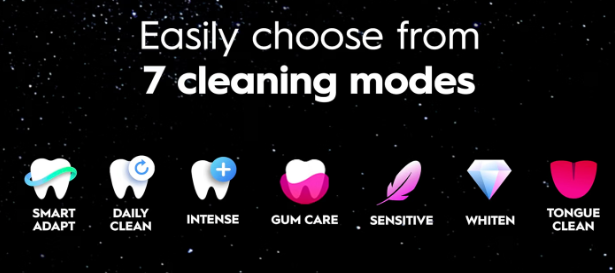
The Oral-B iO Series 9 has seven brushing modes.
They are:
- Daily Clean
- Sensitive
- Super Sensitive
- Gum Care
- Intense Clean
- Whitening
- Tongue Clean
These modes are combined with several premium features, including a color display, pressure feedback, app connectivity, and 3D brushing tracking.
Having seven modes doesn’t mean we need to use all seven regularly, though.
Most people will probably find one or two favorite settings and use the others only when necessary.
Oral-B iO 9 Modes at a Glance
Here’s a simple overview of what each Oral-B iO 9 mode is generally intended for.
| Oral-B iO 9 Mode | Best For | Brushing Feel |
|---|---|---|
| Daily Clean | Everyday brushing | Balanced |
| Sensitive | Mild sensitivity | Gentle |
| Super Sensitive | Greater sensitivity | Very gentle |
| Gum Care | Gum-focused brushing | Soft |
| Intense Clean | Stronger clean sensation | Powerful |
| Whitening | Surface stain polishing | Variable |
| Tongue Clean | Cleaning the tongue | Gentle |
The names give us a good idea of their purpose, but there are a few important differences worth understanding.
For instance, Intense Clean isn’t automatically better than Daily Clean just because it feels stronger. Similarly, Super Sensitive doesn’t mean poor cleaning simply because it feels softer.
The best mode is the one that matches our comfort level and brushing needs.
Understanding Each Oral-B iO 9 Mode
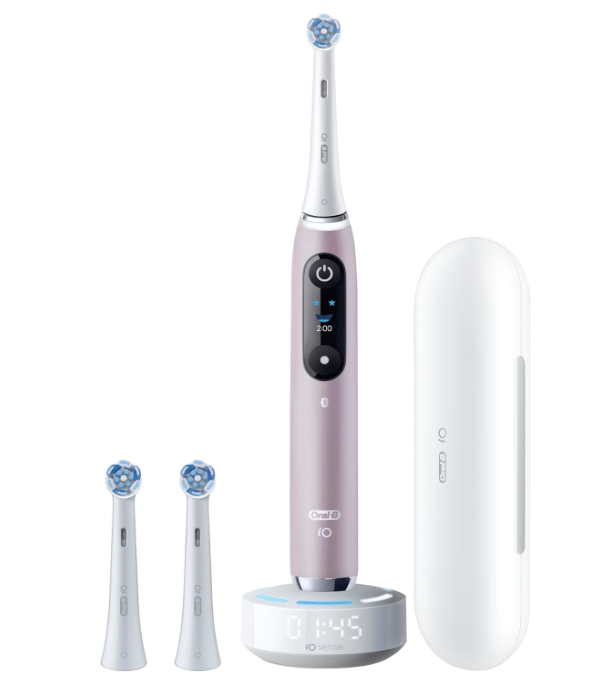
Let’s break down the seven settings one by one.
1. Daily Clean Mode
Daily Clean is the easiest place to start if we aren’t sure which Oral-B iO 9 mode to choose.
It is designed as the standard setting for normal everyday brushing and plaque removal.
Think of it as the toothbrush’s all-purpose mode. It’s the equivalent of the everyday tool we reach for most often rather than a specialized option.
Who Should Use Daily Clean?
Daily Clean is a good fit for people who:
- Don’t have significant tooth sensitivity
- Want a simple twice-daily brushing routine
- Prefer moderate brushing intensity
- Don’t want to constantly change settings
- Are already comfortable using an electric toothbrush
For many users, Daily Clean may be the only mode they need most of the time.
Is Daily Clean Good Enough for Everyday Brushing?
Yes.
That’s exactly what this mode is intended for.
A stronger mode isn’t automatically more effective. Brushing quality also depends on how thoroughly we cover every tooth, how much pressure we use, and whether we brush for long enough.
A careful two-minute session on Daily Clean can be far more useful than rushing through the mouth with Intense Clean.
2. Sensitive Mode
Sensitive mode reduces the intensity and provides a gentler brushing sensation.
It can be a useful middle ground when Daily Clean feels slightly stronger than we’d like.
Some people move straight to electric toothbrushes after years of manual brushing and initially find the vibration unusually powerful. Sensitive mode can make that transition easier.
When Should We Use Sensitive Mode?
Sensitive mode may be worth trying when:
- Teeth feel mildly sensitive
- Gums occasionally feel tender
- Daily Clean feels uncomfortable
- We’re new to electric brushing
- We simply prefer a softer brushing experience
Comfort matters more than chasing the strongest possible setting.
If Sensitive mode makes us more likely to brush thoroughly for the full recommended time, it may actually be the better everyday choice.
Can Sensitive Mode Be Used Every Day?
Yes.
Sensitive mode isn’t just a temporary setting.
We can use it as our normal daily brushing mode if we prefer the gentler sensation.
There’s no rule saying Daily Clean must be used simply because it carries the word “Daily.”
3. Super Sensitive Mode
Super Sensitive takes gentleness another step further.
It is designed for users who want an even softer brushing experience than the regular Sensitive setting provides.
Sensitive vs Super Sensitive: What’s the Difference?
The main difference is intensity.
Sensitive provides a gentler experience than Daily Clean, while Super Sensitive lowers the intensity even further.
Think of them as two softness levels rather than completely different types of cleaning.
Sensitive may suit someone with occasional discomfort.
Super Sensitive may feel more appropriate when regular electric brushing still feels too strong.
Who Might Prefer Super Sensitive?
Super Sensitive may suit people who:
- Have noticeably sensitive teeth
- Prefer very gentle brushing
- Have gums that dislike stronger vibration
- Are gradually adapting to an electric toothbrush
However, ongoing pain or significant tooth sensitivity shouldn’t simply be managed forever by changing toothbrush modes. Persistent symptoms are worth discussing with a dentist.
Does Super Sensitive Still Clean Effectively?
A softer sensation doesn’t automatically mean ineffective brushing.
Electric toothbrushes are designed to move the brush head for us. Our job is mainly to guide the head across the tooth surfaces rather than aggressively scrub.
That means lower intensity can still support a thorough brushing routine when we use proper technique.
4. Gum Care Mode
Gum Care is slightly different from the Sensitive settings because it focuses specifically on providing a gentler brushing pattern around the gumline.
The goal is not simply lower power. It is a softer experience designed with gum comfort in mind.
What Does Gum Care Mode Feel Like?
It generally feels gentler and less aggressive than stronger cleaning settings.
When using it, we should carefully guide the round brush head around the gumline rather than pushing hard against the gums.
The toothbrush is already doing the motion.
We simply need to direct it.
Gum Care vs Sensitive Mode
These two modes can seem very similar.
The difference is mainly in their intended purpose.
Sensitive mode is aimed at reducing discomfort for sensitive teeth and gums.
Gum Care focuses more directly on a comfortable brushing experience around the gumline.
If tooth sensitivity is your main concern, Sensitive may make more sense.
If you particularly want a softer gum-focused routine, Gum Care may be worth trying.
Can Gum Care Mode Treat Gum Disease?
No.
A toothbrush mode isn’t a treatment for gum disease.
Good brushing is certainly part of a healthy oral-care routine, but persistent bleeding, swelling, gum recession, discomfort, or bad breath should be assessed by a dental professional.
Gum Care is a brushing option, not a replacement for dental treatment.
5. Intense Clean Mode
Intense Clean sits at the stronger end of the Oral-B iO 9 modes.
It provides a more powerful brushing sensation and may appeal to people who like their electric toothbrush to feel energetic.
Is Intense Clean Better Than Daily Clean?
Not necessarily.
This is one of the biggest misconceptions about electric toothbrush modes.
A stronger sensation does not automatically mean better cleaning.
Technique matters enormously.
If we use Intense mode but rush around the mouth and repeatedly miss the back teeth, the extra power isn’t helping much.
Meanwhile, someone using Daily Clean carefully and methodically may achieve a much more complete brushing session.
Who Will Like Intense Mode?
Intense Clean may suit people who:
- Prefer stronger brushing feedback
- Find Daily Clean too mild
- Enjoy a powerful polished feeling
- Already feel comfortable with electric brushing
People with notable sensitivity or tender gums will probably prefer to start elsewhere.
Avoid Combining Intense Mode With Heavy Pressure
Using a stronger mode doesn’t mean we should press harder.
The iO9 includes pressure feedback to help us recognize when we’re brushing with too much force.
Let the brush do the work.
A powerful mode plus excessive pressure isn’t a better cleaning strategy.
6. Whitening Mode
Whitening is probably one of the most misunderstood Oral-B iO 9 modes.
The name can easily make us imagine dramatically whiter teeth after a few brushing sessions.
That’s not really what it’s designed to do.
Whitening mode focuses mainly on surface stain polishing.
What Does Oral-B iO 9 Whitening Mode Do?
The brushing pattern is designed to help polish the tooth surface and target external staining.
That can be relevant for stains from things like:
- Coffee
- Tea
- Red wine
- Strongly colored foods
- Certain tobacco-related stains
However, the mode does not fundamentally change the natural internal color of the teeth.
Think of it like polishing a coffee-stained white mug. We can remove some external discoloration, but we aren’t chemically changing the material underneath.
Can Whitening Mode Be Used Every Day?
Some people use it regularly, but there’s no need to make it your default mode unless you enjoy the brushing sensation.
If your gums or teeth feel uncomfortable, a gentler setting makes more sense.
We should also keep expectations realistic. Toothbrush polishing and professional tooth whitening aren’t the same thing.
Whitening Mode vs Daily Clean
Daily Clean is the better straightforward option for routine oral hygiene.
Whitening mode makes more sense when our main goal is surface stain polishing.
For many people, Whitening will be more of an occasional extra than an everyday necessity.
7. Tongue Clean Mode
Tongue Clean is the most specialized setting on the Oral-B iO Series 9.
Unlike the other modes, it isn’t primarily intended for the teeth.
It’s designed for cleaning the tongue as part of a broader oral-care routine.
Why Clean the Tongue?
The tongue has a textured surface where bacteria, food debris, and other material can accumulate.
That’s one reason our mouth can sometimes feel less fresh even after brushing our teeth.
Cleaning the tongue can complement tooth brushing and improve the overall feeling of freshness.
How to Use Tongue Clean Mode
Use gentle pressure.
There’s no need to aggressively scrub the tongue.
After brushing your teeth, activate Tongue Clean mode and lightly guide the brush across the accessible surface of the tongue.
If you have a strong gag reflex, avoid pushing the brush too far toward the back of the mouth.
Should Tongue Clean Replace a Tongue Scraper?
Not necessarily.
Some people prefer the convenience of using their toothbrush.
Others prefer a dedicated tongue scraper.
Both approaches can fit into an oral-care routine.
The most useful method is usually the one we’ll use consistently and comfortably.
Which Oral-B iO 9 Mode Is Best?
There isn’t one universally best setting.
Different modes make sense for different situations.
For most everyday users, Daily Clean is the logical starting point.
For mild sensitivity, try Sensitive.
For a softer experience, choose Super Sensitive.
For gentle gum-focused brushing, experiment with Gum Care.
For a stronger feel, try Intense Clean.
For surface stain polishing, use Whitening.
For cleaning the tongue, choose Tongue Clean.
The best mode depends on what we’re trying to achieve.
Best Oral-B iO 9 Mode for Everyday Brushing
For normal daily brushing, we’d start with Daily Clean.
It provides a balanced experience and is designed for routine cleaning.
However, Sensitive can also become an excellent everyday setting if Daily Clean feels too strong.
Comfort is important.
The toothbrush isn’t grading us based on which setting we choose.
Best Oral-B iO 9 Mode for Sensitive Teeth
Start with Sensitive.
If it still feels uncomfortable, move down to Super Sensitive.
One of the iO9’s advantages is that it offers two different gentle modes rather than forcing us to choose between standard and extremely soft brushing.
Persistent sensitivity, however, deserves professional attention.
Best Mode for Gums
Gum Care is the obvious option if our main priority is gentle brushing around the gumline.
Still, brushing pressure matters just as much as the mode.
A gentle setting won’t fully compensate for pressing the toothbrush too aggressively against the gums.
Best Oral-B iO 9 Mode for Whitening
Choose Whitening mode if you’re mainly interested in polishing surface stains.
Just remember that we’re talking about external staining.
The mode isn’t a substitute for professional or peroxide-based whitening treatments.
How to Change Modes on the Oral-B iO Series 9
Changing modes on the iO9 is fairly straightforward.
The toothbrush includes an interactive color display that shows the selected brushing setting along with other useful information.
Use the controls on the handle to cycle through the available modes.
When the mode you want appears on the display, select it and begin brushing.
Do We Need the Oral-B App to Change Modes?
No.
The brushing modes can be selected directly on the toothbrush.
The Oral-B app becomes more useful when we want extra tracking and coaching.
The iO9 can connect to the app to provide detailed brushing guidance and 3D tooth tracking.
This can help identify areas we may be neglecting.
That’s especially useful because it’s surprisingly easy to brush for two full minutes while repeatedly focusing on the same easy-to-reach sections of the mouth.
Do Brushing Modes Matter More Than Technique?
No.
Technique matters more than constantly switching between settings.
A premium toothbrush can offer multiple modes, pressure sensors, a color screen, app guidance, and advanced tracking, but none of those features completely compensate for poor brushing habits.
We still need to focus on:
- Covering every tooth surface
- Brushing for enough time
- Avoiding excessive pressure
- Replacing worn brush heads
- Brushing consistently
- Cleaning between the teeth appropriately
Technology should support good habits, not replace them.
Using the Pressure Sensor With Different Modes
The pressure sensor is useful no matter which mode we choose.
Many of us learned to associate harder scrubbing with cleaner teeth.
Electric toothbrushes work differently.
The brush head already creates the cleaning movement.
Our job is to guide it carefully across the teeth and gums.
Pressing harder doesn’t automatically mean cleaning better.
In fact, the iO9’s pressure feedback can help us learn how much force is appropriate.
Should We Switch Oral-B iO 9 Modes During the Day?
We can, but we don’t need to.
A simple routine might look like this:
- Morning: Daily Clean
- Evening: Daily Clean or Sensitive
- Occasionally: Whitening
- After tooth brushing: Tongue Clean
Another person might use Sensitive morning and night and never touch Intense mode.
That’s completely fine.
The modes are options, not requirements.
A Simple Oral-B iO 9 Routine for Beginners
If you’ve just bought the toothbrush and seven options seem overwhelming, keep things simple at first.
Week One: Start With Sensitive
Spend several days getting used to the round brush head and the iO motor.
Focus on guiding the toothbrush tooth by tooth.
Avoid recreating the aggressive back-and-forth motion of manual brushing.
Week Two: Try Daily Clean
If Sensitive feels comfortable, experiment with Daily Clean.
Pay close attention to the pressure sensor.
There’s no need to add extra hand force.
Week Three: Experiment With Specialized Modes
Once you’re comfortable with the toothbrush, test Gum Care, Intense Clean, and Whitening.
You’ll probably discover that only one or two of these actually matter to your routine.
Keep Tongue Clean Separate
Use Tongue Clean for its intended purpose rather than treating it as another regular tooth-brushing mode.
That keeps the entire system much easier to understand.
Oral-B iO 9 Modes vs Cheaper iO Models
The number of available modes is one of the ways the iO9 differentiates itself from less expensive Oral-B iO toothbrushes.
Some cheaper models offer fewer brushing settings.
That doesn’t automatically make them bad toothbrushes.
If we only ever use Daily Clean, having seven modes may not provide much extra practical value.
However, users who enjoy customization may appreciate having both Sensitive and Super Sensitive as well as Gum Care, Whitening, Intense Clean, and Tongue Clean.
The iO9 becomes more compelling when we actually use its flexibility.
Are Seven Modes Worth Paying For?
That depends on how much we value customization.
If we enjoy switching between settings depending on our needs, seven modes are useful.
If we’re going to choose Daily Clean once and never change it again, fewer settings may be enough.
The same logic applies to the iO9’s advanced tracking features.
Some people love seeing detailed brushing coverage in the app.
Others just want a toothbrush that cleans effectively without turning brushing into a data-analysis session.
Premium features are only valuable when we actually use them.
Common Mistakes When Using Oral-B iO 9 Modes
Having more settings can be helpful, but it can also create a few misunderstandings.
Choosing Intense Because Stronger Must Be Better
A more powerful sensation isn’t automatically better.
Intensity should match comfort and preference.
Pressing Harder in Sensitive Mode
A softer mode doesn’t mean we should compensate with extra pressure.
Let the toothbrush do the movement.
Expecting Whitening Mode to Bleach Teeth
Whitening mode mainly targets surface stains.
It doesn’t work like a professional bleaching treatment.
Ignoring Persistent Sensitivity
If brushing regularly hurts, lowering the intensity shouldn’t be the only solution.
Persistent sensitivity deserves dental evaluation.
Constantly Switching Modes Without Improving Coverage
No mode can clean areas we repeatedly miss.
Improving brushing coverage is usually more important than endlessly changing settings.
Oral-B iO 9 Modes: Which One Should You Start With?
For most users, we’d recommend starting with Daily Clean.
If it feels too strong, switch to Sensitive.
If Sensitive still feels uncomfortable, try Super Sensitive.
After that, consider the remaining settings as specialized tools.
Gum Care, Intense Clean, Whitening, and Tongue Clean don’t need to be part of every brushing session.
The best Oral-B iO 9 mode is ultimately the one that helps us brush thoroughly, comfortably, and consistently without excessive pressure.
Final Thoughts on the Oral-B iO 9 Modes
The seven Oral-B iO 9 modes give this toothbrush plenty of flexibility.
Daily Clean handles everyday brushing.
Sensitive and Super Sensitive offer two gentler intensity levels.
Gum Care gives us a softer gum-focused option.
Intense Clean provides a stronger sensation.
Whitening focuses on polishing surface stains.
Tongue Clean extends the routine beyond the teeth.
Do we need all seven every day?
No.
Most users will probably find one main mode and occasionally switch to another when needed.
That’s really the advantage of having several settings.
They give us flexibility without requiring us to overcomplicate our routine.
Combine the right mode with gentle pressure, complete brushing coverage, and consistent daily habits, and the iO9’s extra technology becomes genuinely useful.
Frequently Asked Questions About Oral-B iO 9 Modes
1. How many modes does the Oral-B iO 9 have?
The Oral-B iO Series 9 has seven brushing modes: Daily Clean, Sensitive, Super Sensitive, Gum Care, Intense Clean, Whitening, and Tongue Clean.
2. Which Oral-B iO 9 mode should I use every day?
Daily Clean is the most obvious everyday option. However, Sensitive can also work well for daily brushing if you prefer a gentler sensation.
3. What is the difference between Sensitive and Super Sensitive?
Both are gentle settings, but Super Sensitive reduces the intensity further. Sensitive may suit mild sensitivity, while Super Sensitive is better for users who prefer the softest brushing experience.
4. Does Oral-B iO 9 Whitening mode actually whiten teeth?
Whitening mode is mainly designed to polish surface stains. It can help with external discoloration but isn’t the same as professional or peroxide-based whitening.
5. Is Intense mode better than Daily Clean?
Not automatically. Intense mode provides a stronger brushing sensation, while Daily Clean is designed for normal everyday use. Good technique and complete brushing coverage matter more than simply choosing the strongest setting.