
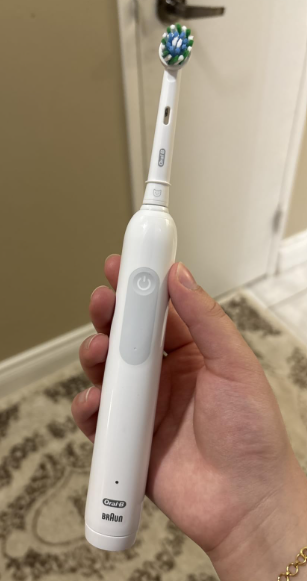
Yes, the Oral-B Pro 1000 is a good electric toothbrush for people with braces. Its oscillating-rotating cleaning technology, compact round brush head, built-in timer, and pressure sensor make it a practical option for removing plaque around orthodontic brackets, wires, and the gumline.
However, having braces changes the way we need to brush our teeth. Food particles can become trapped around brackets, plaque accumulates in difficult areas, and aggressive brushing can irritate already sensitive gums.
The good news is that we don’t necessarily need an expensive electric toothbrush to maintain healthy teeth throughout orthodontic treatment.
The Oral-B Pro 1000 offers several features that can make daily brushing easier, particularly when paired with a suitable brush head and proper brushing technique.
In this guide, we’ll explain how effective the Oral-B Pro 1000 is for braces, whether it can damage orthodontic appliances, which replacement heads work best, and how to use it correctly.
Is the Oral-B Pro 1000 Safe to Use With Braces?
The Oral-B Pro 1000 is generally safe for traditional metal braces and ceramic braces when used correctly.
Its cleaning mechanism combines three movements:
- Oscillation: The brush head moves back and forth.
- Rotation: The head rotates through a controlled angle to help remove plaque.
- Pulsation: Additional movement helps loosen plaque from tooth surfaces.
These movements can make cleaning around orthodontic appliances more manageable than relying entirely on manual brushing movements.
Unlike a conventional manual toothbrush, which requires us to perform most of the cleaning action ourselves, the Oral-B Pro 1000 provides powered movement.
This can be particularly useful when brushing around brackets, where precise positioning is important.
Can the Oral-B Pro 1000 Damage Brackets or Wires?
Under normal conditions, the Oral-B Pro 1000 should not damage properly attached orthodontic brackets or wires.
Braces are designed to withstand everyday activities, including toothbrushing.
Nevertheless, we should avoid applying excessive pressure or pushing the plastic brush head directly against orthodontic attachments.
The goal is to allow the bristles to clean around the braces rather than forcing the toothbrush against them.
If a bracket is already loose or a wire is protruding, it’s best to contact our orthodontist for instructions before brushing directly over the affected area.

- REMOVE UP TO 100% MORE PLAQUE* along the gumline whilst PROTECTING GUMS with our dentist-inspired round brush head techn…
- PROTECT YOUR GUMS with sensi cleaning mode and GUM PRESSURE CONTROL that automatically stops brush pulsations when brush…
- MAXIMIZE CLEANING performance with 3 EASY-TO-USE CLEANING MODES + handle-integrated quadrant timer that alerts you every…
Why the Oral-B Pro 1000 Works Well for Braces
Several characteristics make this electric toothbrush suitable for orthodontic patients.
1. Small Round Brush Head for Precise Cleaning
One of the biggest advantages of the Oral-B Pro 1000 is its compact, round brush head.
Traditional toothbrush heads are usually elongated, which can make certain areas around braces more difficult to reach.
The Oral-B design allows us to position the bristles around individual teeth and carefully clean:
- The area above each orthodontic bracket.
- The space below brackets.
- Tooth surfaces close to the gumline.
- The back teeth and molars.
- Areas surrounding orthodontic wires.
This tooth-by-tooth cleaning approach is particularly helpful because braces create additional spaces where food and bacteria can accumulate.
However, the brush head cannot necessarily reach every space underneath an orthodontic wire. Interdental cleaning tools remain important.
2. Oscillating-Rotating Technology Removes Plaque
Plaque accumulation is one of the main concerns during orthodontic treatment.
When plaque remains around brackets, it can contribute to gingivitis, tooth decay, and white spot lesions on the enamel.
The Oral-B Pro 1000 uses powered brushing movements to clean tooth surfaces and disrupt plaque.
For someone wearing braces, this can be especially useful around the gumline and exposed tooth surfaces surrounding the brackets.
Still, effectiveness depends heavily on positioning and brushing time.
Even a powerful electric toothbrush will leave plaque behind if we repeatedly miss the same areas.
3. Pressure Sensor Helps Prevent Aggressive Brushing
Brushing too hard can irritate the gums and contribute to tooth abrasion over time.
This becomes especially important when wearing braces because orthodontic treatment can temporarily make teeth and gums sensitive.
The Oral-B Pro 1000 includes a pressure sensor that reduces or stops the pulsating action when excessive pressure is applied.
This encourages gentler brushing.
However, the basic Pro 1000 does not typically provide the same prominent visual pressure feedback found on some premium Oral-B models.
We should still concentrate on using light pressure rather than relying completely on the sensor.
4. Two-Minute Timer Encourages Better Brushing Habits
The Oral-B Pro 1000 features a built-in brushing timer.
On common versions, it provides a signal approximately every 30 seconds to encourage us to move to another section of the mouth.
After two minutes, another signal indicates that we’ve reached the recommended minimum brushing time.
This is useful because orthodontic patients need to clean several different surfaces around every tooth.
In practice, we may need additional time to thoroughly clean brackets, wires, and difficult areas.
The timer should therefore be considered a minimum brushing reminder rather than a signal to stop before our teeth are clean.
5. Simple Operation Without Complicated Features
Another advantage is simplicity.
The standard Oral-B Pro 1000 focuses on essential brushing functions without requiring Bluetooth connectivity, smartphone applications, or advanced tracking systems.
For many people with braces, this is sufficient.
We can focus on positioning the brush correctly and maintaining consistent cleaning habits instead of navigating unnecessary settings.
Features and cleaning modes can vary slightly between versions sold in different markets.
What Is the Best Oral-B Pro 1000 Brush Head for Braces?
Although the Oral-B Pro 1000 is compatible with several replacement brush heads, not all are equally appropriate for orthodontic appliances.
Selecting the correct head can make a significant difference in comfort and cleaning access.
Oral-B Ortho Brush Head: Best for Orthodontic Appliances
The Oral-B Ortho brush head is specifically designed for cleaning around braces.
Its bristle arrangement is intended to accommodate brackets and other orthodontic attachments.
This design can help us clean around the surfaces of brackets without relying on excessive brushing pressure.
For people wearing fixed braces, the Ortho head is a particularly relevant option.
It is compatible with traditional Oral-B Pro-series handles, including the Pro 1000.
However, availability depends on the market, and it should not be confused with replacement heads designed exclusively for Oral-B iO toothbrushes.
Oral-B Sensitive Clean: Good for Sensitive Gums
If our teeth or gums feel uncomfortable after orthodontic adjustments, a soft replacement head may be a suitable alternative.
The Oral-B Sensitive Clean brush head uses softer bristles than some standard cleaning heads.
This can be helpful when:
- Our gums feel tender.
- We’ve recently had our braces tightened.
- We experience discomfort during brushing.
- We need a gentler brushing experience.
A softer brush head does not eliminate the need for careful technique, but it can improve comfort.
Oral-B CrossAction: Is It Suitable for Braces?
Many Oral-B Pro 1000 packages include a CrossAction brush head.
This replacement head features angled bristles designed for plaque removal.
It can be used carefully around braces, but the dedicated Ortho head may provide a more convenient bristle arrangement for orthodontic attachments.
We should also remember that compatibility with the toothbrush handle doesn’t automatically mean every brush head is ideal for braces.
For example, Oral-B has advised against using certain FlossAction and ProWhite polishing heads with fixed braces.
Brush Head Comparison
| Oral-B Brush Head | Suitability for Braces | Main Advantage |
|---|---|---|
| Ortho | Excellent choice | Designed for orthodontic brackets |
| Sensitive Clean | Very good | Gentle brushing for sensitive gums |
| CrossAction | Generally suitable | Effective everyday plaque cleaning |
| Precision Clean | Good | Compact, conventional cleaning design |
| FlossAction | Not recommended | Better reserved for use without fixed braces |
| 3D White / ProWhite | Not recommended | Whitening-focused design |
Our recommendation: If we already own an Oral-B Pro 1000, switching to a compatible Ortho brush head is a sensible way to adapt it for orthodontic treatment without replacing the entire toothbrush.
How to Brush Your Teeth With Braces Using the Oral-B Pro 1000
Using an electric toothbrush with braces is slightly different from brushing teeth without orthodontic appliances.
The most important principle is to clean all exposed tooth surfaces without applying excessive pressure.
Step 1: Rinse Your Mouth Before Brushing
Start by rinsing with water to remove loose food particles.
This can be particularly helpful after eating because braces often trap food around wires and brackets.
If necessary, use an interdental brush to remove larger particles before beginning regular brushing.
Step 2: Apply Fluoride Toothpaste
Place a suitable amount of fluoride toothpaste on the brush head.
Fluoride helps strengthen tooth enamel and protect against cavities, which is especially important during orthodontic treatment.
People wearing braces are more susceptible to plaque accumulation around brackets, so consistent fluoride use is valuable.
Step 3: Clean Above the Brackets
Position the round brush head at an angle that allows the bristles to contact the tooth surfaces above the brackets.
Hold the brush gently against each tooth and allow the powered movement to perform the cleaning.
Move slowly from one tooth to another.
Avoid scrubbing aggressively or pushing the brush head into the brackets.
Step 4: Clean Below the Brackets
Next, adjust the brush position to clean the exposed tooth surfaces below the brackets and close to the gumline.
This is an area where plaque can accumulate easily.
Take time to reach the curved surfaces around the brackets without forcing the bristles underneath the orthodontic wires.
Step 5: Brush the Inner and Chewing Surfaces
Braces may be attached to the front surfaces of our teeth, but the inner surfaces and chewing areas also require attention.
Use the Oral-B Pro 1000 to clean:
- The inner surfaces of the upper teeth.
- The inner surfaces of the lower teeth.
- The chewing surfaces of molars.
- Areas around the back teeth.
Continue moving slowly from tooth to tooth.
Step 6: Clean Between Teeth and Under Wires
Even with an electric toothbrush, certain spaces remain difficult to access.
This is where interdental brushes, floss threaders, or orthodontic flossers become useful.
These tools can help remove plaque and food debris from spaces that a standard toothbrush cannot thoroughly clean.
Flossing at least once daily is an important part of maintaining oral health during orthodontic treatment.
Step 7: Check Your Teeth and Braces
After brushing, inspect your teeth in a mirror.
Look for food particles around brackets and areas that may have been missed.
If necessary, use an interdental brush to finish cleaning.
When our braces are properly cleaned, there should be no visible food trapped around the wires or brackets.
How Often Should You Use the Oral-B Pro 1000 With Braces?
For people with braces, brushing twice daily is an important minimum, but orthodontists commonly recommend cleaning after every meal or snack and before going to bed.
This helps reduce the time food and plaque remain around orthodontic appliances.
A practical daily routine could look like this:
| Time | Recommended Cleaning |
|---|---|
| After breakfast | Brush with fluoride toothpaste |
| After lunch | Brush and remove trapped food |
| After dinner | Thoroughly brush around brackets |
| Before bed | Floss and complete any remaining cleaning |
If brushing immediately after eating isn’t possible, rinsing thoroughly with water can help remove loose food particles until we’re able to brush.
We should also follow our orthodontist’s specific instructions, particularly when using special appliances or undergoing more complex treatment.
Oral-B Pro 1000 vs Manual Toothbrush for Braces
A common question is whether an electric toothbrush is genuinely better than a manual toothbrush for people wearing braces.
Both can clean teeth effectively when used correctly.
However, the Oral-B Pro 1000 offers several conveniences.
| Feature | Oral-B Pro 1000 | Manual Toothbrush |
|---|---|---|
| Cleaning movement | Powered oscillating-rotating | Controlled manually |
| Brushing timer | Built-in | Usually requires separate timing |
| Pressure feedback | Yes, basic pressure sensor | No automatic feedback |
| Cleaning around brackets | Good with appropriate technique | Good with appropriate technique |
| Special orthodontic heads | Compatible options available | Orthodontic manual brushes available |
| Purchase price | Higher | Lower |
| Replacement cost | Electric replacement heads | Standard manual brushes |
| Charging required | Yes | No |
Which One Is Better?
For many people, the Oral-B Pro 1000 is more convenient because its motor performs the brushing movements.
Its small head also encourages us to clean individual teeth carefully.
However, a manual orthodontic toothbrush remains a good option for people who prefer a simpler cleaning tool.
We wouldn’t say that purchasing an electric toothbrush is mandatory for braces.
What matters most is consistent plaque removal, gentle technique, and cleaning between teeth.
Oral-B Pro 1000 vs Oral-B iO for Braces
The Oral-B iO series is another popular option for orthodontic patients.
Both the Pro 1000 and iO toothbrushes can be used with braces, but they belong to different product categories.
Cleaning Technology
The Oral-B Pro 1000 uses a conventional oscillating-rotating system with pulsation.
The Oral-B iO series combines oscillating-rotating movement with its own micro-vibration technology.
Both approaches are designed to clean teeth effectively.
Pressure Feedback
The Pro 1000 has a basic pressure sensor.
Many Oral-B iO models offer more visible pressure guidance, which may help people who tend to brush too aggressively.
Replacement Brush Heads
The Pro 1000 uses traditional compatible Oral-B brush heads, including the Ortho head.
Oral-B iO toothbrushes require dedicated iO replacement heads.
The two systems are not interchangeable.
Price and Overall Value
The Oral-B Pro 1000 is generally a more affordable choice.
The iO series may appeal to users who want additional features, enhanced pressure feedback, or a more premium brushing experience.
For braces alone, however, the Pro 1000 can provide the essential functions needed for a thorough daily cleaning routine.
We don’t necessarily need to upgrade to a premium iO model simply because we’ve started orthodontic treatment.
Advantages and Disadvantages of the Oral-B Pro 1000 for Braces
Before choosing this electric toothbrush, it’s worth considering its strengths and limitations.
Advantages
- Compact round brush head for precise positioning.
- Compatible with dedicated orthodontic brush heads.
- Oscillating-rotating cleaning technology.
- Pressure sensor helps discourage excessive force.
- Built-in two-minute timer.
- Simple controls and straightforward operation.
- Typically more affordable than premium electric toothbrushes.
- Rechargeable handle for everyday use.
Disadvantages
- The standard package may not include an Ortho brush head.
- No advanced brushing-position tracking.
- Basic pressure feedback compared with premium models.
- Requires periodic charging.
- Replacement heads add to long-term ownership costs.
- Cannot replace flossing or interdental cleaning.
- Bristles may wear faster when repeatedly contacting brackets and wires.
Overall, these limitations don’t make the Oral-B Pro 1000 a poor choice.
They simply highlight why we need to combine the toothbrush with appropriate orthodontic cleaning accessories.
Does the Oral-B Pro 1000 Help Prevent White Spots Around Braces?
White spots on teeth are a concern for many orthodontic patients.
These marks can develop when acids produced by plaque bacteria cause mineral loss from the enamel.
Because brackets create additional plaque-retention areas, inadequate cleaning can increase the risk of white spot lesions.
The Oral-B Pro 1000 may help reduce this risk by supporting effective plaque removal.
However, the toothbrush itself cannot guarantee prevention.
We also need to:
- Brush carefully around every bracket.
- Use fluoride toothpaste.
- Clean between teeth daily.
- Limit frequent sugary snacks and drinks.
- Attend regular dental and orthodontic appointments.
- Follow any additional fluoride recommendations from our dentist.
Good brushing habits throughout treatment are essential because white spot lesions may remain visible after braces are removed.
Can You Use the Oral-B Pro 1000 After Getting Braces Tightened?
Yes, but some people experience temporary tooth sensitivity after an orthodontic adjustment.
During this period, brushing may feel uncomfortable.
A softer brush head and gentle pressure can help.
We recommend avoiding aggressive brushing movements and allowing the brush head to perform the cleaning.
If discomfort makes regular brushing difficult, ask your orthodontist for guidance.
It is important not to abandon oral hygiene during periods of sensitivity, since plaque accumulation can create additional problems.
How Often Should You Replace the Brush Head When Wearing Braces?
Oral-B generally recommends replacing brush heads approximately every three months.
However, people with braces may notice that their bristles wear out sooner.
Orthodontic brackets and wires can cause additional wear because the brush head repeatedly contacts uneven surfaces.
Consider replacing the head earlier if:
- Bristles become visibly frayed.
- The bristles spread outward.
- Cleaning effectiveness appears reduced.
- The head becomes damaged.
- The brush head has been used for approximately three months.
A worn brush head may not clean effectively around brackets and could feel less comfortable against the gums.
Inspecting the brush head regularly is therefore a useful habit.
Common Mistakes When Using the Oral-B Pro 1000 With Braces
Even a suitable electric toothbrush can produce disappointing results if we use it incorrectly.
Applying Too Much Pressure
Pressing the toothbrush firmly against brackets doesn’t improve cleaning.
Instead, it can irritate the gums and place unnecessary force on orthodontic components.
Gentle contact is usually enough.
Moving the Brush Too Quickly
The Oral-B Pro 1000 is designed to clean individual teeth with powered movements.
Moving rapidly across several teeth can result in missed surfaces.
We should pause briefly at each tooth and carefully reposition the head.
Ignoring the Gumline
People with braces sometimes focus entirely on cleaning the brackets.
However, plaque also accumulates where teeth meet the gums.
This area deserves equal attention.
Skipping Flossing
An electric toothbrush does not eliminate the need for interdental cleaning.
Floss threaders, orthodontic flossers, and other suitable tools help clean spaces inaccessible to normal toothbrush bristles.
Using an Unsuitable Replacement Head
Not every Oral-B replacement head is recommended for fixed braces.
Choosing a compatible Ortho or suitable soft-bristle head is preferable to using whitening-oriented or other heads that the manufacturer advises against during orthodontic treatment.
Is the Oral-B Pro 1000 Worth Buying for Braces?
For most people who want an affordable electric toothbrush during orthodontic treatment, the Oral-B Pro 1000 is worth considering.
It provides the essential features that matter most:
- Effective powered cleaning.
- A small round brush head.
- Pressure control.
- Brushing-time guidance.
- Compatibility with orthodontic replacement heads.
It is particularly attractive if we want dependable everyday brushing without paying extra for Bluetooth connectivity, a digital display, or multiple advanced settings.
However, people with particularly sensitive gums might prefer a model offering more cleaning-intensity options and more detailed pressure feedback.
The Pro 1000 is also not a complete orthodontic cleaning system by itself.
We still need fluoride toothpaste, interdental cleaning tools, and regular professional care.
Our verdict: The Oral-B Pro 1000 is a strong budget-friendly choice for braces, especially when used with an appropriate Ortho brush head.
Frequently Asked Questions
1. Is the Oral-B Pro 1000 Good for Metal Braces?
Yes. The Oral-B Pro 1000 can be used with traditional metal braces. Its round brush head makes it possible to carefully clean the exposed tooth surfaces around brackets and wires. For the best experience, consider a compatible orthodontic brush head and avoid excessive pressure.
2. Can You Use the Oral-B Pro 1000 With Ceramic Braces?
Yes, the Oral-B Pro 1000 is generally suitable for ceramic braces as well. The brushing technique is similar to that used with metal braces. Use gentle pressure, avoid knocking the hard plastic brush head against attachments, and follow your orthodontist’s instructions.
3. What Oral-B Brush Head Is Best for Braces?
The Oral-B Ortho brush head is one of the most suitable options because it is specifically designed for cleaning around orthodontic brackets and wires. Sensitive Clean is another useful option for people with tender gums. Always verify that the replacement head is compatible with the Pro 1000 handle.
4. Can the Oral-B Pro 1000 Replace Flossing With Braces?
No. Although the Oral-B Pro 1000 can remove plaque from accessible tooth surfaces, it cannot thoroughly clean every space between teeth or underneath orthodontic wires. Daily flossing with suitable orthodontic tools remains necessary, even when using an electric toothbrush.
5. Is the Oral-B Pro 1000 Better Than a Manual Toothbrush for Braces?
The Oral-B Pro 1000 offers several conveniences, including powered brushing movements, a timer, and a pressure sensor. These features may make maintaining good brushing habits easier. Nevertheless, a soft manual toothbrush can also clean braces effectively when used correctly. Proper technique and consistent interdental cleaning are more important than the toothbrush alone.
Conclusion: Is the Oral-B Pro 1000 a Good Choice for Braces?
The Oral-B Pro 1000 is a good choice for people with braces who want effective electric brushing at a relatively affordable price.
Its compact round head, oscillating-rotating cleaning action, pressure sensor, and built-in timer make it suitable for maintaining oral hygiene throughout orthodontic treatment.
We particularly appreciate that it can be paired with an Oral-B Ortho brush head, allowing us to adapt the toothbrush to the additional cleaning challenges created by brackets and wires.
Of course, no electric toothbrush can compensate for poor brushing habits or replace flossing.
For the best results, we should clean above and below each bracket, brush gently along the gumline, use fluoride toothpaste, and thoroughly clean between our teeth every day.
If we’re looking for a practical electric toothbrush without paying for premium technology, the Oral-B Pro 1000 is certainly worth considering for braces.