
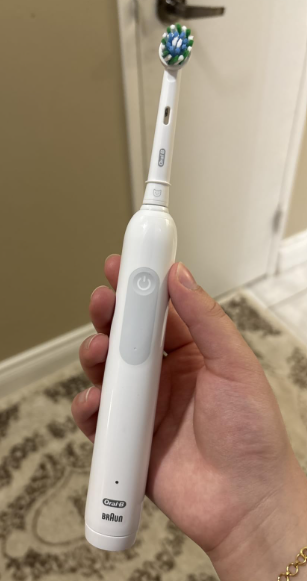
Yes, the Oral-B Pro 1000 is a good electric toothbrush for braces. Its oscillating-rotating cleaning technology, small round brush head, built-in pressure sensor, and two-minute timer make it a practical choice for people wearing traditional orthodontic brackets and wires.
Keeping teeth clean with braces can be challenging. Food particles easily become trapped around brackets, plaque builds up near the gumline, and regular brushing techniques may not reach every surface effectively.
Fortunately, we don’t necessarily need an expensive electric toothbrush to maintain good oral hygiene during orthodontic treatment.
The Oral-B Pro 1000 offers several essential features that can make brushing easier and more consistent. However, choosing the right brush head and learning the correct brushing technique are just as important as the toothbrush itself.
In this guide, we’ll explain whether the Oral-B Pro 1000 is safe for braces, how effectively it cleans around orthodontic appliances, which replacement heads work best, and whether it’s worth buying.
Is the Oral-B Pro 1000 Safe to Use with Braces?
Yes. The Oral-B Pro 1000 is generally safe to use with traditional metal braces and ceramic braces when used correctly.
The toothbrush features a small, round brush head that rotates and oscillates to remove plaque from tooth surfaces. Unlike a manual toothbrush, which requires repeated brushing movements, the Pro 1000 performs most of the cleaning motion automatically.
This can be particularly helpful when navigating brackets, wires, and other orthodontic components.
The most important consideration is brushing pressure.
Applying excessive pressure against brackets can cause discomfort and may put unnecessary stress on orthodontic appliances. Fortunately, the Oral-B Pro 1000 includes a pressure sensor that reduces its pulsating action when excessive force is detected.
However, this does not mean we can press the toothbrush firmly against braces.
We should still use gentle pressure, move slowly around individual teeth, and avoid forcing the brush head against wires or loose brackets.

- REMOVE UP TO 100% MORE PLAQUE* along the gumline whilst PROTECTING GUMS with our dentist-inspired round brush head techn…
- PROTECT YOUR GUMS with sensi cleaning mode and GUM PRESSURE CONTROL that automatically stops brush pulsations when brush…
- MAXIMIZE CLEANING performance with 3 EASY-TO-USE CLEANING MODES + handle-integrated quadrant timer that alerts you every…
Can the Oral-B Pro 1000 Damage Brackets or Wires?
When used properly, the Oral-B Pro 1000 should not damage correctly attached orthodontic brackets or wires.
Electric toothbrushes are commonly used during orthodontic treatment because they can provide effective plaque removal without requiring aggressive manual scrubbing.
However, several precautions are worth following:
- Avoid pushing the brush head forcefully against brackets.
- Do not use the toothbrush to manipulate orthodontic wires.
- Move gently around areas where brackets are particularly exposed.
- Stop brushing an area if a bracket or wire becomes loose.
- Contact your orthodontist if you notice damaged orthodontic components.
The toothbrush’s vibrations may initially feel unusual, particularly shortly after braces have been tightened.
If your teeth are temporarily sensitive, use a gentle touch and consider a soft-bristled replacement head.
Why the Oral-B Pro 1000 Works Well for Braces
Several features make this toothbrush particularly useful during orthodontic treatment.
1. Oscillating-Rotating Cleaning Technology
One of the biggest advantages of the Oral-B Pro 1000 is its cleaning mechanism.
The toothbrush uses oscillating, rotating, and pulsating movements to help break up plaque and remove debris from tooth surfaces.
For people wearing braces, plaque accumulation is a major concern because brackets create additional areas where bacteria can collect.
The Pro 1000 can help clean exposed tooth surfaces around these obstacles.
However, it cannot automatically reach every area beneath orthodontic wires. Additional cleaning tools remain necessary.
2. Small Round Brush Head
The Oral-B Pro 1000 uses a relatively compact, circular brush head.
This design makes it easier to focus on individual teeth rather than attempting to clean several teeth simultaneously.
When brushing around braces, we can position the brush head above a bracket, below it, and along the exposed tooth surface.
This targeted approach helps us pay attention to areas that might otherwise be missed.
The smaller head is also useful for cleaning back teeth, where orthodontic appliances can make access more difficult.
3. Built-In Pressure Sensor
Brushing too hard can irritate gums and contribute to tooth wear over time.
This is especially important during orthodontic treatment because gums may already be sensitive.
The Pro 1000 includes a pressure-control feature that stops its pulsating movement when excessive force is applied.
Although this provides useful protection, it is not the same as the prominent visual pressure indicators available on some more expensive Oral-B toothbrushes.
We should not rely exclusively on the sensor to determine whether our brushing technique is gentle enough.
4. Two-Minute Brushing Timer
The Oral-B Pro 1000 includes a timer designed to encourage the recommended minimum two-minute brushing session.
This feature can be particularly valuable for braces because cleaning every tooth surface requires patience.
Some versions also provide interval signals to encourage us to spend time on different sections of the mouth.
However, two minutes should be considered a starting point rather than a strict limit.
People with braces may need additional time to clean thoroughly around brackets and wires.
5. Simple and Affordable Design
Another advantage of the Oral-B Pro 1000 is its straightforward design.
It does not require a smartphone application, Bluetooth connection, or advanced brushing-tracking system.
For many orthodontic patients, these additional features are unnecessary.
The important factors are effective cleaning, gentle pressure, regular brushing, and proper interdental hygiene.
The Oral-B Pro 1000 covers the basic requirements without the complexity of a premium electric toothbrush.
What Is the Best Oral-B Pro 1000 Brush Head for Braces?
Choosing the correct replacement head can make a substantial difference when brushing around orthodontic appliances.
Although the Oral-B Pro 1000 is compatible with several traditional Oral-B replacement heads, not every design is equally suitable for braces.
Oral-B Ortho Brush Head
The Oral-B Ortho brush head is specifically designed for cleaning around fixed orthodontic appliances.
Its bristle arrangement is intended to reach around brackets and help remove plaque from exposed tooth surfaces.
For people with traditional braces, this can be an excellent option.
Before purchasing, check that the replacement head is compatible with your Pro 1000 handle and available in your region.
Oral-B Sensitive Clean Brush Head
A soft-bristled Sensitive Clean head is another useful choice, particularly for people experiencing gum tenderness.
During orthodontic treatment, the gums may occasionally become irritated because of plaque accumulation or mechanical sensitivity.
Softer bristles can make brushing more comfortable while still providing effective cleaning when used correctly.
This option may be especially appealing after orthodontic adjustments.
Oral-B CrossAction Brush Head
The CrossAction brush head commonly supplied with the Oral-B Pro 1000 can also be used for routine cleaning around braces.
Its angled bristles are designed to help remove plaque from tooth surfaces and along the gumline.
However, its general-purpose design is not specifically optimized for orthodontic brackets.
We may find that a dedicated orthodontic head makes some areas easier to access.
Which Brush Heads Should We Avoid?
Oral-B has advised against using certain specialized heads, including FlossAction and some whitening or polishing heads, with braces.
Compatibility and instructions vary by product generation, so checking the specific replacement head’s guidance is essential.
Also, Oral-B iO replacement heads are not compatible with the traditional Oral-B Pro 1000 handle.
For most people wearing braces, an orthodontic-specific head or a suitable soft-bristled head is the most practical choice.
How to Brush Your Teeth with Braces Using the Oral-B Pro 1000
Using the correct brushing technique is essential for preventing plaque buildup, cavities, and gum inflammation during orthodontic treatment.
Here is a simple routine we can follow.
Step 1: Rinse Your Mouth
Before brushing, rinse your mouth with water to loosen larger food particles trapped around brackets and wires.
This is particularly helpful after meals.
It does not replace brushing, but it can make the cleaning process easier.
Step 2: Apply Fluoride Toothpaste
Place a small amount of fluoride toothpaste on the brush head.
Fluoride helps strengthen tooth enamel and reduces the risk of cavities.
This is especially important for orthodontic patients because plaque left around brackets can contribute to white spot lesions.
Step 3: Clean Above the Brackets
Position the toothbrush so the bristles can reach the tooth surfaces between the gumline and the upper edges of the brackets.
Guide the head gently from tooth to tooth.
Allow the toothbrush’s motor to perform the cleaning movements rather than scrubbing aggressively.
Step 4: Clean Below the Brackets
Next, adjust the brush angle to clean the tooth surfaces beneath the brackets.
This area is easily overlooked because the orthodontic wire can interfere with normal brushing.
Move slowly and spend sufficient time around each bracket.
Step 5: Clean the Gumline
Pay special attention to the gumline, where plaque frequently accumulates.
Position the bristles gently toward the gum margin and guide the brush from one tooth to the next.
Avoid pushing too firmly against sensitive tissue.
Step 6: Brush the Inside and Chewing Surfaces
Braces are attached to the outer surfaces of most teeth, but we still need to clean the inner surfaces and chewing surfaces thoroughly.
Use the Pro 1000 as we would during regular brushing, moving systematically through the mouth.
Step 7: Clean Between Teeth and Around Wires
After brushing, use orthodontic floss, a floss threader, or another recommended interdental cleaning tool.
Small interdental brushes can help remove debris from areas around brackets and beneath wires.
A water flosser may also be useful as an additional cleaning aid, but it should not automatically replace flossing unless your dental professional recommends that approach.
Step 8: Inspect Your Teeth
Finally, examine your teeth in a mirror.
Look for visible food particles or plaque around brackets.
If necessary, clean those areas again.
Regularly checking our brushing results can help us develop better habits throughout orthodontic treatment.
How Often Should You Use the Oral-B Pro 1000 with Braces?
People wearing braces should brush at least twice daily using fluoride toothpaste.
However, orthodontists frequently recommend cleaning after meals because food can become trapped around brackets.
A practical routine might look like this:
| Time | Recommended cleaning |
|---|---|
| Morning | Brush thoroughly with fluoride toothpaste |
| After lunch | Brush when possible or rinse with water |
| After dinner | Brush and remove trapped food particles |
| Before bed | Brush thoroughly and clean between teeth |
Nighttime cleaning is especially important because plaque and food debris should not remain around orthodontic appliances while we sleep.
If brushing after every meal is impractical, rinsing thoroughly with water and removing visible debris can help until the next brushing session.
Oral-B Pro 1000 vs Manual Toothbrush for Braces
Both electric and manual toothbrushes can be effective for people wearing braces.
The biggest difference is how easy it is to maintain consistent brushing movements around orthodontic components.
| Feature | Oral-B Pro 1000 | Manual toothbrush |
|---|---|---|
| Cleaning motion | Powered oscillating-rotating | Hand-powered |
| Two-minute timer | Yes | Usually no |
| Pressure assistance | Built-in sensor | Depends on user |
| Cleaning around brackets | Small powered head helps | Requires careful technique |
| Initial cost | Higher | Lower |
| Replacement costs | Powered brush heads | Manual toothbrushes |
| Learning curve | Requires technique adjustment | Familiar to most users |
The Oral-B Pro 1000 may be particularly beneficial for people who struggle with consistent manual brushing.
However, an electric toothbrush does not automatically guarantee better oral hygiene.
Careful technique, sufficient brushing time, fluoride toothpaste, and interdental cleaning remain essential.
Oral-B Pro 1000 vs Oral-B iO for Braces
If we’re considering a more expensive Oral-B toothbrush, the iO range may be worth examining.
Both product families can be suitable for orthodontic patients, but they differ in their cleaning systems and additional features.
| Feature | Oral-B Pro 1000 | Oral-B iO Series |
|---|---|---|
| Cleaning system | Oscillating-rotating-pulsating | iO magnetic drive |
| Brushing timer | Yes | Yes |
| Pressure feedback | Basic pressure control | More advanced on many models |
| Replacement heads | Traditional compatible heads | iO-specific heads |
| Smart features | No | Available on selected models |
| Price category | Budget | Midrange to premium |
| Suitable for braces | Yes | Yes |
The iO models may appeal to users who want more sophisticated pressure feedback, additional brushing settings, or smart guidance.
However, those extras are not essential for maintaining healthy teeth with braces.
If our priority is a reliable electric toothbrush at a reasonable price, the Pro 1000 remains a sensible option.
Advantages and Disadvantages of Oral-B Pro 1000 for Braces
Before buying, it helps to understand the main strengths and limitations.
Advantages
- Effective powered cleaning around exposed tooth surfaces.
- Small brush head for more precise brushing.
- Built-in pressure control.
- Two-minute timer.
- Compatible with various traditional Oral-B brush heads.
- Straightforward operation.
- Generally more affordable than premium electric toothbrushes.
- Suitable for routine brushing with fixed braces when used correctly.
Disadvantages
- Does not eliminate the need for flossing or interdental brushes.
- Basic pressure feedback compared with more expensive models.
- Specialized orthodontic heads may need to be purchased separately.
- Some users may initially find the vibrations uncomfortable.
- Requires careful positioning around brackets and wires.
- Replacement brush heads create ongoing expenses.
- Does not include advanced brushing-tracking technology.
For most people, these disadvantages are relatively minor compared with the practical benefits.
Can the Oral-B Pro 1000 Remove Plaque Around Braces?
Yes, the Oral-B Pro 1000 can help remove plaque from tooth surfaces around orthodontic brackets.
Its powered cleaning action is particularly useful for removing plaque along accessible areas of the gumline and around individual teeth.
However, there is an important limitation.
Orthodontic brackets and wires create small spaces that a standard toothbrush head cannot always reach.
Even a powerful electric toothbrush may leave plaque behind if these areas are not cleaned separately.
That is why orthodontic patients should combine brushing with appropriate interdental cleaning methods.
Preventing White Spots Around Brackets
One concern during orthodontic treatment is the development of white spot lesions.
These chalky areas can appear when acids produced by plaque bacteria cause minerals to be lost from tooth enamel.
They may become noticeable after braces are removed.
To reduce the risk, we should:
- Brush thoroughly with fluoride toothpaste.
- Clean around every bracket.
- Remove plaque from the gumline.
- Limit frequent sugary snacks and drinks.
- Follow the orthodontist’s instructions regarding fluoride treatments.
- Attend regular dental appointments.
The Pro 1000 can support this routine, but the toothbrush alone cannot prevent every orthodontic-related dental problem.
Is the Oral-B Pro 1000 Good for Sensitive Gums with Braces?
The Oral-B Pro 1000 can be suitable for people with sensitive gums, provided they use gentle pressure and an appropriate brush head.
Gum sensitivity is common during orthodontic treatment.
Some people notice tenderness after adjustments, while others experience inflammation because plaque accumulates near the brackets and gumline.
For sensitive gums, we recommend focusing on brushing technique rather than increasing brushing force.
A soft-bristled replacement head may also improve comfort.
If the gums bleed frequently, remain swollen, or become increasingly painful, arrange a dental evaluation rather than simply avoiding the affected areas.
Persistent bleeding can be a sign of inflammation that requires attention.
Is the Oral-B Pro 1000 Good for Teenagers with Braces?
Yes, the Oral-B Pro 1000 can be a practical choice for teenagers wearing fixed braces.
Many teenagers struggle to maintain consistent brushing habits during orthodontic treatment, especially when cleaning requires extra time.
The built-in timer can encourage longer brushing sessions, while the compact round head helps focus attention on individual teeth.
The relatively simple controls are another advantage.
However, teenagers still need to understand how to position the toothbrush correctly around brackets.
Parents may also need to reinforce daily interdental cleaning and regular orthodontic appointments.
For younger children, suitability should be assessed based on their age, ability to handle the toothbrush, and their dentist’s advice.
Tips to Get Better Results with the Oral-B Pro 1000
We can improve our oral hygiene routine by making a few practical adjustments.
Replace Brush Heads Regularly
Replacement heads generally should be changed about every three months, or sooner if the bristles become worn or frayed.
Braces can sometimes cause bristles to wear more quickly because of contact with brackets and wires.
Inspect the brush head regularly.
Avoid Excessive Pressure
The powered cleaning action already performs the brushing movement.
Pressing harder does not necessarily produce better results.
Instead, guide the toothbrush gently and allow the bristles to contact the tooth surfaces.
Spend Extra Time Around Brackets
The standard two-minute timer provides a useful minimum, but orthodontic patients may need additional cleaning time.
Do not rush through areas where food commonly gets trapped.
Keep Interdental Brushes Available
A small orthodontic interdental brush can be extremely useful after meals.
These brushes are designed to access spaces that larger toothbrush heads cannot easily reach.
Choose a size that fits without forcing it into tight spaces.
Maintain Regular Orthodontic Checkups
Even excellent home brushing cannot replace professional monitoring.
Your orthodontist can identify difficult-to-clean areas and recommend adjustments to your oral hygiene routine.
Is the Oral-B Pro 1000 Worth Buying for Braces?
For many people, yes.
The Oral-B Pro 1000 provides the most important features we would expect from an entry-level electric toothbrush: powered cleaning, pressure control, a brushing timer, and compatibility with multiple traditional replacement heads.
These features are particularly useful during orthodontic treatment, when cleaning around brackets requires more attention than ordinary brushing.
We also appreciate that the Pro 1000 does not require expensive smart features to perform its main function.
Its greatest limitation is that it cannot completely clean beneath wires or between teeth without additional tools.
However, this limitation applies to most standard electric toothbrushes.
For orthodontic patients who want a reasonably priced electric toothbrush and are willing to use appropriate cleaning techniques, the Pro 1000 is a strong option.
Frequently Asked Questions
1. Can You Use the Oral-B Pro 1000 with Metal Braces?
Yes. The Oral-B Pro 1000 can be used with traditional metal braces. Its small round brush head allows targeted cleaning around brackets, while its pressure sensor helps discourage excessive brushing force. Always brush gently and follow your orthodontist’s instructions.
2. What Oral-B Brush Head Is Best for Braces?
The Oral-B Ortho brush head is specifically designed for fixed orthodontic appliances and can be an excellent option when compatible with your handle. A suitable soft-bristled head may also work well, especially if your gums are sensitive.
3. Can the Oral-B Pro 1000 Break Brackets?
Normal, gentle brushing with the Oral-B Pro 1000 should not break properly attached brackets. However, excessive pressure or brushing against already-loose orthodontic components can create problems. Contact your orthodontist if a bracket becomes loose.
4. Is Oral-B Pro 1000 Better Than a Manual Toothbrush for Braces?
The Oral-B Pro 1000 can make consistent cleaning easier because it provides powered brushing movements and a built-in timer. However, both manual and electric toothbrushes can clean effectively when used with proper technique. Interdental cleaning is essential with either option.
5. Do You Need a Special Electric Toothbrush for Braces?
No. Most people do not need an expensive orthodontic-specific electric toothbrush. A standard model such as the Oral-B Pro 1000 can work well when paired with a suitable brush head, fluoride toothpaste, proper brushing technique, and regular interdental cleaning.
Conclusion: Is Oral-B Pro 1000 Good for Braces?
Yes, the Oral-B Pro 1000 is a good choice for people wearing braces, particularly those who want an affordable electric toothbrush with reliable cleaning performance.
Its oscillating-rotating technology, compact brush head, pressure sensor, and brushing timer provide several practical benefits during orthodontic treatment.
We especially like that it offers essential cleaning features without requiring premium technology or a complicated brushing routine.
However, getting the best results depends on using the right replacement head, applying gentle pressure, and carefully cleaning around every bracket.
We also need to remember that electric brushing does not replace flossing or interdental cleaning.
Overall, if you’re looking for a straightforward, budget-friendly electric toothbrush for traditional braces, the Oral-B Pro 1000 is well worth considering. With the correct technique and regular dental care, it can be a valuable part of maintaining healthy teeth and gums throughout orthodontic treatment.