
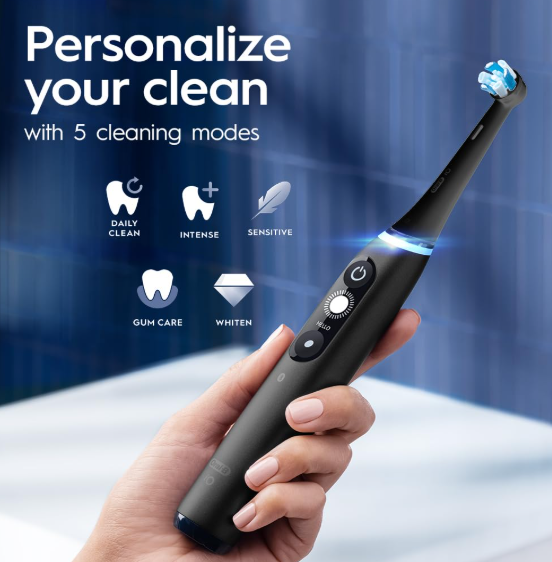
The Oral-B iO Series 7 is an advanced electric toothbrush designed to provide a personalized brushing experience. One of its most useful features is the ability to switch between five different cleaning modes, each developed for a particular oral care need.
However, if you have recently purchased this toothbrush, you might wonder what each mode actually does. Is Daily Clean better than Intense? Should you use Sensitive mode every day? And does Whitening mode genuinely make your teeth whiter?
Understanding the Oral-B iO 7 modes can help you make better use of your toothbrush and choose a cleaning setting that suits your teeth and gums.
In this guide, we’ll explain all five brushing modes, compare their differences, explore the best settings for various dental needs, and show you how to change modes correctly.
What Are the 5 Oral-B iO 7 Cleaning Modes?
The Oral-B iO7 features five smart brushing modes:
- Daily Clean: Standard cleaning for everyday plaque removal.
- Sensitive: Gentler brushing for sensitive teeth and gums.
- Gum Care: A gentle brushing pattern designed to massage the gums.
- Whitening: A polishing mode intended to help remove surface stains.
- Intense: A more powerful cleaning setting for a thorough-clean feeling.
Although these modes use the same toothbrush motor and compatible brush heads, they modify the brushing action to provide different cleaning experiences.
Oral-B iO7 Modes Comparison Table
| Cleaning Mode | Main Purpose | Brushing Intensity | Best For |
|---|---|---|---|
| Daily Clean | Everyday plaque removal | Standard | Most users |
| Sensitive | Gentle cleaning | Lower | Sensitive teeth and gums |
| Gum Care | Gentle gumline care | Gentle, pulsing action | Gum-focused brushing |
| Whitening | Surface stain polishing | Variable | Coffee, tea, and other surface stains |
| Intense | Stronger cleaning sensation | Higher | Users who prefer a more powerful clean |
All five modes can contribute to a good brushing routine, but they are not necessarily equally comfortable for everyone.
Let’s examine each setting in detail.
1. Oral-B iO7 Daily Clean Mode Explained
Daily Clean is the standard brushing mode on the Oral-B iO Series 7.
It provides a balanced cleaning action intended for removing plaque from your teeth during normal daily brushing.
This is generally the best starting point if you have healthy teeth and gums and do not require a particularly gentle setting.
How Does Daily Clean Mode Work?
Daily Clean combines the iO toothbrush’s oscillating-rotating cleaning action with micro-vibrations.
The round brush head surrounds individual teeth, allowing you to clean tooth surfaces and along the gumline without relying on aggressive manual brushing movements.
The standard cleaning intensity is designed to balance comfort and effective plaque removal.
Who Should Use Daily Clean Mode?
We recommend considering Daily Clean if:
- You have no significant tooth sensitivity.
- Your gums are generally healthy.
- You want a simple everyday cleaning routine.
- You are switching from a conventional electric toothbrush.
- You do not need a specialized polishing or gum-focused setting.
Is Daily Clean the Best Oral-B iO7 Mode?
For many users, yes.
Daily Clean provides the essential cleaning performance most people need without requiring a stronger setting.
Remember that brushing technique, duration, coverage, and appropriate pressure are usually more important than selecting the most powerful mode.
Our recommendation: Start with Daily Clean for your morning and evening brushing sessions, unless your teeth or gums require a gentler approach.
2. Oral-B iO7 Sensitive Mode Explained
Sensitive mode is designed for people who experience discomfort when brushing their teeth or gums.
Compared with Daily Clean, this setting uses a gentler brushing action with reduced intensity.
It still helps remove plaque, but the brushing experience feels softer.
How Does Sensitive Mode Work?
When Sensitive mode is activated, the toothbrush operates at a lower intensity.
This can make brushing more comfortable around delicate areas, particularly if you have experienced tenderness while using stronger electric toothbrush settings.
However, Sensitive mode does not eliminate the need to use light pressure.
When Should You Use Sensitive Mode?
Sensitive mode may be appropriate if you experience:
- Tooth sensitivity when brushing.
- Mild gum tenderness.
- Discomfort with stronger electric toothbrush settings.
- Sensitivity associated with exposed root surfaces.
- Temporary sensitivity following certain dental procedures, when your dentist has approved normal brushing.
It can also be a good option for people using an electric toothbrush for the first time.
Can You Use Sensitive Mode Every Day?
Absolutely.
There is no requirement to switch to Daily Clean or Intense once your teeth become accustomed to electric brushing.
A gentler mode can be suitable for long-term everyday use when combined with proper technique and sufficient brushing time.
In fact, if Sensitive mode makes brushing more comfortable, it may encourage you to brush consistently for the recommended two minutes.
Our recommendation: Choose Sensitive if Daily Clean feels too strong or if your dentist has advised gentle brushing.
3. Oral-B iO7 Gum Care Mode Explained
Gum Care is one of the features that distinguishes the iO7 from some lower-numbered Oral-B iO models.
This mode is designed to provide a gentle gum-focused brushing experience.
Instead of emphasizing maximum cleaning intensity, Gum Care uses a softer pulsing pattern intended to massage and stimulate the gums while brushing.
What Does Gum Care Mode Actually Do?
Gum Care adjusts the toothbrush’s movement to create a more comfortable cleaning experience around the gumline.
Its main purpose is to support brushing in areas where plaque frequently accumulates: the boundary between teeth and gums.
However, Gum Care mode is not a treatment for gum disease, and the massage sensation alone does not guarantee healthier gums.
Effective plaque removal, flossing or interdental cleaning, and professional dental care remain essential.
Who Should Use Gum Care Mode?
This setting may be useful for people who:
- Want a gentle brushing experience around the gumline.
- Prefer a less intense sensation than standard cleaning.
- Want additional attention to their daily gum-care routine.
- Find stronger brushing modes uncomfortable near their gums.
If your gums bleed repeatedly, become swollen, or feel painful, you should consult a dentist rather than rely on a particular brushing mode to resolve the problem.
Is Gum Care Better Than Sensitive Mode?
Not necessarily.
Both settings provide gentler brushing experiences, but they have different purposes.
Sensitive focuses on reducing brushing intensity for overall comfort.
Gum Care uses a specialized brushing pattern designed for gentle gumline massage.
If your primary concern is tooth sensitivity, Sensitive may be the better choice.
If you prefer a gentle gum-focused brushing pattern, Gum Care may be more appealing.
Our recommendation: Use Gum Care if you appreciate its gentler pulsing sensation, but prioritize cleaning every tooth thoroughly rather than concentrating only on the gums.
4. Oral-B iO7 Whitening Mode Explained
Whitening mode is designed to help polish away external stains from the tooth surface.
These stains can develop from everyday habits such as drinking coffee, tea, or red wine.
The Oral-B iO7 Whitening setting modifies the brushing pattern by alternating speeds to create a polishing effect.
How Does Whitening Mode Work?
Unlike Daily Clean, which uses a more consistent brushing action, Whitening mode changes its operating speed during brushing.
This variation is intended to support polishing and the removal of surface discoloration.
However, it is important to understand what Whitening mode can and cannot accomplish.
Does Oral-B iO7 Whitening Mode Actually Whiten Teeth?
Whitening mode can help remove some external surface stains, which may make teeth look cleaner or brighter.
However, it does not chemically bleach the teeth or change their natural underlying color.
For example:
- Coffee stains may become less noticeable with consistent cleaning.
- Tea-related surface discoloration may gradually improve.
- Natural tooth color will not fundamentally change.
- Deep or internal discoloration generally requires professional assessment and possibly whitening treatment.
The results depend on factors such as the type of stain, your brushing technique, toothpaste, and existing dental conditions.
Can You Use Whitening Mode Every Day?
Oral-B describes Whitening as suitable for occasional or everyday polishing.
Nevertheless, stronger brushing pressure or abrasive toothpaste can increase the risk of unwanted tooth wear, regardless of the selected mode.
If you have sensitive teeth, gum recession, or exposed root surfaces, consult your dentist about whether this setting is appropriate.
Our recommendation: Whitening is worth trying if surface stains are a concern, but do not expect results comparable to professional bleaching.
5. Oral-B iO7 Intense Mode Explained
Intense is the most powerful-feeling brushing option available on the Oral-B iO Series 7.
It operates at a higher speed than the standard cleaning setting, producing a stronger cleaning sensation.
Some users prefer this mode because their teeth feel particularly smooth after brushing.
How Does Intense Mode Work?
The toothbrush increases the brushing intensity to provide a more vigorous cleaning action.
This does not mean you should apply additional pressure to the teeth.
The motor provides the movement, and your job is to guide the brush head gently across each tooth.
Who Should Use Intense Mode?
Intense may appeal to users who:
- Prefer a stronger electric toothbrush sensation.
- Are accustomed to high-intensity brushing.
- Find standard brushing settings too gentle for their personal preference.
- Want an occasional more powerful-feeling clean.
However, stronger does not automatically mean better.
There is no need to choose Intense if Daily Clean is already helping you brush effectively.
Is Intense Mode Safe for Everyday Use?
It can be appropriate for some users, provided brushing remains comfortable and pressure is controlled.
However, people with sensitive teeth, gum recession, exposed root surfaces, or ongoing gum discomfort may find a gentler mode more suitable.
If Intense causes pain or irritation, switch to Sensitive or Daily Clean.
Our recommendation: Treat Intense as an optional preference rather than a necessary upgrade over standard brushing.
Which Oral-B iO7 Mode Is Best for Your Teeth?
Choosing the best Oral-B iO7 cleaning mode depends on your personal oral health and comfort.
Here is a practical comparison:
| Your Situation | Recommended Mode | Reason |
|---|---|---|
| Healthy teeth and gums | Daily Clean | Balanced everyday cleaning |
| Sensitive teeth | Sensitive | Lower brushing intensity |
| Preference for gentle gum massage | Gum Care | Specialized gentle brushing pattern |
| Coffee or tea surface stains | Whitening | Polishing action |
| Preference for stronger brushing | Intense | Higher cleaning intensity |
| New electric toothbrush user | Sensitive or Daily Clean | Comfortable introduction |
| Gum recession or exposed roots | Sensitive, with dental guidance | Gentler cleaning may be more comfortable |
| General long-term oral hygiene | Daily Clean or Sensitive | Suitable for consistent routines |
There is no single mode that is universally best.
The most effective setting is generally one that allows you to clean all tooth surfaces thoroughly without discomfort or excessive pressure.
Oral-B iO7 Sensitive vs Gum Care: What’s the Difference?
Sensitive and Gum Care are two of the most commonly confused Oral-B iO7 modes.
Both are designed to provide a gentler experience than a high-intensity brushing setting.
However, they work differently.
Sensitive Mode
Sensitive reduces overall brushing intensity.
Its primary purpose is to help users clean teeth more comfortably when they experience sensitivity.
Gum Care Mode
Gum Care modifies the brushing pattern to provide gentle pulses intended to massage the gums.
Its emphasis is on gum-focused comfort while brushing.
Which One Should You Choose?
If your teeth are sensitive to brushing, we would generally start with Sensitive mode.
If your teeth feel comfortable but you enjoy a gentle gumline-focused cleaning pattern, Gum Care is worth trying.
Remember that neither mode substitutes for professional treatment when sensitivity or gum problems persist.
Oral-B iO7 Daily Clean vs Intense: Which Cleans Better?
A common assumption is that higher motor speed automatically produces cleaner teeth.
In practice, plaque removal depends on several factors:
- Brushing for a sufficient amount of time.
- Reaching the front, back, and chewing surfaces.
- Cleaning along the gumline.
- Avoiding excessive brushing pressure.
- Replacing worn brush heads.
Intense may produce a stronger brushing sensation, but that does not prove it will remove more plaque for every user.
Someone using Daily Clean with excellent technique can achieve better overall cleaning than someone using Intense while rushing through their brushing routine.
For most people, Daily Clean is a sensible default.
Oral-B iO7 Whitening vs Daily Clean
These modes share the same fundamental cleaning technology but have different brushing patterns.
Daily Clean is intended for normal plaque removal and maintaining oral hygiene.
Whitening adds a variable-speed polishing action intended to help remove external stains.
Whitening is not inherently a better everyday cleaning mode.
If you are happy with your tooth color and primarily want to maintain good oral hygiene, Daily Clean is usually sufficient.
If surface staining is an issue, Whitening provides an additional option.
How to Change Modes on the Oral-B iO 7
One advantage of the iO7 is its interactive handle display, which makes selecting brushing modes more convenient.
Unlike simpler electric toothbrushes that rely only on indicator lights, the iO7 can display mode names and provide brushing information.
Step-by-Step Instructions
- Pick up your Oral-B iO7 or remove it from the charger to wake the display.
- Find the mode button on the toothbrush handle, below the main power button.
- Press the mode button to cycle through the available cleaning modes.
- Look at the display to identify the selected mode.
- Once your preferred mode appears, press the power button to begin brushing if the toothbrush is not already running.
- You can also cycle through the modes during brushing using the mode button.
The display allows you to identify the selected setting without guessing from the sound or vibration.
Does the Oral-B iO7 Remember Your Last Mode?
Yes. The toothbrush normally starts in the cleaning mode used during the previous brushing session.
For example, if you select Sensitive mode and finish brushing, the toothbrush should begin in Sensitive mode the next time you use it.
This is useful if you regularly use the same setting.
Compatible mode preferences and settings may also be managed through the Oral-B app.
Understanding the Oral-B iO7 Pressure Sensor
The Oral-B iO7 includes a Smart Pressure Sensor that provides visual feedback as you brush.
This feature is important because using too much pressure can contribute to gum irritation and tooth wear.
The light ring changes color depending on the pressure applied.
| Pressure Sensor Color | Meaning | What to Do |
|---|---|---|
| Red | Too much pressure | Reduce pressure |
| Green | Appropriate pressure | Maintain your technique |
| White | Too little pressure | Apply slightly more contact pressure |
The white indication may be affected by personalized light-ring color settings on some configurations.
Why Pressure Matters More Than Intensity
Even when using Sensitive mode, pushing the brush head aggressively against your teeth can cause discomfort.
Similarly, Intense mode does not require hard brushing.
Allow the toothbrush to perform the cleaning movement and guide it slowly from tooth to tooth.
A light, controlled brushing technique is preferable to scrubbing.
How Long Should You Brush With Each Oral-B iO7 Mode?
The standard recommendation is to brush for approximately two minutes, twice daily, using fluoride toothpaste, unless your dental professional advises otherwise.
The iO7 includes timer functionality to help you maintain a consistent routine.
A useful approach is to divide your mouth into four sections and spend approximately 30 seconds on each.
These sections are:
- Upper right teeth.
- Upper left teeth.
- Lower right teeth.
- Lower left teeth.
Make sure to cover the outer, inner, and chewing surfaces within each section.
The toothbrush provides timer feedback to help you monitor your brushing session.
The five cleaning modes do not require five separate brushing sessions. You only need to choose the mode suited to your routine.
Which Brush Head Should You Use With Each iO7 Mode?
Your brush head can influence how comfortable a particular cleaning mode feels.
The Oral-B iO7 works with Oral-B iO-specific replacement heads rather than conventional Oral-B rotating brush heads.
Two commonly available options are Ultimate Clean and Gentle Care.
Oral-B iO Ultimate Clean
Ultimate Clean is intended for thorough everyday plaque removal.
It can be paired with Daily Clean, Whitening, and Intense, depending on personal comfort.
However, it is also usable with the other cleaning settings.
Oral-B iO Gentle Care
Gentle Care uses a brush design intended for a softer cleaning experience.
It may be particularly appealing when using Sensitive or Gum Care.
If you experience discomfort with a standard brush head, switching to Gentle Care can be worth considering.
How Often Should You Replace the Brush Head?
A common recommendation is to replace the brush head approximately every three months, or sooner if the bristles become visibly worn or damaged.
A worn brush head may provide a less effective and less comfortable cleaning experience regardless of the selected mode.
Common Mistakes When Using Oral-B iO7 Cleaning Modes
Even an advanced toothbrush cannot compensate for poor brushing habits.
These are some mistakes worth avoiding.
1. Assuming Intense Is Always Better
Higher brushing intensity does not necessarily produce healthier teeth.
Daily Clean or Sensitive may be entirely adequate when used correctly.
2. Pressing Too Hard
Electric toothbrushes are designed to perform the brushing movement for you.
Excessive pressure may irritate gums and contribute to mechanical wear.
Use the pressure sensor to help maintain appropriate contact.
3. Expecting Whitening Mode to Bleach Teeth
Whitening mode focuses on surface polishing.
It cannot replace professional whitening treatments when deeper discoloration is present.
4. Brushing for Less Than Two Minutes
Choosing a specialized mode is less important than allowing enough time to clean your mouth thoroughly.
5. Ignoring Persistent Gum Bleeding
If your gums repeatedly bleed during brushing, do not simply switch to Gum Care and assume the problem is solved.
Persistent bleeding can indicate inflammation or other dental issues requiring professional assessment.
6. Using the Wrong Replacement Brush Heads
The iO7 requires compatible Oral-B iO brush heads.
Traditional Oral-B replacement heads are not interchangeable with the iO system.
Does the Oral-B iO7 Have Super Sensitive or Tongue Clean Mode?
No. The standard Oral-B iO Series 7 has five brushing modes: Daily Clean, Sensitive, Gum Care, Whitening, and Intense.
Super Sensitive and Tongue Clean are not included among the standard iO7 settings.
This is worth clarifying because instruction manuals covering multiple Oral-B iO models may show additional modes that are not available on your specific toothbrush.
Some other iO models include Super Sensitive or Tongue Clean, but the availability depends on the model.
For example, the higher-end iO9 and iO10 feature seven brushing modes, including those additional settings.
The iO7’s five modes already provide a useful range of options for most everyday brushing preferences.
How to Get the Best Results From Your Oral-B iO7
The cleaning mode you select is only one part of an effective oral hygiene routine.
We recommend combining your preferred setting with the following habits:
- Brush twice daily for approximately two minutes.
- Use fluoride toothpaste appropriate for your dental needs.
- Maintain gentle pressure and monitor the Smart Pressure Sensor.
- Move the brush head slowly across each tooth rather than scrubbing.
- Clean between your teeth daily with floss or suitable interdental brushes.
- Replace brush heads when worn or at approximately three-month intervals.
- Attend dental checkups based on your individual oral health needs.
You can also use the Oral-B app to review brushing feedback, monitor coverage, and develop more consistent habits.
These features may be particularly helpful if you frequently miss certain teeth or brush for less time than intended.
Frequently Asked Questions About Oral-B iO7 Modes
1. What Is the Best Cleaning Mode on the Oral-B iO7?
Daily Clean is generally the best starting point for most people because it provides balanced everyday plaque removal.
However, Sensitive may be more comfortable if you have tooth or gum sensitivity. The best setting depends on your individual needs and brushing technique.
2. What Is the Difference Between Sensitive and Gum Care on the Oral-B iO7?
Sensitive mode reduces overall brushing intensity to provide a gentler cleaning experience.
Gum Care uses a specialized gentle pulsing pattern intended to massage the gums while brushing.
Both can be suitable for users who prefer softer brushing, but they emphasize different sensations.
3. Does the Oral-B iO7 Whitening Mode Really Work?
Whitening mode can help polish away some external stains from the tooth surface, potentially improving the appearance of stained teeth.
However, it does not bleach teeth or change their natural color. Results vary depending on the cause and severity of discoloration.
4. Can I Use Intense Mode on My Oral-B iO7 Every Day?
Some users can comfortably use Intense as part of their daily routine, provided they maintain appropriate pressure and brushing technique.
However, if your teeth or gums become uncomfortable, switching to Daily Clean or Sensitive may be preferable. Greater intensity is not always necessary for effective plaque removal.
5. Why Does My Oral-B iO7 Keep Starting in the Same Mode?
The iO7 normally remembers the last brushing mode selected.
If you finish brushing in Sensitive mode, for example, it will generally start in Sensitive mode again during your next session.
To change the setting, press the mode button and select a different cleaning mode from the display.
Conclusion: Which Oral-B iO7 Mode Should You Use?
The five Oral-B iO7 cleaning modes make it possible to personalize your brushing routine according to your comfort and oral care priorities.
Daily Clean is a sensible everyday choice, Sensitive provides a gentler experience, Gum Care offers a gum-focused brushing pattern, Whitening helps polish surface stains, and Intense provides a stronger cleaning sensation.
For most people, we would recommend starting with Daily Clean or Sensitive and experimenting with the other modes according to personal preference.
The important thing to remember is that selecting a stronger or more specialized mode does not automatically result in cleaner teeth.
Good technique, adequate brushing time, gentle pressure, and consistent oral hygiene habits remain the foundation of effective cleaning.
Once you understand what each Oral-B iO7 mode does, choosing the right setting becomes much easier—and you can take full advantage of the toothbrush without making your daily routine unnecessarily complicated.