
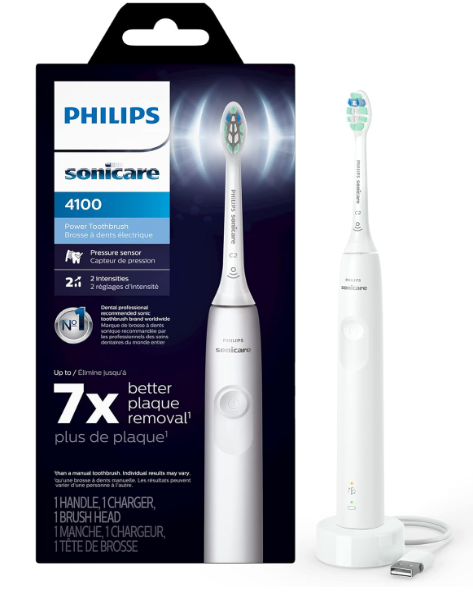
Why the Philips Sonicare 4100 Battery Life Matters More Than Most People Think
When we buy an electric toothbrush, we usually obsess over brushing modes, pressure sensors, and sleek handles. But let’s be honest for a second: battery life quietly determines whether we love the toothbrush six months later or toss it into a bathroom drawer next to forgotten razors and tangled charging cables.
The Philips Sonicare 4100 has built a reputation for being one of the most balanced sonic toothbrushes on the market. It is not overloaded with flashy features, yet it delivers something people actually use every day—reliable cleaning and dependable battery endurance.
And that battery life? Surprisingly impressive.
In this guide, we will dive deep into how long the Philips Sonicare 4100 battery lasts, what affects it, how to extend it, how it compares with competitors, and whether it is still a smart buy in 2026.
Understanding the Philips Sonicare 4100 at a Glance
Before discussing battery performance, we should understand where the Sonicare 4100 sits in the lineup.
The Philips Sonicare 4100 is essentially the “sweet spot” model in the Sonicare family. It offers:
- Sonic cleaning technology
- Pressure sensor
- Two intensity settings
- SmartTimer and QuadPacer
- Long-lasting rechargeable battery
- BrushSync replacement reminder
It skips luxury extras like:
- Bluetooth
- App integration
- Multiple cleaning modes
- Premium travel cases
That simplicity actually helps the battery last longer.
Think of it like a fuel-efficient car without unnecessary weight. Fewer power-hungry features often translate into stronger battery endurance.
How Long Does the Philips Sonicare 4100 Battery Last?
The Official Battery Estimate
According to Philips Sonicare Official Website, the Philips Sonicare 4100 battery can last up to:
- 14 days on a full charge
- Based on:
- Two brushing sessions daily
- Two minutes per session
That equals:
- 28 brushing sessions total
- Roughly 56 minutes of runtime
For a mid-range sonic toothbrush, that is genuinely solid.
Real-World Battery Performance
Does It Actually Last Two Weeks?
In real-world use, most people report somewhere between:
- 10 to 14 days
- Sometimes longer with lighter use
Battery life depends heavily on:
- Intensity setting
- Brushing habits
- Battery age
- Charging behavior
- Room temperature
If we brush aggressively on the higher intensity mode, the battery drains faster.
Still, compared to many competitors, the Sonicare 4100 performs remarkably well.
What Type of Battery Does the Sonicare 4100 Use?
Lithium-Ion Technology
The Sonicare 4100 uses a rechargeable lithium-ion battery.
That matters because lithium-ion batteries offer:
- Better longevity
- Lower self-discharge
- Faster charging
- No memory effect
Compared to older nickel-based batteries, lithium-ion feels like upgrading from a flip phone to a smartphone.
How Long Does It Take to Charge?
Charging Time Breakdown
A completely drained Philips Sonicare 4100 typically takes:
- Approximately 24 hours to fully charge
Some users wish it charged faster, especially compared to modern electronics.
But here is the trade-off:
- Slower charging can reduce heat
- Reduced heat can help preserve battery health over time
In other words, Philips prioritized battery longevity over ultra-fast charging.
Understanding the Battery Indicator
How the Toothbrush Tells You It Needs Charging
The Sonicare 4100 uses LED indicators to communicate battery status.
Solid Green Light
Battery is sufficiently charged.
Flashing Green
Battery is charging.
Flashing Amber or Yellow
Battery is low.
No Light
Battery may be completely depleted.
The warning system is simple, but effective. It does not bombard us with unnecessary information.
Can You Use the Sonicare 4100 While Charging?
Short Answer: No
The Philips Sonicare 4100 is designed with safety in mind.
That means:
- It generally cannot operate while actively charging
- This reduces electrical risk in wet environments
Honestly, this is a smart design choice. Bathrooms and electricity are not exactly best friends.
How Battery Life Changes Over Time
What Happens After 1–3 Years?
All rechargeable batteries degrade eventually.
The Sonicare 4100 is no exception.
After:
- 1 year → Minimal battery reduction
- 2 years → Slightly shorter runtime
- 3+ years → Noticeable decline possible
Instead of lasting 14 days, an older unit may last:
- 7–10 days
- Or even less with heavy use
That is normal lithium-ion aging.
Signs Your Sonicare 4100 Battery Is Weakening
Common Symptoms
Watch for:
- Frequent recharging
- Reduced motor strength
- Random shutdowns
- Charging light behaving oddly
- Toothbrush dying before completing a session
If multiple symptoms appear together, battery wear is likely the cause.
How to Extend Philips Sonicare 4100 Battery Life
Simple Habits That Make a Big Difference
Battery longevity is partly in our hands.
Here are the best practices:
Avoid Constant Charging
Do not leave it permanently plugged in if unnecessary.
Let the Battery Cycle Naturally
Occasionally allow partial discharge before recharging.
Store at Moderate Temperatures
Extreme heat damages lithium-ion batteries faster.
Keep the Charger Dry and Clean
Moisture can reduce charging efficiency.
Use the Lower Intensity Setting When Possible
Less power consumption equals longer runtime.
Tiny habits can add months—or years—to battery health.
Traveling With the Philips Sonicare 4100
Is the Battery Good for Travel?
Absolutely.
This is one of the Sonicare 4100’s strongest advantages.
A two-week battery life means:
- Weekend trips require no charger
- Business travel becomes easier
- Bathroom counter clutter disappears
It is surprisingly liberating not carrying charging docks everywhere.
International Travel Considerations
Voltage Compatibility
The Sonicare charger generally supports:
- 100–240V
That means it works internationally with the correct plug adapter.
For travelers, this is huge.
The toothbrush becomes almost “set and forget,” like a reliable passport companion.
How the Sonicare 4100 Battery Compares to Oral-B
Battery Battle: Sonicare vs Oral-B
Many Oral-B models in the same price range use:
- Older battery systems
- Shorter runtimes
Typical comparisons:
- Sonicare 4100 → ~14 days
- Comparable Oral-B → ~7–10 days
That difference becomes very noticeable during travel.
Why Sonic Toothbrushes Often Have Better Battery Life
Efficiency Matters
Sonic toothbrushes use:
- High-frequency vibrations
- Less mechanical movement
Oscillating brushes often require:
- More motor torque
- More moving components
That increased mechanical effort can consume more energy.
The result?
Sonic toothbrushes frequently achieve superior battery efficiency.
Does Brush Head Choice Affect Battery Life?
Yes, Slightly
Different brush heads create varying resistance levels.
For example:
- Dense bristles may increase motor load
- Older worn heads can reduce efficiency
The difference is usually small, but measurable over time.
Using fresh compatible brush heads helps maintain optimal performance.
Can You Replace the Battery in a Sonicare 4100?
Technically Yes, Practically Difficult
The Sonicare 4100 was not designed for easy battery replacement.
Opening the handle:
- Risks water resistance damage
- Requires technical skill
- May void warranties
Most users eventually replace the entire handle rather than repairing the battery.
How Long Should the Entire Toothbrush Last?
Expected Lifespan
With proper care, many Sonicare 4100 handles last:
- 3 to 5 years
- Sometimes longer
Battery health is usually the limiting factor rather than the brushing motor itself.
That says a lot about the product’s engineering quality.
Battery Life vs Brushing Power
Does Longer Battery Mean Weaker Cleaning?
Not at all.
The Sonicare 4100 still delivers:
- 31,000 brush strokes per minute
- Strong plaque removal
- Effective gum cleaning
Philips balanced:
- Power
- Efficiency
- Simplicity
Like a marathon runner rather than a sprinter, the toothbrush prioritizes sustained performance.
What Drains the Battery Faster?
Common Battery Killers
Several habits accelerate battery depletion:
Overusing High Intensity
More power equals more energy draw.
Repeated Short Charging Sessions
Can gradually stress lithium-ion chemistry.
Leaving It in Hot Cars
Heat is brutal for batteries.
Using Damaged Chargers
Inconsistent charging hurts efficiency.
Long-Term Storage While Empty
Deep discharge can permanently reduce capacity.
Is the Sonicare 4100 Good for Families?
Shared Household Use
For single users, battery life is excellent.
For families sharing handles:
- Recharge frequency increases significantly
Example:
- One user → 14 days
- Two users → Around 7 days
Still respectable, but worth considering.
How the Battery Impacts Daily Convenience
The Hidden Luxury
Battery life sounds boring until we experience bad battery life.
Then suddenly:
- Chargers matter
- Counter space matters
- Travel stress matters
The Sonicare 4100 quietly eliminates those annoyances.
It is like having a reliable friend who never forgets appointments.
Not flashy.
Just dependable.
Environmental Perspective
Rechargeable vs Disposable Batteries
The Sonicare 4100’s rechargeable system reduces:
- Disposable battery waste
- Frequent replacements
- Environmental impact
Longer battery lifespan also means:
- Fewer discarded electronics
- Better long-term sustainability
That may not be the first thing we think about while brushing, but it matters.
Should You Leave It on the Charger All the Time?
Mixed Opinions Exist
Modern lithium-ion batteries are smarter than older technologies.
Still, constantly keeping the toothbrush on the charger:
- May slightly accelerate aging
- Keeps the battery at maximum charge stress
A balanced approach works best:
- Recharge when needed
- Disconnect once fully charged
Simple.
What Happens If the Battery Completely Dies?
Deep Discharge Concerns
If unused for many months:
- The battery may enter deep discharge
- Recovery can become difficult
To avoid this:
- Charge the toothbrush periodically during storage
Even electronics dislike being forgotten.
Is the Philips Sonicare 4100 Battery Life Worth It?
Final Verdict
Yes—without question.
The Philips Sonicare 4100 battery life is one of the strongest reasons to buy this toothbrush.
We get:
- Reliable two-week endurance
- Strong sonic cleaning
- Travel-friendly convenience
- Consistent long-term performance
It avoids the trap many modern gadgets fall into:
- Overcomplication
- Feature overload
- Excessive battery drain
Instead, the Sonicare 4100 focuses on what truly matters.
And honestly?
That simplicity is refreshing.
Closing Thoughts
The Philips Sonicare 4100 may not be the flashiest electric toothbrush on the market, but its battery life punches above its weight. In a world where many devices barely survive a single day without charging, having a toothbrush that can comfortably last two weeks feels oddly luxurious.
It is dependable.
Predictable.
Low-maintenance.
And sometimes, those are the best kinds of products.
If we want an electric toothbrush that balances cleaning performance, affordability, and battery endurance without unnecessary gimmicks, the Sonicare 4100 remains one of the smartest choices available.
FAQs
How long does the Philips Sonicare 4100 battery last on one charge?
The battery typically lasts up to 14 days with two daily brushing sessions lasting two minutes each.
How do I know when my Sonicare 4100 needs charging?
The LED indicator flashes amber or yellow when the battery becomes low.
Can I leave the Philips Sonicare 4100 charging overnight?
Yes, occasional overnight charging is generally safe because the toothbrush uses lithium-ion battery protection systems.
Does the Sonicare 4100 battery weaken over time?
Yes, like all rechargeable batteries, capacity gradually decreases after several years of use.
Is the Philips Sonicare 4100 good for travel?
Absolutely. Its long battery life makes it ideal for vacations, business trips, and daily portability.