
Choosing an electric toothbrush sounds simple… until we fall into the rabbit hole of vibrating handles, pressure sensors, sonic pulses, and endless model numbers. Suddenly, a quick shopping decision feels like comparing smartphones.
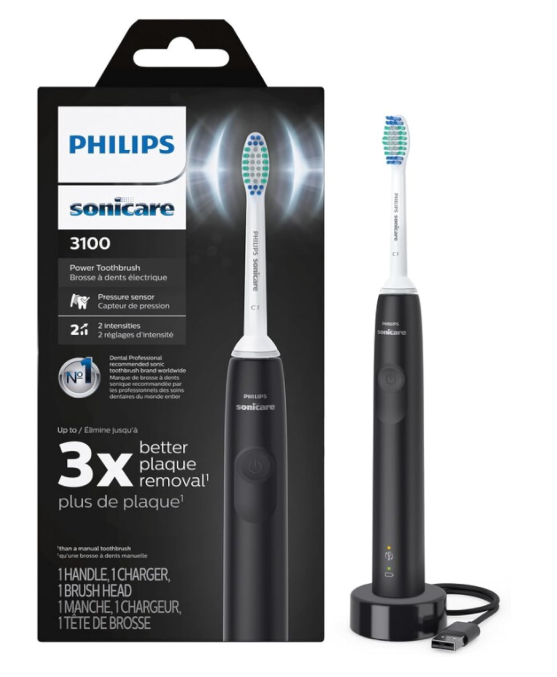
That is exactly what happens when we look at the Philips Sonicare 4100 and the Philips Sonicare 3100.
At first glance, they look almost identical. Same sleek Sonicare DNA. Same minimalist design. Same promise of healthier gums and cleaner teeth. But underneath the surface, there are subtle differences that can completely change the brushing experience depending on what we actually need.
So, which one offers better value? Which one cleans more effectively? And is the 4100 truly worth paying extra for?
Let’s break it all down in a way that feels human — not like reading a robotic spec sheet written by a dishwasher manual.
Why People Compare the Philips Sonicare 4100 and 3100 So Often
The comparison exists because both toothbrushes live in a very similar price neighborhood.
They are not entry-level disposable gadgets, yet they are not ultra-premium luxury brushes either. Think of them as the “sweet spot” models in the Sonicare family.
Both brushes target people who:
- Want cleaner teeth without spending a fortune
- Prefer simplicity over dozens of unnecessary modes
- Need gentle but effective plaque removal
- Want to upgrade from manual brushing
- Care about gum health
In many ways, the 3100 and 4100 are cousins separated by a few premium features.
But sometimes, those tiny differences matter more than we expect.
A Quick Look at the Sonicare Philosophy
Before comparing features, we should understand what makes Sonicare brushes unique.
Unlike rotating toothbrushes that scrub side to side like tiny car washes, Sonicare brushes use high-frequency sonic vibrations.
The core motion can be summarized as:
f(x)=31000 brush strokes per minute
That sonic action creates fluid movement between teeth and along the gumline. Imagine a miniature pressure wave helping loosen plaque in places where bristles barely reach.
The sensation feels different from oscillating brushes. Less mechanical. More like a humming massage for the mouth.
Some people love it immediately.
Others need a few days before their brain stops asking, “Why does my toothbrush feel like a tiny spaceship?”
Design Comparison: Nearly Twins
The Similarities Are Striking
Place the 3100 and 4100 next to each other and most people would struggle to tell them apart.
Both feature:
- Slim ergonomic handles
- Minimal button layout
- Lightweight construction
- Compact charging base
- Familiar Sonicare brush head system
Philips clearly follows the “less is more” philosophy here. No clutter. No flashy chrome explosions. Just clean Scandinavian-style simplicity.
And honestly? That’s refreshing.
Some toothbrushes look like gaming controllers from the future. These do not.
The 4100 Feels Slightly More Refined
The differences are subtle but noticeable in hand.
The 4100 often feels:
- Slightly more premium
- More polished in finish
- Better dampened during vibration
It is like comparing two nearly identical coffee mugs where one simply feels nicer every morning.
Not life-changing.
But noticeable.
Cleaning Performance: Is There a Real Difference?
Here comes the big question.
Does the 4100 actually clean better?
The short answer: yes, but not dramatically.
Both brushes use Sonicare sonic technology, which means the overall brushing experience remains very similar.
However, the 4100 introduces intensity settings that give users more control.
Philips Sonicare 3100 Cleaning Experience
The 3100 keeps things simple.
You basically get:
- One brushing mode
- Consistent power
- Pressure sensor protection
- Timer functionality
For many people, this is more than enough.
The brush feels gentle compared to aggressive oscillating models, yet it still removes plaque effectively.
If you are upgrading from a manual toothbrush, the difference feels enormous.
Your teeth often feel:
- Smoother
- Cleaner
- Fresher for longer
Like running your tongue across polished glass.
Philips Sonicare 4100 Cleaning Experience
The 4100 takes the same foundation and adds customization.
That includes:
- Two intensity levels
- Better adaptability for sensitive users
- Slightly more refined vibration control
This matters more than it sounds.
Some people find full Sonicare power overwhelming initially. The lower intensity setting creates a gentler transition.
It is similar to learning how to drive a sports car in comfort mode before switching to sport mode.
Pressure Sensor Technology
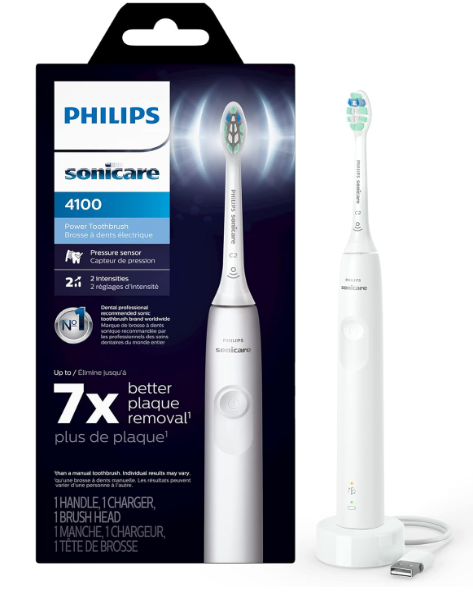
One of the best features on both brushes is the pressure sensor.
Too many people brush like they are scrubbing burnt cheese off a frying pan.
That is terrible for gums.
Both the 3100 and 4100 detect excessive pressure and reduce vibrations automatically.
This feature is especially useful for:
- Sensitive gums
- Gum recession
- Braces
- First-time electric toothbrush users
Think of it as a built-in dental coach quietly saying:
“Easy there, warrior.”
Brushing Modes: Simplicity vs Flexibility
3100: One Mode Simplicity
The 3100 embraces simplicity.
There is beauty in that.
No confusing menus.
No unnecessary combinations.
No decision fatigue at 7 AM.
You press the button.
You brush.
Done.
For many users, that is ideal.
4100: More Personalization
The 4100 adds:
- Two intensity settings
- Better control for sensitivity
- More adaptability
If your teeth are sensitive after whitening treatments or dental work, this flexibility becomes valuable.
Some days our mouths feel normal.
Other days they feel like we bit into ice cream made of lightning.
The 4100 handles those moments better.
Battery Life Comparison
Battery life is excellent on both models.
Typically, we can expect:
- Around two weeks of use
- Based on brushing twice daily
- With full charge capacity
That makes both ideal for:
- Travel
- Small bathrooms
- Minimal charging clutter
No one wants another cable snake living on the bathroom counter.
Charging Systems
Both brushes use compact charging stands.
The charging approach feels intentionally minimalist:
- Small footprint
- Easy setup
- Reliable connection
However, neither brush includes:
- USB charging
- Travel charging cases
- Wireless charging luxuries
Those features are usually reserved for pricier Sonicare models.
Brush Head Compatibility
Here is good news.
Both models support a wide range of Sonicare brush heads.
That means we can customize based on:
- Gum care
- Plaque removal
- Whitening
- Sensitive teeth
- Deep cleaning
Popular compatible heads include:
- C2 Optimal Plaque Control
- G2 Optimal Gum Care
- W DiamondClean
This flexibility matters because the brush head often affects cleaning quality more than the handle itself.
Noise Levels and Vibration Feel
Electric toothbrushes can sound surprisingly aggressive.
Fortunately, both brushes remain relatively quiet.
The Sonicare sound resembles:
- A soft hum
- A high-frequency buzz
- Gentle resonance
Compared to rotating brushes, they feel:
- Less harsh
- Less mechanical
- More fluid
The 4100 slightly improves vibration refinement, but the difference is subtle.
Smart Features: Barebones by Design
Neither model goes overboard with smart technology.
That is actually a positive.
You will not find:
- Wi-Fi
- AI mouth mapping
- Touchscreens
- Overcomplicated apps
And honestly, most people do not need their toothbrush behaving like a Tesla dashboard.
The focus stays on cleaning teeth effectively.
Refreshing, right?
Who Should Buy the Philips Sonicare 3100?
The 3100 is perfect for people who value:
- Simplicity
- Affordability
- Reliable performance
- Minimal learning curve
It works especially well for:
- First-time electric toothbrush users
- Teenagers
- Students
- Budget-conscious shoppers
The experience is clean, straightforward, and dependable.
Sometimes the best tool is simply the one we actually use consistently.
- Improves gum health up to 100% better than a manual toothbrush
- Removes up to 6x more plaque along the gumline vs. a manual toothbrush
- Three intensity settings for a gentle and comfortable brushing experience
Who Should Buy the Philips Sonicare 4100?
The 4100 suits users who want:
- More comfort customization
- Gentler brushing flexibility
- Slightly more premium feel
- Better long-term adaptability
It is especially useful for:
- Sensitive teeth
- Gum sensitivity
- Users transitioning from manual brushes
- People wanting extra comfort without premium pricing
The additional intensity setting may sound small, but for sensitive mouths, it can be the difference between “pleasant” and “never using this again.”
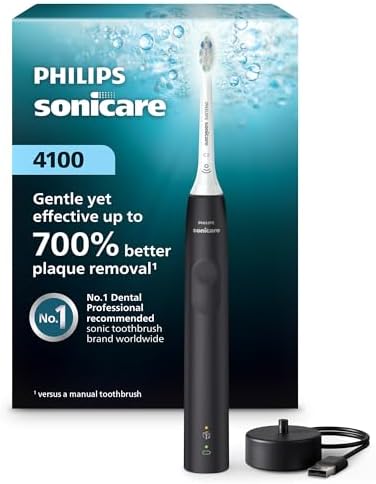
- The C2 Optimal Plaque brush head with soft, flexible, stain-removal bristles helps whiten and polish your teeth; it also…
- Electric toothbrush for adults providing gentle yet effective cleaning: the Advanced Sonic Technology pulses fluid betwe…
- Safe and gentle electric toothbrush with pressure sensor: if you apply too much pressure, the handle will pulse slightly…
Price Difference: Is the 4100 Worth the Extra Money?
This is where the decision gets interesting.
The 4100 usually costs somewhat more than the 3100.
The question becomes:
Are two intensity settings worth paying extra?
For some people, absolutely.
For others, not at all.
Here is the reality:
- If you just want a solid Sonicare brush, the 3100 delivers.
- If you appreciate comfort flexibility, the 4100 feels more refined.
The gap is not enormous.
But it is noticeable.
Travel Convenience
Both brushes are highly travel-friendly because of their:
- Slim profiles
- Lightweight handles
- Long battery life
However, premium travel features are limited.
You may need:
- Separate travel caps
- Third-party travel cases
Still, compared to bulky brushes, both travel well.
Durability and Longevity
Philips Sonicare brushes generally have a strong reputation for durability.
Both the 3100 and 4100 feel:
- Well-built
- Sturdy
- Resistant to daily moisture exposure
That said, like most rechargeable devices, battery longevity may decline after several years.
The good news is that most users report years of reliable operation.
Daily Experience: The Difference You Actually Feel
Specs matter.
But daily experience matters more.
Using the 3100 Feels Like
- Simple routine
- Reliable consistency
- No distractions
- Easy brushing
Using the 4100 Feels Like
- Slightly more premium
- More customizable
- More comfortable for sensitive days
- More polished overall
It is the difference between:
- A reliable sedan
- And the same sedan with upgraded suspension
Both get you there.
One simply feels smoother.
Plaque Removal and Gum Health
Both brushes perform very well for:
- Plaque reduction
- Gumline cleaning
- Daily maintenance
Sonicare’s sonic motion helps move fluid dynamically around teeth.
Conceptually, fluid movement behaves similarly to wave propagation:
v=fλ
f
λλ
That movement helps improve cleaning beyond direct bristle contact alone.
In practical terms?
Your mouth feels cleaner with less effort.
And that is what really matters.
Common Complaints About Both Brushes
No product is perfect.
Some users mention:
- Brush heads can be expensive
- Sonic vibrations feel strange initially
- Charging stands feel basic
- No travel case included
The adjustment period is real.
The first few uses may tickle your lips or gums in hilarious ways.
But most people adapt quickly.
What Dentists Usually Appreciate About Sonicare Brushes
Many dental professionals like Sonicare brushes because they:
- Encourage gentler brushing
- Improve plaque removal consistency
- Reduce aggressive scrubbing
- Support gum health
Of course, technique still matters.
Even the best toothbrush cannot fully compensate for:
- Brushing too quickly
- Skipping flossing
- Eating candy like it is oxygen
Sorry.
Best Value Choice: 3100 or 4100?
Choose the 3100 If:
- You want the lowest cost
- You prefer simplicity
- You do not need multiple intensity settings
- You are new to electric brushing
Choose the 4100 If:
- You have sensitive teeth or gums
- You value flexibility
- You want slightly more refinement
- You are willing to spend a little more
Our Final Verdict
The truth is surprisingly simple.
The Philips Sonicare 3100 is the smarter budget purchase.
The Philips Sonicare 4100 is the better overall experience.
Neither brush is revolutionary.
Neither is dramatically superior.
But the 4100 adds enough polish and flexibility to justify its higher price for many users — especially those with sensitive teeth or gums.
Meanwhile, the 3100 remains one of the easiest recommendations for people entering the electric toothbrush world for the first time.
In other words:
- The 3100 wins on value.
- The 4100 wins on refinement.
And honestly, both are miles ahead of most manual toothbrushes.
Conclusion
Choosing between the Philips Sonicare 4100 and 3100 feels a bit like choosing between two excellent coffee shops across the street from each other.
One offers the basics done exceptionally well.
The other adds a few comfort upgrades that make the experience smoother.
If we simply want clean teeth and healthy gums, the 3100 absolutely gets the job done.
But if we appreciate a little extra finesse — especially for sensitivity management — the 4100 quietly earns its premium.
Either way, both brushes represent a meaningful upgrade for daily oral care.
And sometimes, the smallest habits create the biggest long-term changes.
FAQs
Is the Philips Sonicare 4100 better than the 3100?
Yes, but mainly because it includes multiple intensity settings and a slightly more refined brushing experience. Cleaning performance is otherwise very similar.
Does the Sonicare 3100 have a pressure sensor?
Yes. The 3100 includes a pressure sensor that helps prevent overly aggressive brushing.
Are the brush heads interchangeable between the 3100 and 4100?
Yes. Both toothbrushes support many Sonicare replacement brush heads.
Which model is better for sensitive teeth?
The 4100 is generally better for sensitive teeth because it offers adjustable intensity levels.
Is the Philips Sonicare 4100 worth the extra cost?
For users who value comfort and customization, yes. For people wanting basic effective cleaning, the 3100 often provides better value.