
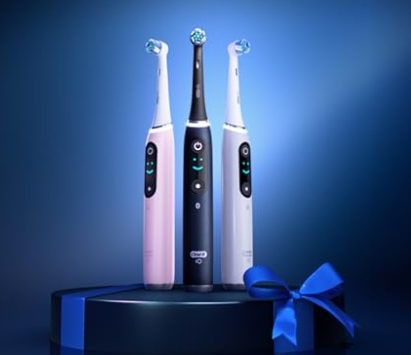
When we ask, “How long do Oral-B iO toothbrushes last?”, we may actually be asking three different questions.
How long does the battery last after one charge? How many years can the toothbrush handle continue working? And how long should we use an Oral-B iO brush head before replacing it?
Those answers are not identical.
Depending on the model and the way we use it, an Oral-B iO toothbrush may operate for roughly one to four weeks between charges. The removable brush head should generally be replaced about every three months, while the rechargeable handle may remain useful for several years when it is charged, cleaned, and stored correctly.
However, longevity is not carved in stone. A toothbrush used by one person twice a day lives a very different life from a handle shared by an entire family. Charging habits, moisture, drops, bathroom conditions, brushing pressure, and battery age all play a role.
Let’s pull the subject apart and see exactly what determines how long an Oral-B iO toothbrush lasts.
The Quick Answer: How Long Does an Oral-B iO Last?
For most owners, the practical answer looks like this:
- Battery runtime per charge: commonly around one to two weeks, although some models and usage patterns may provide considerably longer runtime.
- Charging time: approximately three hours on certain premium magnetic-charging models, while several other iO models may require around 12 hours.
- Brush-head lifespan: approximately three months, or sooner when the bristles become worn.
- Handle lifespan: often several years, depending on battery health, maintenance, usage frequency, accidental damage, and storage conditions.
- Manufacturer warranty: commonly two years, although coverage and extensions may vary by country and retailer.
Oral-B’s UK comparison material advertises up to four weeks of battery life for parts of the iO range, while its US support information notes that actual runtime depends on how frequently and how long we brush. That difference matters: a laboratory-style estimate and real bathroom use are not always twins.
What Does “Last” Really Mean?
Before judging the longevity of an Oral-B iO, we should separate three components.
1. Battery Runtime
This is the number of brushing sessions we can complete before the handle needs to return to its charger.
2. Overall Handle Lifespan
This refers to the number of months or years the toothbrush remains functional before battery wear, motor problems, electronic failure, or physical damage makes replacement necessary.
3. Brush-Head Lifespan
The handle is reusable, but the brush head is a consumable item. Even when its bristles still look acceptable from a distance, their cleaning performance may gradually decline.
Confusing these three meanings can make product comparisons frustrating. A brush may last four weeks per charge yet fail after three years. Another may need weekly charging but continue working reliably for six years.
Battery runtime and product lifespan are related, but they are not the same thing.
How Long Does an Oral-B iO Battery Last Per Charge?
Under normal use, many Oral-B iO toothbrushes can provide approximately one to two weeks of brushing between charges. Some official Oral-B UK product information lists battery life of up to four weeks for selected iO models.
Why such a broad range?
Because “normal use” is slippery. We do not all brush in exactly the same way.
Battery runtime depends on:
- The specific iO Series model
- Battery age
- Cleaning mode
- Brushing duration
- Number of daily sessions
- Bluetooth and display use
- Whether more than one person uses the handle
- Ambient temperature
- How completely the battery was charged
- Whether the toothbrush is frequently switched on accidentally
Someone brushing for two minutes twice a day consumes about four minutes of operating time daily. A person brushing three times per day for three minutes uses more than twice as much energy.
Naturally, the second user will reach for the charger sooner.
What Does Two Weeks of Battery Life Mean in Sessions?
Suppose we brush twice daily for two minutes.
Over 14 days, that equals:
- 28 brushing sessions
- 56 minutes of total powered brushing
That is why a toothbrush that lasts “two weeks” may sound more impressive when viewed as nearly 30 cleaning sessions.
If two people share the same handle, those 28 sessions could be consumed in only seven days. The battery has not suddenly become defective; the workload has doubled.
Battery Life Across the Oral-B iO Range
Not every iO model uses precisely the same charging arrangement, display, battery-management system, or included charger.
Premium models such as certain iO Series 7, 8, 9, and 10 versions use magnetic fast-charging equipment. Oral-B states that selected models can reach a full charge in approximately three hours.
Other iO models use a standard charging base and may take much longer. For example, Oral-B’s support information for the iO Series 3 through 6 advises allowing approximately 12 hours for a full charge.
This does not necessarily mean the slower-charging model has a worse battery. It simply means the charging hardware and power-delivery method differ.
Typical iO Charging Expectations
| Oral-B iO category | Approximate full-charge time | Practical runtime |
|---|---|---|
| Selected iO 7–10 magnetic-charging models | About 3 hours | Often one to several weeks |
| Several iO 3–6 models | About 12 hours | Often around one to two weeks |
| Older or heavily used handles | Varies | May be noticeably shorter |
These figures should be treated as general guidance rather than a promise. Packaging, chargers, regional versions, firmware, and individual habits can all influence results.
The user manual supplied with the exact handle remains the best reference for its recommended charging time.
How Many Years Does an Oral-B iO Toothbrush Last?
There is no universal expiry date stamped inside an Oral-B iO handle.
With ordinary household use and sensible care, we can reasonably hope for several years of service. Some handles may fail shortly after their warranty period, while others can continue operating well beyond it.
A realistic expectation for a rechargeable premium electric toothbrush is often somewhere around three to five years, although this is an estimate rather than an official guaranteed lifespan.
Some units may last longer. Others may not reach that range due to:
- Battery deterioration
- Charging-base failure
- Moisture intrusion
- Repeated drops
- Motor wear
- Internal corrosion
- Button damage
- Electronic or display faults
- Improper cleaning
- Extreme heat or cold
Think of the toothbrush handle like a small bathroom appliance with a rechargeable battery. It is not immortal, but it is not supposed to be disposable after a year either.
Why the Warranty Is Not the Expected Lifespan
Oral-B’s standard US warranty generally runs for two years from the purchase date and covers qualifying defects, subject to its terms and exclusions.
A two-year warranty does not mean the toothbrush is designed to die on its second birthday.
The warranty is simply the period during which the manufacturer promises specific remedies for covered faults. Product life may extend far beyond that window.
A car with a five-year warranty is not expected to become scrap in year six. The same logic applies here.
How Long Do Oral-B iO Brush Heads Last?
Oral-B recommends replacing an iO brush head approximately every three months for the best results. The company also advises changing it sooner if the bristles become visibly worn.
At two brushing sessions per day, one brush head may complete roughly:
- 60 sessions per month
- 180 sessions over three months
- About six hours of powered brushing in total
That is a considerable amount of rubbing, bending, rinsing, drying, and contact with toothpaste.
After hundreds of cleaning cycles, even premium bristles begin to lose their original shape.
Signs an iO Brush Head Needs Replacing Early
Do not wait for the calendar when the brush head is clearly exhausted. Replace it sooner when:
- Bristles flare outward
- The cleaning filaments look uneven
- Indicator bristles have significantly faded
- The head feels rough or uncomfortable
- Plaque removal seems less effective
- The head develops a persistent odor
- Debris remains trapped around the base
- The brush head has been damaged
- Someone else has accidentally used it
- It was used during or after an illness and replacement has been advised
A worn brush head is like a broom with bent bristles. The motor can keep moving it, but the tool no longer reaches surfaces as efficiently.
Does Brushing Pressure Shorten Brush-Head Life?
Yes.
Excessive pressure forces the bristles to bend more aggressively against the teeth and gums. Over time, they may spread outward and lose their intended cleaning pattern.
The iO pressure sensor can help us correct this habit. When we allow the brush to do the work instead of scrubbing like we are sanding a wooden table, the head may remain effective for longer.
Why Oral-B iO Battery Runtime Changes Over Time
Rechargeable batteries gradually lose capacity. This is normal.
When the toothbrush is new, one full charge may comfortably cover a long trip. After several years, the same handle may need charging every few days.
The change often happens slowly enough that we barely notice it.
Lithium-Ion Battery Aging
Most modern iO toothbrushes use rechargeable lithium-ion battery technology. Lithium-ion batteries are practical because they offer good energy density, relatively low self-discharge, and convenient recharging.
However, battery chemistry ages through two processes:
- Cycle aging: wear caused by charging and discharging.
- Calendar aging: gradual deterioration that occurs simply as time passes.
Even a carefully maintained battery cannot remain new forever.
Heat, deep discharge, long periods without use, and repeated charging cycles may accelerate the decline.
Why a New Brush May Seem to Drain Quickly
A recently purchased handle may appear disappointing when:
- It was not fully charged before first use
- The travel lock is being triggered incorrectly
- The display is checked repeatedly
- Multiple users share it
- The charger is not receiving power
- The handle is not positioned correctly on the base
- The first few battery readings are still calibrating
- Brushing sessions last much longer than two minutes
Before assuming the battery is defective, give the toothbrush a complete uninterrupted charge using the correct charger.
How to Make an Oral-B iO Toothbrush Last Longer
A few habits can protect both the handle and the battery. None require us to treat the toothbrush like museum glass.
Rinse the Handle After Brushing
Remove the brush head and rinse away toothpaste residue from the top of the handle.
Dried toothpaste can collect around the shaft, forming a chalky ring. Over time, that buildup may interfere with hygiene and make the head harder to remove.
Dry the Handle Instead of Leaving It Soaked
The toothbrush is designed for normal bathroom use, but that does not mean we should leave it sitting in a puddle.
After rinsing:
- Remove the brush head.
- Rinse the head and handle separately.
- Shake off excess water.
- Wipe the handle.
- Store both pieces upright where air can circulate.
Oral-B’s iO guidance states that the handle can be rinsed but should not be completely submerged.
Avoid Dropping It
The exterior may survive a fall, but internal damage is not always visible.
A hard impact can affect:
- The battery connection
- Internal seals
- The display
- The motor assembly
- Buttons
- Charging components
A toothbrush repeatedly knocked from a narrow sink shelf may age like a phone without a case.
Consider storing it in a stable holder rather than balancing it near the basin edge.
Use the Correct Charger
A charger that looks similar is not automatically compatible.
Use the charger supplied with the toothbrush or one officially approved for the exact model. This is especially important when moving between standard iO chargers, magnetic chargers, travel cases, and region-specific power systems.
Keep the Charging Area Clean
Toothpaste, moisture, and bathroom dust can accumulate around the charger.
Unplug it before cleaning, wipe it according to the manual, and allow it to dry before reconnecting it.
Never immerse the charging base in water.
Do Not Store the Toothbrush in Extreme Heat
High temperatures are unfriendly to rechargeable batteries.
Avoid leaving the handle:
- In direct sunlight
- Inside a hot vehicle
- Next to a radiator
- Beside heat-producing appliances
- In luggage stored in a hot attic
The bathroom itself is generally fine, but a consistently hot and poorly ventilated storage area may speed up battery aging.
Should We Leave the Oral-B iO on Its Charger?
For normal use, leaving an Oral-B iO on its compatible charging base is generally acceptable. Oral-B’s iO quick-start guidance states that users may keep the brush on the charger or remove it, noting that the system is designed to avoid overcharging.
That makes daily use convenient. We can brush, rinse the handle, dry it, and return it to its base.
Still, there is no requirement to top it up after every session. Many users prefer to recharge only when the battery level becomes low, especially when keeping the charger off the bathroom counter.
The more important rules are simple:
- Use the correct charging equipment
- Keep the charger dry and clean
- Follow the model’s manual
- Avoid extreme temperatures
- Do not use damaged cords or bases
Is It Better to Drain the Battery Completely?
No. We do not need to deliberately run a lithium-ion battery flat before recharging it.
That practice comes from habits associated with older battery technologies. Modern lithium-ion batteries do not require regular full discharge cycles.
Occasional low-battery use is normal, but repeatedly leaving the handle completely discharged for long periods is not a useful battery-care strategy.
How to Tell Whether the Battery Is Wearing Out
A tired battery usually gives us hints before it becomes unusable.
Common warning signs include:
- Runtime falls dramatically
- The battery percentage drops unpredictably
- The toothbrush switches off during brushing
- Charging takes much longer than expected
- The handle appears full but empties quickly
- The battery indicator behaves inconsistently
- The brush works only when recently removed from the charger
- It will no longer power on after charging
- The handle becomes unusually warm
One bad charging cycle does not prove the battery is finished. First inspect the power outlet, charging position, base, and recommended charge duration.
For iO Series 3–6 troubleshooting, Oral-B advises charging for the full recommended period, which may be approximately 12 hours.
Why an Oral-B iO May Not Hold a Charge
Several issues can imitate battery failure.
The Outlet Is Not Continuously Powered
Some bathroom sockets switch off with the light or have a safety cutoff. The toothbrush may sit on the base all night without actually receiving power.
Test the outlet with another suitable device or move the charger to a known working socket.
The Handle Is Misaligned
A magnetic iO charger may guide the handle into place, but incorrect positioning, debris, or an uneven surface can still interrupt charging.
The Charger Is Faulty
If the handle works but never gains power, the charger may be the culprit rather than the toothbrush.
The Battery Is Deeply Discharged
A completely flat battery may not show immediate signs of charging. Leave it connected for the full recommended period before testing it again.
The Handle Has Internal Damage
Moisture intrusion, impact damage, or component failure can prevent charging even when the battery itself is not the original problem.
Does the Cleaning Mode Affect Battery Life?
Potentially, yes.
More intensive modes may require the motor to operate differently from gentler settings. A color display, illuminated ring, Bluetooth connection, and real-time coaching features also consume energy.
In everyday use, these features should not transform a two-week battery into a two-day battery. Still, they can help explain why two owners with the same model report different results.
Someone using a basic daily mode for exactly two minutes may achieve better runtime than someone who:
- Brushes for four minutes
- Uses intensive modes
- checks the display repeatedly
- Connects to the app every session
- Brushes three times daily
The toothbrush is doing more work, so it requires more energy.
How Long Does an Oral-B iO Last When Traveling?
For a short trip, many users can leave the charger at home.
A fully charged handle may comfortably cover a week or two, depending on the model, age, and routine. Oral-B’s general travel guidance says modern rechargeable brushes may provide up to around two weeks of regular use, while certain iO product pages advertise longer potential runtime.
Before traveling:
- Charge the handle fully
- Activate the travel lock when available
- Dry the brush before placing it in the case
- Pack the brush head separately or use a ventilated cover
- Check voltage compatibility before taking the charger abroad
- Do not assume every travel case can charge the handle
For a weekend trip, carrying the charger may be unnecessary. For a three-week holiday, bringing the correct charging solution is the safer choice.
Can Two People Share One Oral-B iO Handle?
Technically, two people can use the same handle if each person has a separate brush head.
However, sharing increases the number of daily sessions and therefore reduces the number of days between charges. It also puts more operating hours on the motor and battery.
For example:
- One user brushing twice daily: 2 sessions per day
- Two users brushing twice daily: 4 sessions per day
- Four users brushing twice daily: 8 sessions per day
A handle rated for roughly two weeks of single-person use may need charging every few days in a larger household.
Sharing can also complicate app tracking and personalized coaching. The toothbrush may not always distinguish routines as cleanly as separate devices would.
When Should We Replace the Entire Oral-B iO Handle?
Replacement may be sensible when the handle becomes unreliable, unsafe, unhygienic, or too expensive to repair.
Consider replacing it when:
- It no longer charges with a confirmed working charger
- Battery life has fallen to only a few sessions
- The motor repeatedly stops
- The handle has cracks or exposed internal areas
- The casing becomes unusually hot
- Buttons no longer respond
- The display fails and affects usability
- Water appears to have entered the body
- Repair costs approach the price of a replacement
- The toothbrush behaves unpredictably
A cosmetic scratch is not usually a reason to discard an otherwise healthy brush. A cracked housing near an electrical or sealed area is more serious.
Safety Comes Before Squeezing Out Another Month
Stop using the toothbrush if it:
- Smells burnt
- Produces smoke
- Becomes excessively hot
- Has a swollen or distorted casing
- Exposes electrical components
- Has a damaged charger cable
Do not continue charging a device that appears physically unsafe.
Can the Battery Be Replaced?
Oral-B iO handles are not generally designed for simple user battery replacement.
Opening the sealed handle may damage its water resistance, create a safety risk, and affect warranty coverage. Oral-B’s warranty terms exclude certain damage involving unauthorized tampering or repair.
Although technically skilled repairers may attempt internal battery replacement, it is not comparable to swapping batteries in a television remote.
For a toothbrush still under warranty, contact official customer support before opening it. For an older unit, compare authorized repair availability with the cost of a new handle.
How to Get the Best Value From an Oral-B iO
The purchase price matters, but cost per year gives us a clearer picture.
Imagine an iO handle costs $180 and lasts four years. The handle cost works out to $45 per year before brush heads and electricity.
If it lasts six years, the annual handle cost falls to $30.
We can improve value by:
- Buying the model with features we will actually use
- Replacing heads at sensible intervals
- Avoiding counterfeit or poorly fitting accessories
- Preventing drops
- Cleaning the handle regularly
- Keeping proof of purchase
- Registering for any eligible warranty extension
- Using the proper charger
- Seeking support before a minor problem becomes terminal
The most expensive model is not automatically the longest-lasting choice. Extra screens, sensors, app functions, and charging accessories add convenience, but they also create more components that could eventually fail.
Sometimes the best long-term option is the model whose features match our real routine—not the one with the longest specification sheet.
Oral-B iO Lifespan Compared With a Manual Toothbrush
A manual toothbrush is usually replaced as a complete unit every three to four months. An electric toothbrush separates the durable handle from the replaceable cleaning head.
That creates a different ownership pattern.
With an Oral-B iO:
- The handle may last for years
- The brush head is changed approximately every three months
- The charger can be reused
- Only the worn cleaning component is routinely discarded
From a convenience perspective, the reusable handle is like a razor body with replaceable cartridges. The engine stays; the working edge changes.
Common Mistakes That Shorten Oral-B iO Lifespan
Even a well-designed toothbrush can be worn down prematurely.
Leaving Toothpaste Around the Shaft
Residue hardens and traps moisture around the connection point.
Storing the Brush Head Permanently Attached While Wet
Separating the pieces after rinsing can improve airflow and reduce hidden buildup.
Pressing Too Hard
This wears the head faster and may make brushing less comfortable.
Using the Wrong Charger
Incompatible charging equipment can create unreliable or unsafe operation.
Ignoring Early Charging Problems
A dirty base, loose plug, or faulty outlet is easier to solve before the battery remains flat for weeks.
Dropping the Handle Into the Sink or Shower
Water resistance is not the same as immunity to impact or prolonged submersion.
Keeping One Brush Head for Six Months
A head that still rotates is not necessarily a head that still cleans effectively.
A Simple Oral-B iO Maintenance Routine
We do not need a complicated schedule. This is enough for most households.
After Every Brushing Session
- Rinse the brush head
- Remove toothpaste from the handle
- Shake away excess water
- Store the brush where it can dry
Once a Week
- Remove the head
- Wipe the upper shaft carefully
- Clean the storage area
- Inspect the charger for residue
- Check the bristles for spreading
Every Three Months
- Replace the brush head
- Inspect the handle for cracks
- Review whether battery runtime has changed
- Clean the travel case, if used
Once a Year
- Check warranty or registration records
- Inspect charging cables and plugs
- Review whether the battery still meets your needs
- Recycle damaged or expired accessories responsibly
This small routine can prevent the toothbrush from turning into a toothpaste-encrusted bathroom fossil.
So, How Long Do Oral-B iO Toothbrushes Really Last?
The most balanced answer is that an Oral-B iO toothbrush should deliver multiple brushing sessions over one or more weeks per charge, depending on the model and usage. Some official product information advertises up to four weeks, while real-world runtime may be shorter when sessions are longer, several people share the handle, or the battery has aged.
The brush head should normally be replaced about every three months.
The handle itself can potentially serve us for several years, although Oral-B does not promise one universal operating lifespan for every unit. Maintenance, battery aging, accidental damage, moisture, charging habits, and manufacturing variation all affect the final result.
In other words, longevity is a partnership. Oral-B builds the device, but the way we live with it determines how gracefully it ages.
Conclusion
So, how long do Oral-B iO toothbrushes last?
A healthy battery may provide roughly one to several weeks of use per charge. A replacement brush head should generally last about three months. The rechargeable handle may remain useful for several years when it is treated sensibly.
The easiest way to maximize that lifespan is not to obsess over battery percentages. Instead, we should follow a few ordinary habits: rinse it, dry it, avoid dropping it, use the correct charger, replace worn heads, and investigate sudden battery changes early.
An Oral-B iO is a small machine doing a repetitive job twice every day. Give it room to dry, keep it clean, and stop pressing as though we are trying to erase our teeth. With that basic care, it has a much better chance of remaining a dependable part of the bathroom for years.
Frequently Asked Questions
1. How long does an Oral-B iO battery last after a full charge?
Many users can expect approximately one to two weeks of regular brushing, although selected models may be advertised with up to four weeks of battery life. Actual runtime depends on the model, brushing duration, cleaning mode, battery age, and number of users.
2. How many years should an Oral-B iO toothbrush handle last?
There is no fixed official lifespan for every handle. A reasonable practical expectation is several years, with around three to five years being a useful estimate rather than a guarantee. Some handles may last considerably longer with good care.
3. How often should we replace an Oral-B iO brush head?
Oral-B recommends replacing the brush head approximately every three months, or sooner if the bristles become worn, frayed, damaged, or noticeably less effective.
4. Is it okay to leave an Oral-B iO on the charger constantly?
Yes, Oral-B indicates that compatible iO charging systems are designed to prevent overcharging. Still, the charging base should remain clean, dry, undamaged, and connected to a suitable power supply.
5. Why is my Oral-B iO battery suddenly running out quickly?
Possible causes include an incomplete charge, a faulty outlet, charger misalignment, multiple users, longer brushing sessions, cold or hot storage conditions, charger failure, or natural battery aging. Charge it for the full recommended period before deciding that the battery has failed.